

In the food industry, “safety” has always been the core issue running through the entire production process. The disinfection stage, as a key barrier to prevent microbial contamination and ensure food quality. Its efficiency and safety directly determine the survival and development of enterprises. Traditional disinfection methods such as chemical disinfectants (chlorine-containing disinfectants, peracetic acid, etc.) and ultraviolet irradiation often have problems such as residue risks. Strong corrosiveness, complex operation or disinfection dead corners. And are difficult to meet the modern food factories’ demands for efficient, safe and environmentally friendly disinfection. Against this backdrop, hypochlorous acid generators, with their ability to prepare high-purity hypochlorous acid solutions on-site. Excellent disinfection effects and no residue, have gradually become the ideal choice for equipment disinfection and environmental disinfection in food factories. Building a green defense line for food safety production.
The core demands of disinfection in food factories and the limitations of traditional methods
The disinfection scenarios in food factories are complex and diverse. They not only involve processing equipment that comes into direct contact with food (such as mixing tanks, conveyor belts, cutting tools, filling equipment, etc.). But also include environmental areas such as workshop floors, walls, air, changing rooms, and raw material warehouses. The requirements for disinfection in different scenarios vary significantly. But the core demands are highly consistent: It can efficiently kill pathogenic bacteria (such as Salmonella, Escherichia coli, Listeria, etc.). leave no chemical residue. Be harmless to equipment and human body, be easy to operate and have controllable costs.
However, traditional disinfection methods often struggle to meet these demands in practical applications. For instance, when using sodium hypochlorite (84 disinfectant) for disinfection, it needs to be diluted in proportion. It is difficult to control the concentration. If the concentration is too low, the disinfection will not be thorough. If the concentration is too high, it will not only corrode the surface of stainless steel instruments but also may react with organic matter in food to form harmful trichloromethane. Although ultraviolet disinfection leaves no chemical residue. It can only act on direct surfaces and cannot penetrate shaded areas or contaminants. It is powerless in disinfecting dead corners such as the interior of pipes and equipment gaps. Although ozone disinfection has strong diffusibility. Excessive concentration can irritate the human respiratory tract.
Moreover. It needs to be operated in an unattended environment and requires long-term ventilation after disinfection. Which seriously affects production efficiency. These limitations make food factories urgently need a disinfection technology that is more suitable for the industry’s demands.
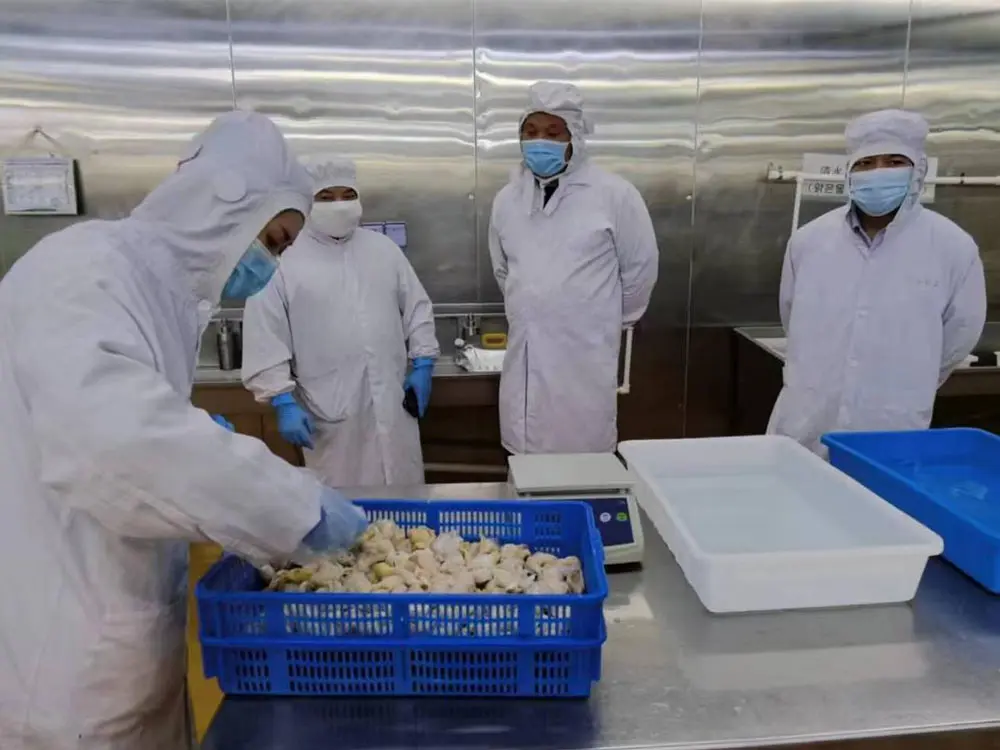
The application of hypochlorous acid generators in the disinfection of Food factory equipment: precise, safe and non-destructive
Food processing machinery is a “hotspot” for microbial growth. Especially the equipment that comes into contact with perishable foods such as meat. Fruits and vegetables. And dairy products. If disinfection is not thorough. It is very likely to cause cross-contamination. The hypochlorous acid generator can produce high-purity hypochlorous acid (HClO) solution with a pH value close to neutral (5.0-7.0) on-site by electrolyzing salt (or dilute hydrochloric acid) solution. This solution has extremely strong oxidizing properties and can quickly destroy the cell membranes and enzyme systems of microorganisms. Achieving efficient killing of bacteria, viruses and fungi. The killing rate can reach over 99.999%. And compared with traditional disinfectants, it shows unique advantages in the disinfection of instruments.
1,Hypochlorous acid generators can be adapted to various types of equipment and specifically solve disinfection problems
Precision processing equipment (such as filling valves, sensors) : Neutral hypochlorous acid solution is non-corrosive and can be directly disinfected by spraying, soaking or wiping. Without worrying about damaging the metal coating or electronic components on the surface of the equipment. For instance. In the filling workshop of a dairy factory. Staff can use a hypochlorous acid generator connected to a spray system to perform high-pressure flushing on the interior of the filling valve. This not only thoroughly removes residual milk stains but also simultaneously kills pathogenic bacteria such as Escherichia coli and Staphylococcus aureus. Preventing
Pipelines and closed systems (such as raw material conveying pipelines, cooling water pipes) : Traditional disinfection methods are difficult to penetrate deep into the interior of the pipelines. However, hypochlorous acid solution can remain in the pipelines for 10 to 20 minutes through the “circulation soaking method”. Fully contacting the microorganisms on the inner walls of the pipelines. It has a particularly significant removal effect on biofilms (such as Legionella biofilms) that breed inside the pipelines. In beverage factories. The solution prepared by hypochlorous acid generators can replace traditional chemical cleaning agents, achieving an integrated “disinfection – flushing” process for pipelines. Reducing the amount of flushing water and lowering the cost of wastewater treatment.
Large-scale equipment (such as mixing tanks, conveyor belts) : For large-sized instruments, hypochlorous acid generators can be paired with mobile spray equipment. Staff hold the spray heads to precisely spray on the surfaces, crevices, corners and other parts of the equipment. For instance. In meat processing plants. Blood water and fat are prone to accumulate on the surface of conveyor belts. Which can breed Salmonella. After spraying hypochlorous acid solution. There is no need to wipe repeatedly. It can be put into use after being naturally dried. Which not only saves time but also avoids the impact of disinfectant residues on the quality of meat.
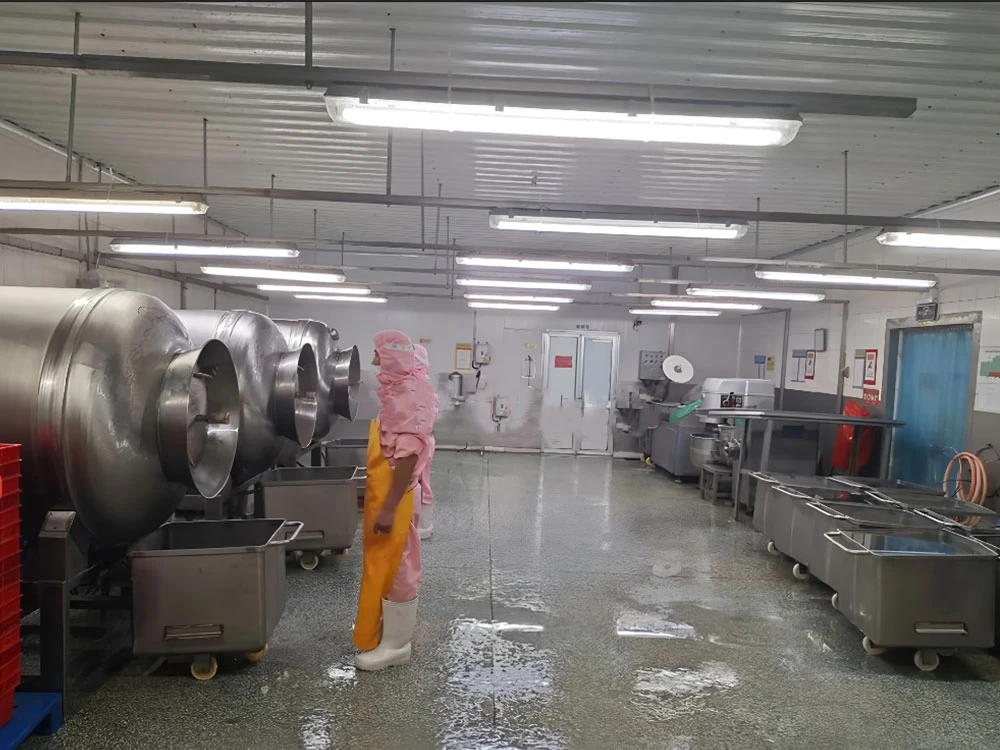
The core advantages of hypochlorous acid generators: no residue, easy to degrade, and in compliance with food safety standards
The key pain point in the disinfection of food equipment lies in the “residue risk”. However, hypochlorous acid (HClO) rapidly decomposes into water and sodium chloride (the main component of table salt) after disinfection, leaving no toxic or harmful substances behind. There is no need for additional rinsing with clean water (except for special high-precision equipment). It fully complies with the requirements for “disinfectant residue” stipulated in GB 14881 “National Food Safety Standard – General Hygienic Specifications for Food Production”. This feature makes hypochlorous acid generators particularly suitable for disinfecting processing equipment in ready-to-eat foods (such as cooked food and ready-to-eat meals), avoiding the potential threat of disinfectant residues to consumer health from the source.
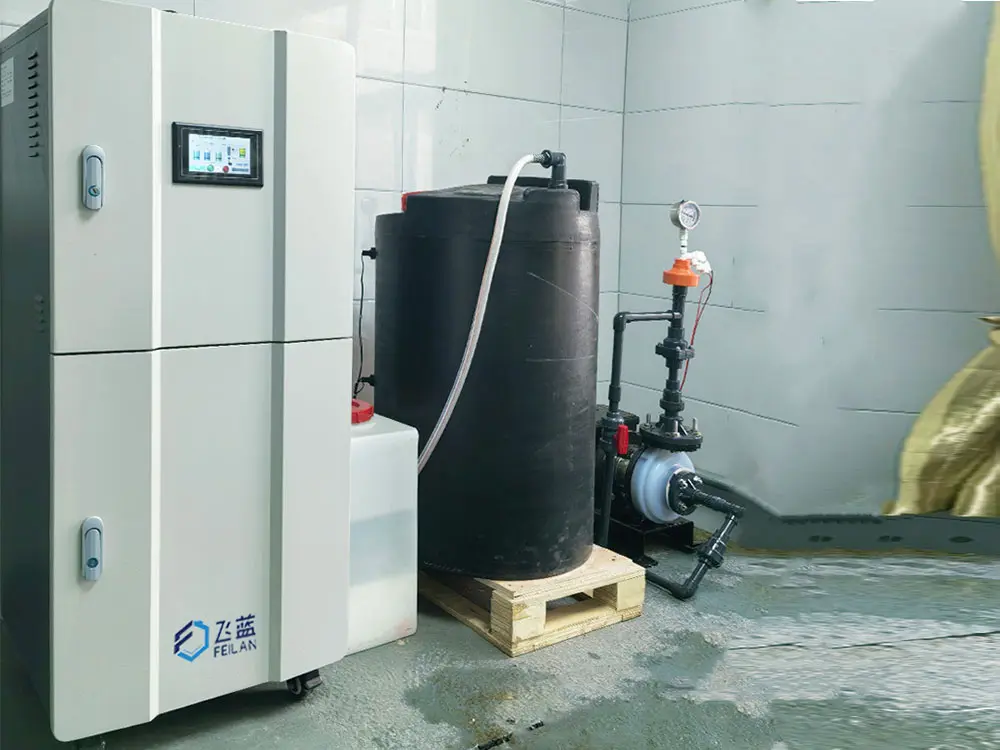
The application of hypochlorous acid generators in environmental disinfection of Food factories: Comprehensive coverage, blocking the chain of pollution transmission
The production environment of a food factory is an important carrier for the spread of microorganisms. If pathogenic bacteria exist in areas such as the air, floor, walls, changing rooms. And bathrooms in the workshop. They may contaminate food through air flow. Personnel movement, and tool transfer. Hypochlorous acid generators. With the fluidity and diffusibility of their solutions. Can achieve “all-round and no-blind spot” disinfection of the environment. Effectively blocking the transmission chain of microorganisms.
1. Workshop air disinfection: Purify the breathing environment and reduce the risk of airborne transmission
The high humidity environment in food processing workshops (especially low-temperature workshops and pickling workshops) is prone to mold growth, and when there are many people. It is easy for viruses to spread through droplets. Traditional air disinfection methods (such as ultraviolet rays and ozone) have the problem of “incoexistence between humans and machines”. While neutral hypochlorous acid solution can be transformed into micron-level droplets through an atomization disinfection system and evenly diffuse into the workshop air. It can be safely used even when people are working (when the hypochlorous acid concentration is controlled at 50-100 PPM) It has no irritation to the human respiratory tract or skin. For instance, in the cooling workshop of a bakery. By atomizing hypochlorous acid solution. The concentration of mold spores in the air can be effectively reduced.
Preventing bread and cakes from getting moldy during the cooling process. At the same time, it improves the air quality in the workshop and reduces respiratory discomfort among employees.
2. Floor and wall disinfection: Powerful decontamination, preventing cross-contamination
The floors of food factories are prone to retaining raw material debris and sewage, while the walls may breed mold due to condensate water. All these are “breeding grounds” for microorganisms. The solution prepared by the hypochlorous acid generator (with a concentration of 100-200 PPM). When used in combination with a floor mopping machine or high-pressure cleaner to clean and disinfect the floor. Can not only remove oil stains and food residues. But also kill pathogenic bacteria in the crevices of the floor (such as Listeria, which can survive for several months on damp floors). For the walls. A sprayer can be used to spray from top to bottom. With a focus on cleaning areas prone to dust accumulation such as corners. Window sills, and equipment bases to prevent the spread of mold spores. In fruit and vegetable processing plants,
the floor and walls of the workshop are disinfected with hypochlorous acid solution after daily production. Which can keep the total number of environmental microorganisms below 100CFU/cm². Far below the national standard limit.
3. Auxiliary area disinfection: Safeguarding the safety of the last mile
In addition to the core production area, auxiliary areas such as changing rooms. Restrooms and raw material warehouses in food factories also need to be strictly disinfected. In the changing room. Staff can use hypochlorous acid solution (with a concentration of 50-100 PPM) to wipe wardrobes. Shoe cabinets and washbasins. And spray disinfectant on work clothes to prevent microorganisms carried by clothes from entering the production workshop. In raw material warehouses, especially those storing grains and nuts, regularly spraying hypochlorous acid solution on the ground and shelves can effectively prevent the growth of storage pests (such as rice weevil) and mold, and extend the shelf life of raw materials.
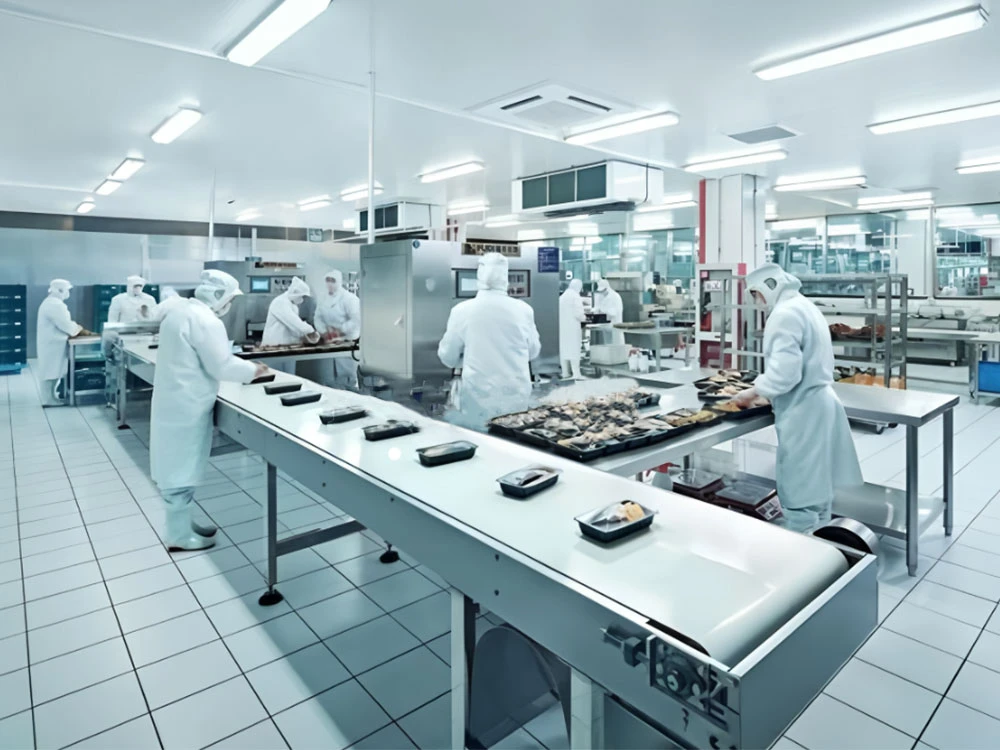

With the continuous improvement of safety standards in the food industry and the advancement of “intelligent manufacturing”, the application of hypochlorous acid generators will witness further upgrades. In the future, hypochlorous acid generators will be integrate with Internet of Things (iot) technology to achieve full-process intelligent management of “real-time concentration monitoring – automatic adjustment – disinfection data recording”. Staff can remotely monitor the operation status of the equipment and disinfection data through a mobile phone APP to ensure the traceability of the disinfection process. At the same time, in light of the characteristics of different food industries (such as dairy products, meat products, and fruit and vegetable processing), more targeted “disinfection solutions” will be develop. For instance, low-temperature resistant hypochlorous acid generators will be design for low-temperature food factories, and the anti-fogging performance of solutions will be optimize for high-humidity workshops, further enhancing the accuracy and adaptability of disinfection.