

Seafood processing and distribution link, has been facing two major problems. One is how to effectively kill harmful bacteria (such as Vibrio parahaemolyticus) to ensure food safety. The second is how to slow down the spoilage process and extend the shelf life of fresh ice.
Traditional disinfection methods. Such as the use of sodium hypochlorite (84 disinfectant main component) or ozone water. Although there are certain effects. But often have high sterilization concentration, irritating odor, negative impact on the flavor and color of seafood and other drawbacks. In this context, hypochlorous acid generator. As a kind of technical equipment that can produce efficient and safe disinfectant on site. Is becoming the new favorite of seafood processing industry.
What is hypochlorous acid generator
Many people mistake hypochlorous acid for “84 disinfectant,” but the two are very different. Hypochlorous acid is a kind of slightly acidic electrolytic water. Its bactericidal ability is about 80 times that of sodium hypochlorite (the main component of 84 disinfectant). But its nature is extremely mild and almost harmless to human body and the environment.
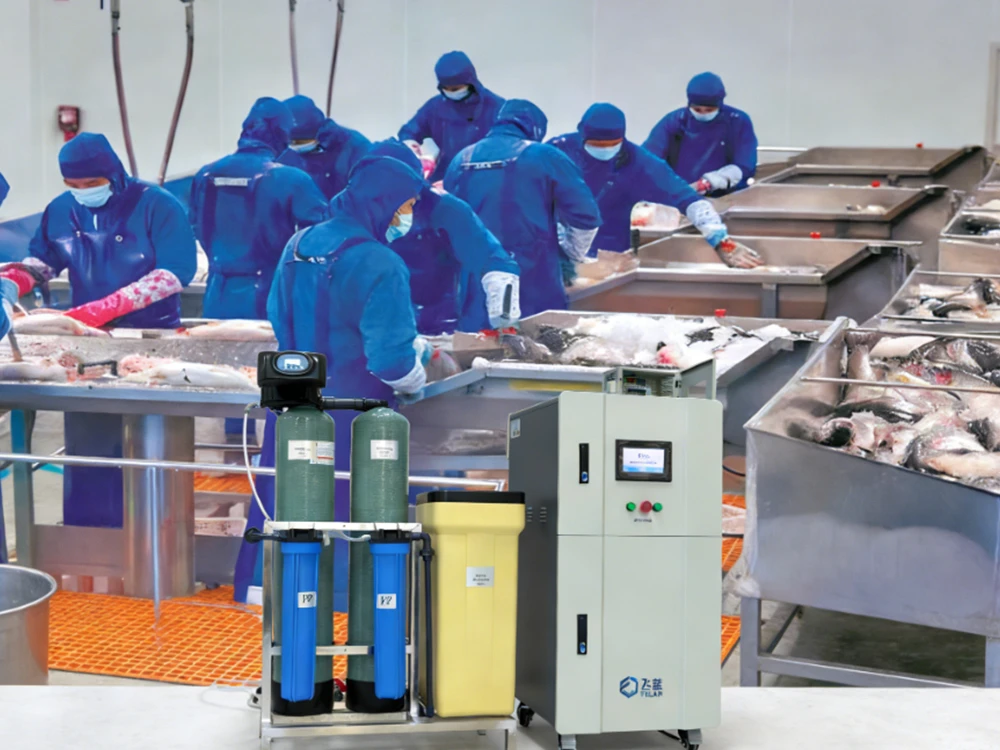
Hypochlorous acid generators are devices that generate this highly efficient disinfectant solution on-site by electrolyzing dilute hydrochloric acid or sodium chloride solution. Because it is produced on-site and used immediately, it avoids the concentration drop problem caused by evaporation during storage and transportation of traditional disinfectants.

Hypochlorous acid for seafood cleaning disinfection: highly effective killing pathogenic bacteria
Seafood is easy to carry Vibrio parahaemolyticus, Listeria monocytogenes and other foodborne pathogens. In the cleaning link, if only tap water is used. Not only bacteria cannot be washed away. But may pollute the cleaning tank and cause cross infection.
The disinfectant water produced by hypochlorous acid generator performs well in this link. Studies have shown that the treatment of fresh shrimp with slightly acidic hypochlorous acid water can significantly kill surface microorganisms. Under the optimized process, the bacteria reduction rate of chilled sturgeon meat can reach 96.59%. At the same time, the comparative study of squid and other products also shows that compared with sodium hypochlorite and hydrogen peroxide. Hypochlorite water not only has good sterilization effect. But also has the least influence on the sensory quality and color of seafood. And will not lead to shrimp body redness or squid flavor change. Fujian Fisheries Research Institute has also purchased hypochlorous acid generators. Which are specially used in the processing and sterilization research of high-value seafood such as large yellow croaker to ensure that the products reach export grade standards.
Hypochlorous acid for seafood preservation: extending shelf life from the source
Seafood is prone to spoilage mainly due to the rapid proliferation of bacteria on its surface. Hypochlorous acid can kill bacteria with a 99.99% kill rate in a very short time (usually within 30 seconds) by destroying their cell membranes.
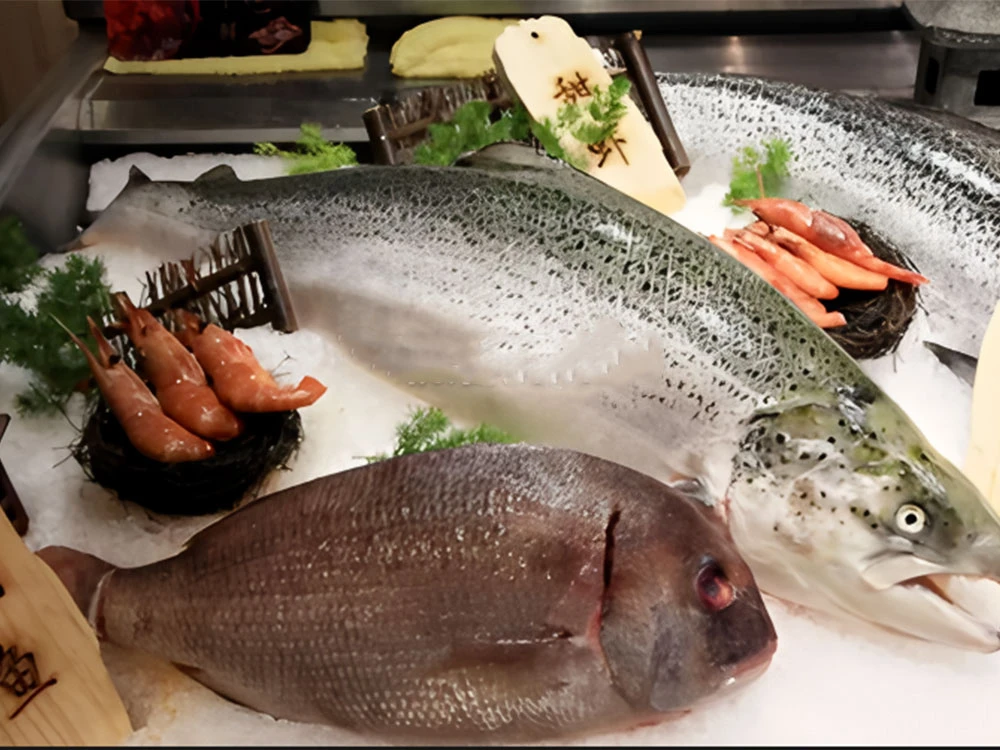
This highly efficient “source sterilization” treatment can directly slow down the spoilage of seafood. Experimental data shows that fish treated with hypochlorous acid water and preserved with hypochlorous acid ice exhibits significantly better freshness than fish preserved with tap water ice. Extending its shelf life by 4 to 5 days. For high-end ingredients such as salmon and white shrimp that rely on cold chain transportation. This translates to lower spoilage rates and a wider delivery radius. Currently, food processing companies in Shanghai and other areas have begun introducing customized hypochlorous acid generators specifically for the sterilization and preservation of salmon and Japanese cuisine ingredients, locking in freshness by controlling the initial microbial count.
Hypochlorous acid safety, no residue, real green disinfection
Food safety is the bottom line. Although the traditional chlorine disinfectant is effective, it is easy to produce chemical residues on the surface of food, and accompanied by a pungent chlorine taste. In contrast, hypochlorous acid is extremely unstable and rapidly reduces to water after reaction with organic matter or visible light decomposition.
Therefore, the use of hypochlorous acid water to clean seafood does not need to carry out cumbersome secondary rinsing like the use of traditional disinfectants, which not only saves a lot of water, but also avoids the risk of chemical residues caused by dirty rinsing, which perfectly conforms to the pursuit of modern consumers for “no addition” and “original taste” seafood