

Due to the continuous large-scale and intensive development of aquaculture industry today. The effective management of water environment and disease prevention and control are the key to determine the success or failure of aquaculture and economic benefits. Although the traditional disinfection methods such as chlorine gas, chlorine dioxide, bleaching powder, etc., have certain effects. They also have the problems of large residual toxicity. Strong irritation, easy to produce harmful by-products. And high operation risk. In recent years. Hypochlorous acid generator technology, a more safe, efficient and environmentally friendly disinfection technology, is gradually showing its great potential and application advantages in the field of aquaculture.

Hypochlorous acid generator: principle and characteristics
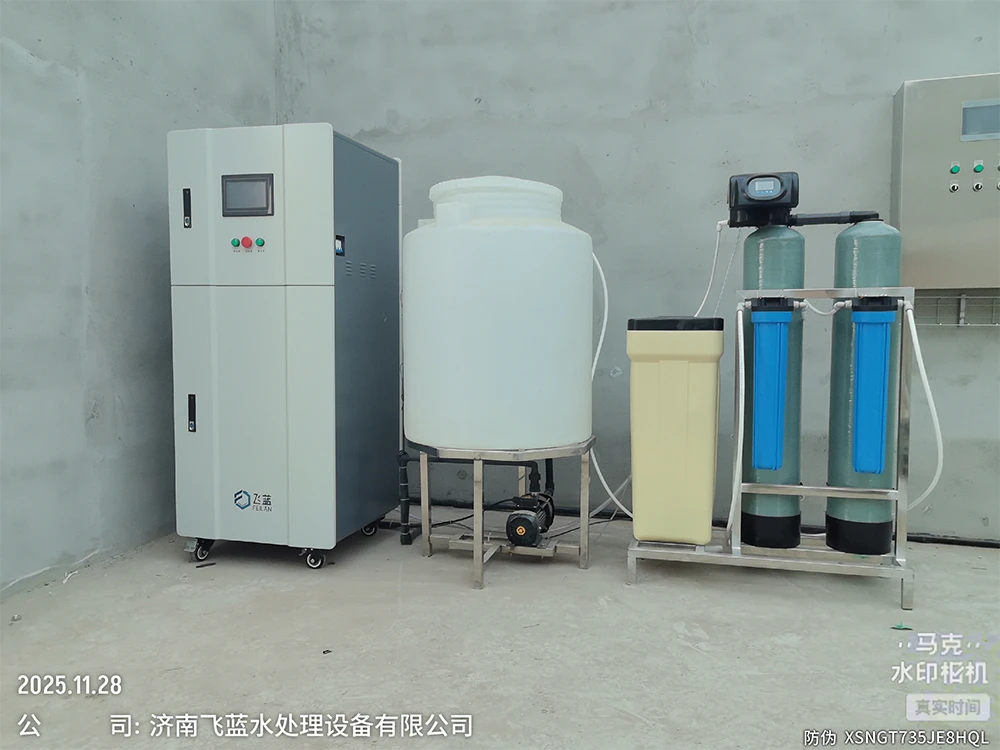
Firstly Hypochlorous acid generator is a kind of equipment that prepares high purity and high activity hypochlorous acid disinfectant on the spot by electrolysis of low concentration salt water (or dilute hydrochloric acid). The core reaction is that in a separateless or special separator electrolyzer. Chloride ions are oxidized at the anode to generate chlorine gas. Which is quickly dissolved in water and hydrolyzed to generate hypochlorous acid.
At the same time Compared with the traditional chlorine-containing disinfectant. The hypochlorous acid solution produced by the generator has remarkable characteristics.
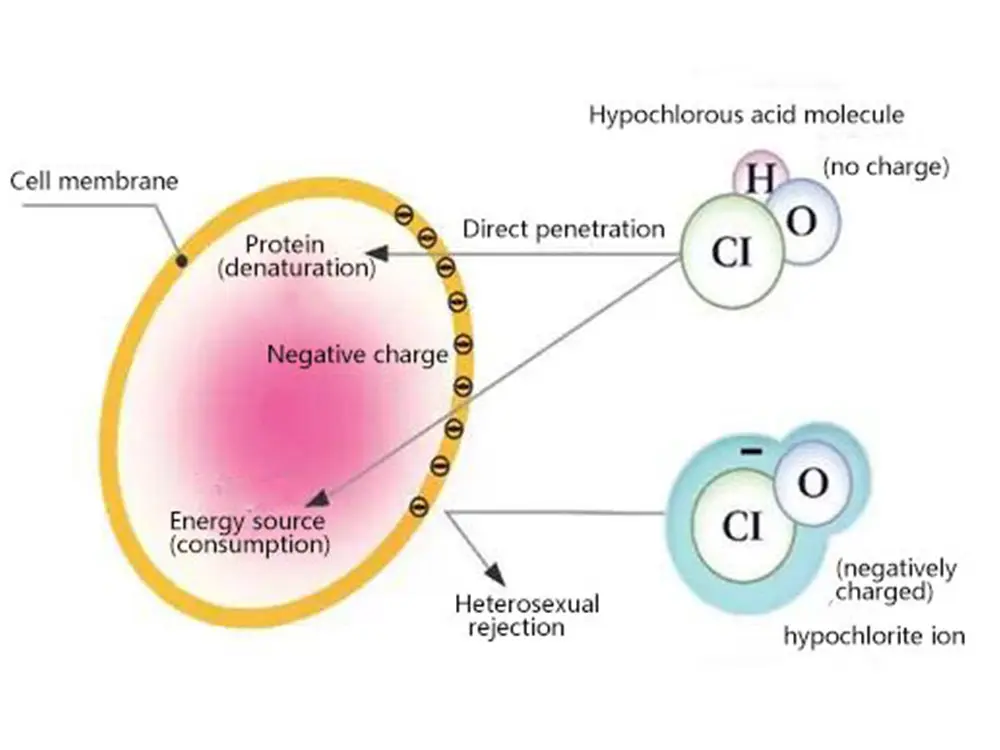
High activity: Hypochlorous acid is a neutral small molecule. Can more quickly penetrate the microbial cell wall/membrane. Oxidative damage to its protein. Nucleic acid and other key structures, bactericidal, viricidal efficiency is much higher than hypochlorite ion.
High purity: prepared on site. The proportion of hypochlorous acid in the effective chlorine components is high, less impurities, and does not contain sodium hydroxide and other stabilizers as common in commercial sodium hypochlorite.
Safe and convenient: on-demand production, concentration can be accurately controlled, avoiding the risk of storage and transportation of hazardous chemicals (such as liquid chlorine).
Good environmental protection: decompose into water, chloride ion and trace oxygen after disinfection, no persistent toxic residue, environmentally friendly.
Application advantages of hypochlorous acid in aquaculture
The application of hypochlorous acid generator technology to aquaculture water treatment can bring multi-dimensional and systematic improvement for aquaculture production
1. Excellent and broad spectrum of pathogen inactivation ability
High efficiency and fast: Hypochlorous acid has a strong killing effect on bacteria (such as Vibrio, aeromonas), viruses (such as white spot syndrome virus, carp spring viremia virus), fungi (water mold), parasite cysts and larvae and other common aquatic pathogens, and the action speed is very fast, can effectively cut off the transmission chain of pathogens.
Prevention and control of diseases: regular use of low-concentration hypochlorous acid solution for water disinfection can significantly reduce the load of pathogenic microorganisms in aquaculture water, prevent the occurrence of explosive diseases, and reduce the use of antibiotics and other chemical drugs.
2. Excellent biosafety and breeding object friendliness
Low irritability: Hypochlorous acid is close to neutral. And its irritability to gills, skin and mucosa of aquaculture animals such as fish, shrimp and crab is far lower than that of strong acid, strong alkali or strong irritant traditional disinfectant, and it is not easy to cause animal stress reaction after use.
High safety: at the recommended concentration, it is safe for breeding animals and does not affect their normal feeding and activities. And because of its easy to decompose characteristics. Will not accumulate in the body. To ensure the edible safety of aquatic products.
3. Improve water quality and breeding environment
Oxidizing ORGANIC MATTER: HYPOCHLORous acid CAN effectively oxidise and decompose ammonia nitrogen, nitrite, hydrogen sulfide and other harmful substances in the water body. As well as some dissolved organic matter. Improve the substrate, purify the water, increase the dissolved oxygen in the water body (decomposition and oxygen production). And create a better growth environment for breeding animals.
4. Convenient operation and economy
On-site preparation, instant use: the farm can be produced at any time according to demand, the solution activity is high, the disinfection effect is guaranteed, and the problem of effective chlorine attenuation of commercial disinfectant in the storage process is avoided.
Controllable concentration, precise dosing: The generator can flexibly adjust the effective chlorine concentration of the output solution, which is easy to realize automatic and precise dosing, and adapt to different needs of different stages of aquaculture (such as empty pond disinfection, water maintenance during aquaculture, intensive disinfection during disease treatment).
Comprehensive cost advantage: Although the equipment has initial investment. The long-term operation mainly consumes salt and electricity. And the raw material cost is low. By reducing the loss of disease, reducing drug costs and improving the success rate of breeding. The comprehensive economic benefits are remarkable.
5. Environmental protection and sustainable development
Reduce drug residues and emissions: Reduce the use of traditional disinfectants and antibiotics. Reduce drug residues and harmful chemical emissions in aquaculture tail water. Meet the requirements of green and healthy aquaculture and environmental protection. And is conducive to the sustainable development of the industry.
No toxic by-products: under appropriate concentration and conditions. Hypochlorous acid disinfection is not easy to produce trihalomethane and other toxic by-products. And is more environmentally friendly.
Application scenarios and precautions of hypochlorous acid in aquaculture
Main application scenarios:
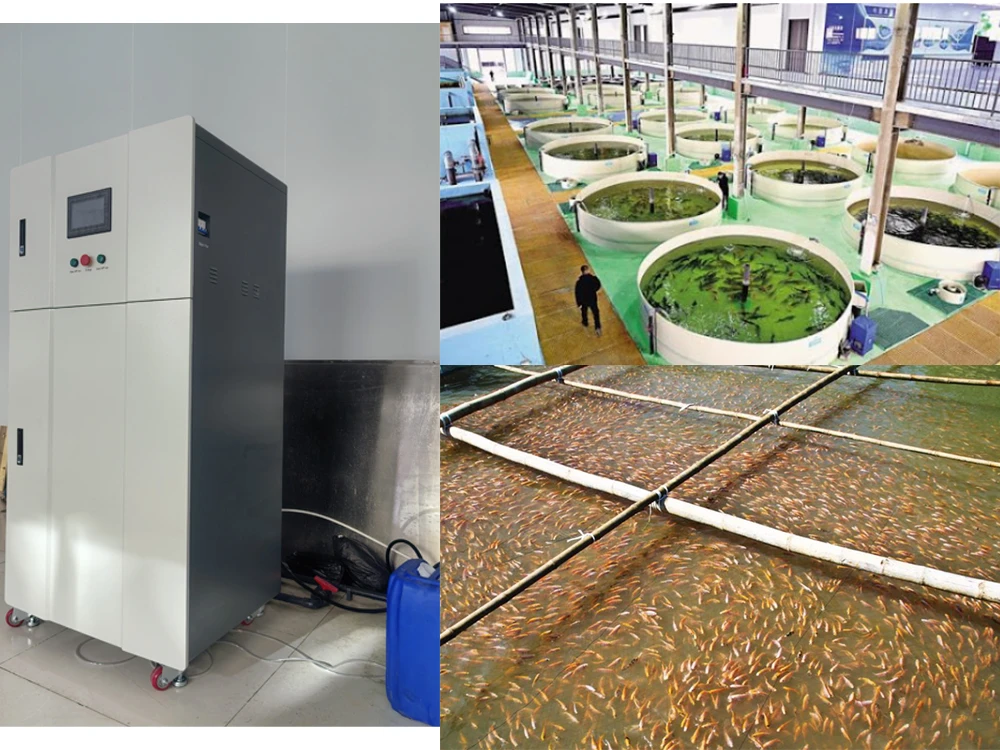
1,Regular disinfection and epidemic prevention of aquaculture water: daily or periodic water disinfection to maintain a good microbial environment.
2,Inlet and drainage disinfection: disinfection of water sources and discharge tailwater to prevent the introduction and spread of pathogens.
3,Sterilization of breeding facilities and tools: cleaning and disinfection of ponds, cages, instruments, feed tables, etc.
4,Auxiliary treatment during disease outbreak: under the guidance of veterinarians, as a means of water disinfection to assist in epidemic control.
5,Seedling immersion disinfection: Use very low concentration, short time immersion, in vitro pathogen inactivation of seedlings.
Notes for use:
1,Precise control of concentration: The optimal safe and effective concentration must be determine through experiments according to the water conditions (pH, temperature, organic matter content), breed and growth stage. General preventive disinfection uses low concentrations (such as 0.5-2 ppm available chlorine), and should be carefully increased during treatment.
2,Monitoring water quality parameters: The disinfection effect of hypochlorous acid is greatly affect by water pH (the best pH range is 6.0-7.5). pH, ammonia nitrogen and other indicators should be monitor before and after use.
3,Avoid mixing with other chemicals: It is strictly forbidden to use with acids, reducing agents and other chemicals at the same time to prevent toxic gases or reduce the effect.
4,Uniform sprinkling: ensure that the disinfectant is evenly distribute in the water body to avoid excessive local concentration.

FAQ
What is the role of hypochlorous acid in aquaculture?
Hypochlorous acid is a highly effective and broad-spectrum disinfectant. It is mainly use in aquaculture for:
Water disinfection: Kill bacteria, viruses, fungi and other pathogenic microorganisms in water to prevent disease outbreaks.
Equipment and pond disinfection: Cleaning and disinfection of breeding ponds, tools, pipes, etc., to reduce the risk of cross infection.
Improve water quality: degradation of organic pollutants, reduce ammonia nitrogen, nitrite content, improve the breeding environment.
Biological control: it can be safely use to sterilize seedlings or live organisms at specific concentrations to prevent pathogen invasion.
Note: The concentration should be strictly controll to avoid irritation or damage to aquatic animals.