

Food safety is the ultimate priority in modern food processing. Traditionally, facilities relied on harsh chemical sanitizers like chlorine bleach or quaternary ammonium. However, these chemicals often leave toxic residues. They can also damage equipment and irritate workers.
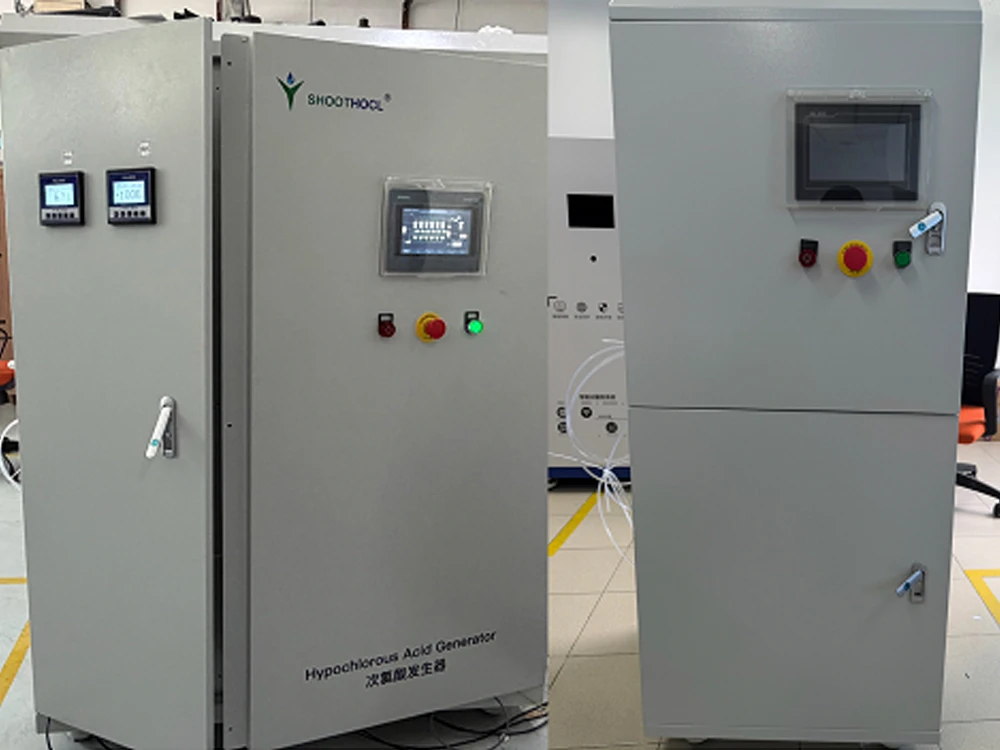
Today, a smarter solution is taking over: Hypochlorous Acid (HOCl) generators.
These advanced systems produce a powerful, eco-friendly sanitizer on-site. They require only water, salt, and also electricity. The resulting solution is highly effective, safe for humans, and fully compliant with US Food and Drug Administration (FDA) regulations.
Here is how HOCl generators are changing the game in food processing.
What is Hypochlorous Acid?
Hypochlorous acid is a weak acid. It is the exact same substance that human white blood cells produce to fight infections. Because of its unique chemical structure, HOCl carries a neutral electrical charge.
This neutrality is crucial. Bacteria have negatively charged cell walls. Typical chlorine sanitizers carry a negative charge, so they repel bacteria like matching magnets. HOCl, however, easily penetrates the bacterial cell wall. Once inside, it quickly destroys the cell from within.
Despite this aggressive action on pathogens, HOCl is completely non-toxic to humans and animals.
5 Core Sanitation Applications
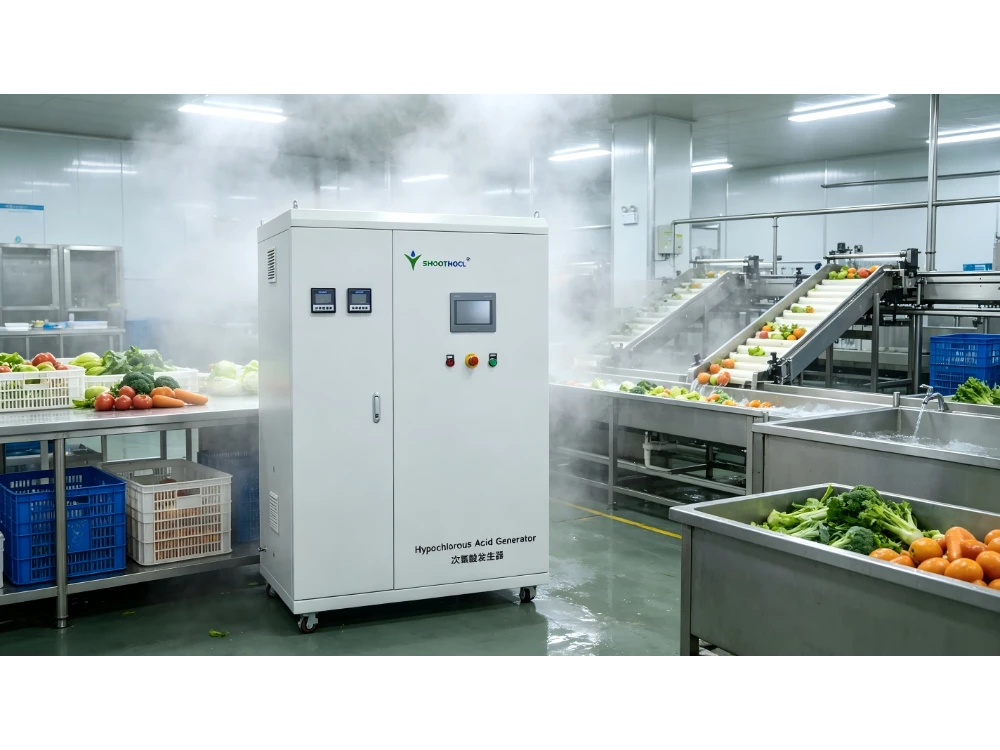
A single HOCl generator can supply sanitizer for your entire facility. You can use this versatile solution to clean and protect five primary areas:
1. Fresh Ingredients
Raw fruits, vegetables, seafood, and meat can carry harmful pathogens like E. coli, Salmonella, and Listeria. Washing these ingredients with HOCl kills these pathogens instantly. Furthermore, it slows down decay. This process significantly extends the shelf life of fresh produce without altering its taste, color, or texture.
2. Machinery and Equipment
Biofilms can easily build up on food contact surfaces, conveyor belts, and cutting tools. HOCl cuts through these biofilms effortlessly. Because HOCl has a neutral pH when generated correctly, it sanitizes your machinery without causing the heavy corrosion associated with traditional bleach.
3. Indoor Air Quality
Airborne pathogens and mold spores can easily contaminate clean food. You can run HOCl through facility ventilation or dedicated misting systems. This action continuously purifies the air, creating a truly clean production environment at the same time.
4. Packaging Materials
Food packaging must be completely sterile before it touches food. Rinsing or spraying plastic containers, bottles, and wraps with HOCl eliminates any microbial hazards.
5. Personnel Hygiene
Employee hand hygiene is the first line of defense against cross-contamination. HOCl makes an excellent, alcohol-free hand sanitizer. It does not dry out the skin or cause dermatitis, which encourages workers to sanitize their hands more frequently.
4 Flexible Methods of Application
Because HOCl is as gentle as water but incredibly lethal to microbes, you can apply it in several highly effective ways:
Soaking : This method works best for whole fruits, vegetables, and small equipment parts. Submerging items in an HOCl bath ensures that the sanitizer reaches every crevice and fold.
Spraying : You can install spray bars directly over conveyor belts. This setup continuously disinfects ingredients and also processing lines as they move through the facility.
Fogging : Ultrasonic humidifiers or dry-fogging machines can disperse HOCl into a fine mist. This mist fills entire rooms, sterilizing hard-to-reach corners and purifying the air without leaving wet residues.
lass=”yoast-text-mark” />>Wiping : Workers can use HOCl-soaked microfiber cloths to wipe down control panels, door handles, and also high-touch prep tables throughout the day.
Zero Residue, Maximum Safety
One of the greatest struggles in food processing is chemical residue. Traditional sanitizers often require a post-sanitation rinse with clean water to remove toxic chemicals at the same time.
HOCl solves this issue completely.
Once HOCl finishes reacting with organic matter or pathogens, it simply breaks down back into mild saltwater. It leaves absolutely no chemical residue behind. Therefore, you do not need to perform a final water rinse. This advantage saves your facility thousands of gallons of water every single day. It also accelerates your production timeline at the same time.
Meeting FDA and Regulatory Standards
Regulatory compliance can make or break a food processing business. Fortunately, HOCl produced by on-site generators meets the highest global standards.
The US Food and Drug Administration (FDA) recognizes HOCl as a safe food contact substance. Specifically, under 21 CFR 178.1010, FDA guidelines permit the use of electrolyzed water (HOCl) on food contact surfaces.
Additionally, the United States Department of Agriculture (USDA) allows its use in organic food production. The Environmental Protection Agency (EPA) also registers HOCl as an effective disinfectant against tough pathogens.
By using an HOCl generator, your facility remains fully compliant with strict safety regulations while actively reducing its carbon footprint.

Why On-Site Generation is Best
Buying pre-packaged HOCl is expensive because the chemical naturally degrades over time when exposed to air and sunlight.
On-site HOCl generators solve this shelf-life problem.
These compact machines sit right inside your facility, plumbed directly into your water supply. They produce fresh, highly active HOCl on demand. You get the exact concentration you need, exactly when you need it, for pennies on the gallon.
Ultimately, switching to an HOCl generator streamlines your supply chain, protects your workers, satisfies FDA regulators, and also guarantees the highest level of food safety from farm to table.
FAQ
How does HOCl compare to traditional chlorine bleach?
While both sanitize, they are very different:
Safety: Bleach (Sodium Hypochlorite) has a high pH, is highly corrosive to machinery, and is toxic to workers. HOCl has a near-neutral pH, is gentle on equipment, and is safe for human skin.
<strong>Efficacy: HOCl is up to 80 times more effective at killing microbes than bleach because its neutral charge allows it to rapidly penetrate cell walls.