

Today, Due to food safety has become a global concern. Therefore And the food processing industry is continuously seeking more efficient. Safer and more environmentally friendly disinfection solutions. Traditional chemical disinfectants such as chlorine-containing disinfectant, peracetic acid, etc., although effective. But often accompanied by corrosion equipment. Harmful residues. Strong irritation and environmental pollution and other problems. Hypochlorous acid generator. As a new field preparation technology. Is becoming the “guardian god” of the whole chain from raw material cleaning. Production line disinfection to finished product preservation in the field of food processing with its revolutionary advantages.

What is hypochlorous acid generator and why can it be used in food processing industry
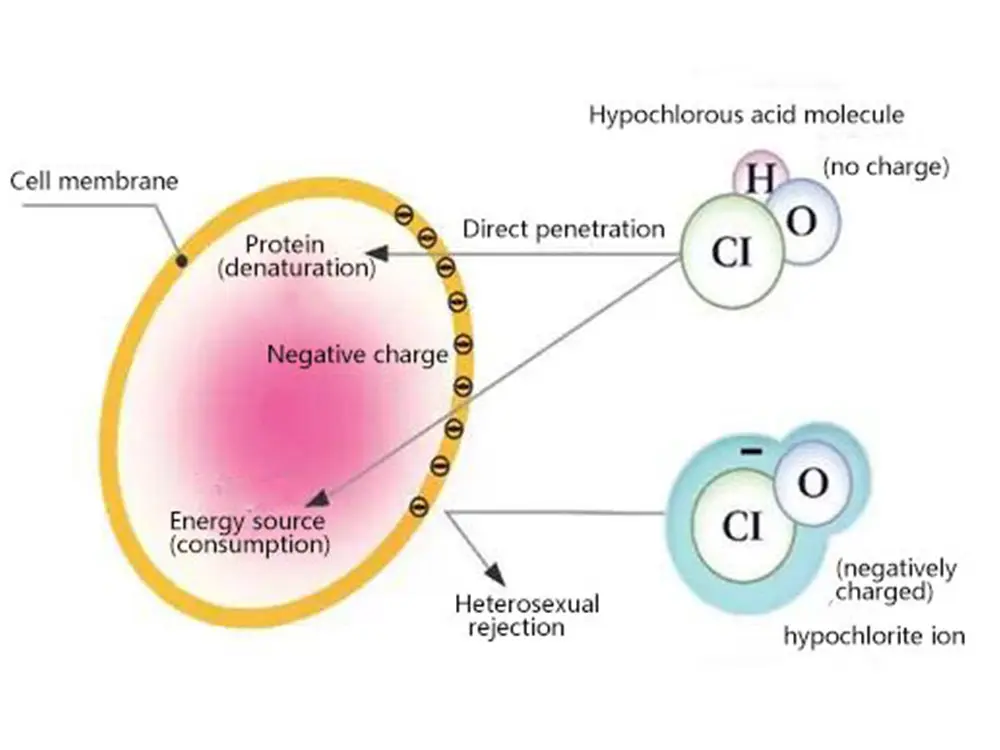
Hypochlorous acid (HClO) is an active substance naturally secreted by white blood cells of the human immune system to kill invading pathogens. It is a mild but highly effective natural fungicide. Its bactericidal mechanism is through the characteristics of small molecules and no charge. Which can quickly penetrate the microbial cell wall and destroy its internal structure. Resulting in cell death. Compared with the traditional sodium hypochlorite (84 disinfectant). The sterilization speed of hypochlorite can reach 80-100 times faster, and the concentration requirements are lower.
The hypochlorous acid generator. Through electrolysis technology. Only uses “salt (or dilute hydrochloric acid) and water” as raw materials. And generates high-purity hypochlorous acid solution with specified concentration in real time and stably on the spot. This “out-of-the-box” model is the cornerstone of many of its advantages.

Hypochlorous acid generator in the field of food applications core advantages
1,The broad spectrum of hypochlorous acid efficient sterilization, to ensure the safety of food
- High efficiency and broad spectrum: it can effectively kill common foodborne pathogens such as E. coli, Salmonella, Listeria, Staphylococcus aureus, norovirus, influenza virus, etc., and the sterilization rate is as high as 99.999%.
- Rapid action: Due to its strong permeability. It can work quickly within tens of seconds. And is suitable for the rapid disinfection of high-speed assembly lines without affecting the production cycle.
2. True zero chemical residue, in line with the highest safety standards
- After the completion of the task of sterilization. Hypochlorous acid will naturally reduce to ordinary water. Very trace chlorine components will quickly decompose. This means that there is no harmful chemical residue on the food surface. Which completely avoids the secondary pollution risk that may be brought by traditional disinfectants. And fully meets the strict requirements of HACCP, FDA and green food processing.
3.Hypochlorous acid has excellent food preservation function and prolongs shelf life
- The generated slightly acidic hypochlorous acid water (pH 5.0-6.5) not only kills bacteria. But also effectively inhibits the respiration and enzyme activity of fruits and vegetables after picking, delaying spoilage.
- Used for washing AQUATIC products and meat. It can significantly reduce the total number of initial colonies. Prolong the fresh-keeping period of 1-3 days. And maintain the original color and flavor of food materials. Reducing the loss of nutrients.
4. The hypochlorous acid generator has excellent operation safety and environmental friendliness
- Mild to human body: non-toxic, non-irritating and non-corrosive at concentrations (usually 50-200ppm). No special protection is needed when employees operate, which improves the working environment.
- Friendly to equipment: the corrosion of stainless steel and other metal equipment is far lower than sodium hypochlorite, greatly extending the life of equipment and reducing maintenance costs.
- Environmental zero burden: production raw materials are only salt and water, no toxic by-products, harmless to the environment after discharge, helping enterprises to achieve green and sustainable development.
5, hypochlorous acid generator significant comprehensive cost advantage
- The cost of raw materials is extremely low: only salt, water and electricity are needed, and the operating cost is only a fraction of the cost of purchasing finished disinfectants.
- Automation and precise control: Modern generator can be integrated with PLC system, according to the demand of precise control of concentration and pH value, cleaning and disinfection process automation, save labor and eliminate artificial ratio error.
- One dose of multi-use: from the workshop environment, equipment CIP cleaning, tool disinfection, staff hand hygiene, to raw material cleaning, finished product preservation, a set of system full coverage, simplify the procurement and management process.


Hypochlorous acid generator is not only a disinfection equipment, but also represents the transformation of food processing enterprises to safer, smarter and more responsible production methods. It transforms disinfection from a necessary “cost expenditure” to a “value investment” to improve product quality, extend shelf life, enhance brand reputation, and reduce overall risk.
With the continuous maturity of technology and the deepening of industry cognition, the site preparation of hypochlorous acid technology will become an indispensable infrastructure of modern food factories, and set up a solid, green and efficient scientific and technological barrier for the defense line of global food safety. Investment in hypochlorous acid generator is the vitality of the future competitiveness and sustainable development of the investment enterprise.
FAQ
Whether the safety of hypochlorous acid used in food processing has been certified
Yes. In many countries and regions (including China, the United States, Japan, and the European Union), food-grade hypochlorous acid has been approve by authorities as a food contact surface disinfectant, fruit and vegetable cleaning agent and even food processing aid. The key is that the generator equipment and its electrolysis process (usually dilute salt solution without diaphragm) must meet food safety standards, and the final solution must meet the national concentration and range of use. It is suggest to require suppliers to provide corresponding third-party safety test reports, equipment material certification and compliance with relevant regulations (such as China’s GB, America’s FDA, EPA, Japan’s Ministry of Health, Labor and Welfare).