

In the fresh cut flower industry, whether roses, lilies or chrysanthemums. The cut flowers after leaving the mother are vulnerable to rapid withering due to water corruption, pipe blockage and pathogen infection. Although traditional chemical preservatives have certain effects. They are often accompanied by toxic residues or complicated operations. In recent years, with the maturity of electrochemical technology. Hypochlorous acid (HOCl) prepared on site by hypochlorous acid generator is becoming a green revolution in the field of fresh cut flower preservation by virtue of its high efficiency, safety and economy.
Application advantage of hypochlorous acid generator in fresh cut flower preservation
1,Hypochlorous acid has the ultimate microbial control: Dredging the life channel from the source
The main reason for the decline of cut flowers is not leaf senescence. But the blockage of the pipe at the cut of the flower stem. Bacteria. Fungi and other microorganisms will breed in the flower stem incision. Blocking the pipe, resulting in water can not be transported to the flower head. And eventually cause the flower wilting and bending neck.
Hypochlorous acid is one of the most effective biocides. The study showed that THE use of slightly acidic hypochlorous acid water could reduce the number of bacteria on the stem end by 99%. Reduce the incidence of gray mold by 83%. And prolong the bottle life by 2.7 days. For perishable cut flowers such as chamomile and dahlia. Preservative solutions containing hypochlorous acid can significantly slow the wilting of leaves and keep stems unblocked. It not only disinfects, but also physically maintains the “water supply lifeline” of flowers.
2,Hypochlorous acid has excellent safety and environmental protection: double friendly to people and flowers
Traditional preservation methods often involve the use of silver ions, 8-hydroxyquinoline (8-HQS), or high concentrations of bleach. These chemicals are not only irritating to the skin and respiratory system of users (florists, florists, home users), but also a burden to the environment due to high concentrations of emissions.
Hypochlorous acid (HOCl) is a naturally occurring substance in the human immune system. It is produced by hypochlorous acid generator by electrolysis of dilute hydrochloric acid or saline water. It has the following significant advantages:
- No harmful residue: quickly decomposed into ordinary water after sterilization, no pollution to the environment.
- Mild to plant tissue: Unlike sodium hypochlorite (sodium salt can damage plants), low concentrations of slightly acidic hypochlorite do not cause burns to the petals, and do not affect the flower diameter, petal color and chlorophyll content, even in the treatment of delicate phalanthes and roses, can keep their flower bright color.
- Easy to use: the generator is ready to use, avoiding the storage risk and transportation cost of high concentration stock solution
3,Hypochlorous acid can maintain water balance and physiological metabolism of fresh cut flowers
Cut flowers preservation is not only sterilization, but also to maintain cell viability. Hypochlorous acid indirectly promoted water absorption of flower branches by inhibiting microbial activities.
The experimental data showed that the fresh weight of cut flowers could be maintained by using the preservative solution containing hypochlorous acid. For example, in chrysanthemum preservation, the combination of hypochlorous acid and sucrose can maintain the fresh weight of cut flowers at more than 100% for 14 days. While the fresh weight of cut flowers in clean water has decreased significantly on the fifth day. This maintenance of water balance directly translates into a longer ornamental period and larger flower diameter.
In addition, recent collaborative studies have found that hypochlorous acid treatment can also activate the activities of antioxidant enzymes (such as SOD and POD) in cut flowers, reduce the release rate of ethylene. And thus physiologically delay the aging process.
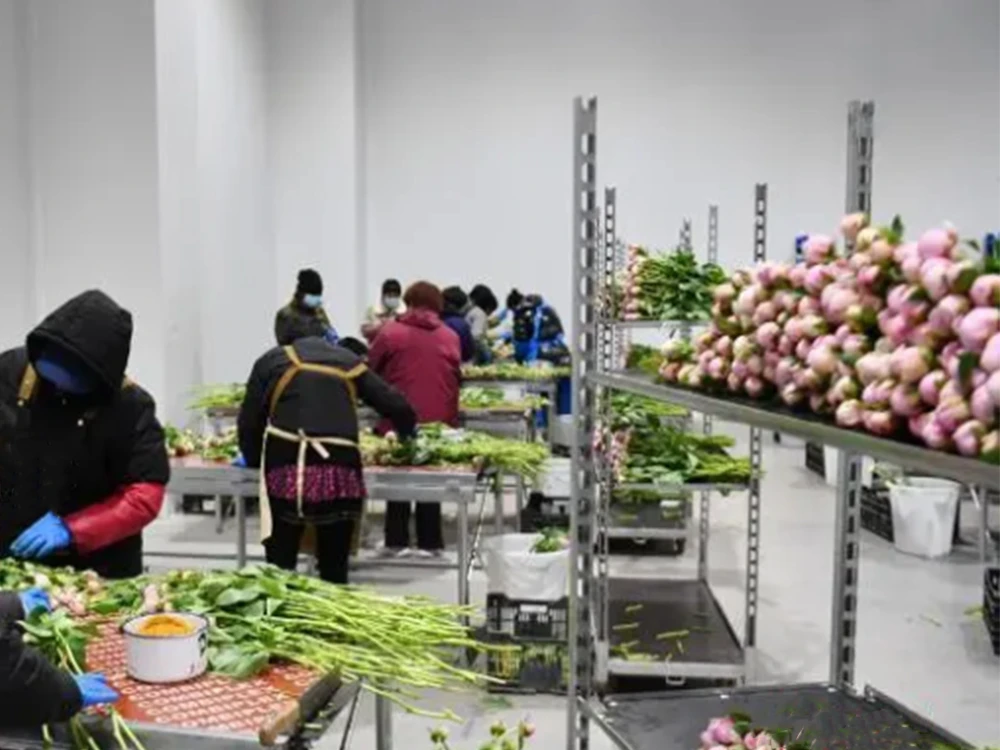
The economic benefit of hypochlorous acid generator: the source of living water produced by oneself
For large growers, wholesalers or florists, the purchase of finished products is an ongoing cost. And hypochlorous acid generator provides a low cost, high concentration adjustable solution.
The devices usually operate with little more than salt, water and electricity. Users can adjust the concentration flexibly according to different flower varieties:
- For perishable gerbera, dahlia, can use a higher concentration of stem base immersion disinfection.
- For delicate flowers such as stars, low concentration is used for space atomization or hydroponics.
This kind of ready-to-use mode not only greatly reduces the processing cost of each liter of freshness liquid. But also ensures the freshness and activity of the fungicide. And avoids the failure of traditional agents due to long storage.

FAQ
Does hypochlorous acid treatment affect the openness of flowers?
It will not affect normal opening, but will help the flower blossom fully.
Because hypochlorous acid effectively kills bacteria at the stem incision (studies have shown that the number of bacteria at the stem end can be reduce by 99%), it keeps the tube unblock, and water and nutrients can be smoothly deliver to the flower head, so the flower can open more fully.
Popular understanding: Hypochlorous acid does a “scavenger” job – unclogging the “blood vessels”, rather than inhibiting the natural opening process of flowers.