

Recently, a customer ordered two sets of hypochlorous acid generators (1000L/H, 3000L/H, concentration: 50-100PPM, adjustable) for a real-time odor removal system in the pig farm. This system combines an efficient groundwater treatment system. A filtration and softening front-end water treatment system. And an electrolytic salt equipment with readily available raw materials. It is about to be put into use. This indicates that the breeding enterprise has taken a crucial step in establishing a biosecurity system and managing the ecological environment. The imported hypochlorous acid generators will be fully applied to all aspects of the pig farm. Leveraging their outstanding sterilization and disinfection-odor removal capabilities to build a solid health barrier for the pig herd. And it effectively improves the environment of the farm and its surrounding areas.

The pain points and demands of traditional livestock farms
The livestock farms, while achieving high production efficiency. Also encounter several significant challenges, including the following points.
1,The pressure of epidemic disease prevention is high: In high-density breeding environments, pathogenic microorganisms (such as African swine fever virus. Foot-and-mouth disease virus, Escherichia coli, Salmonella, etc.) can spread rapidly. Traditional chemical disinfectants have problems such as drug resistance, corrosiveness and residue.
2,Environmental odor problem is prominent: The ammonia and hydrogen sulfide gases produced by livestock excrement not only seriously affect the healthy growth of pigs (such as respiratory diseases). But have also become the most pressing environmental problem that troubles the employees in the breeding industry and the surrounding communities.
3,Food safety and environmental protection requirements: Consumers’ demands for food safety are constantly increasing. And environmental regulations are becoming increasingly strict. There is an urgent need for a safe, efficient, and residue-free green solution.
The technical advantages of the hypochlorous acid generator
The hypochlorous acid generator shipped this time adopts advanced electrolysis technology. It only requires salt (NaCl) and water to produce high-concentration hypochlorous acid disinfectant on-site immediately. Hypochlorous acid (HClO) is a substance naturally secreted by human immune cells. Its sterilization mechanism is to penetrate the cell wall of microorganisms and destroy their structure. Thereby achieving rapid and broad-spectrum sterilization effects.
1,High-efficiency broad-spectrum sterilization: Hypochlorous acid can effectively kill bacteria, viruses, fungi and spores. It takes effect quickly and has excellent inactivation ability against major disease pathogens such as African Swine Fever Virus (ASFV).,
2,Completely break down the source of odors: Hypochlorous acid can actively undergo oxidation-reduction reactions with foul molecules such as ammonia (NH₃) and hydrogen sulfide (H₂S). Decomposing them into harmless salts and water, thus eliminating odors at the source rather than simply masking them.
3,Safe, non-toxic and residue-free: Hypochlorous acid is harmless to humans and animals. Has no irritating odor, and is non-corrosive (at appropriate concentrations). After use, it decomposes into water, leaving no toxic or harmful substances behind, ensuring the safety of pork products.,
4,Cost reduction and efficiency improvement: The equipment has a high degree of automation. Is easy to operate, and the raw materials are only salt and water. The cost is low, which can significantly reduce the long-term expenses for purchasing finished disinfectants and the costs of storage and transportation.
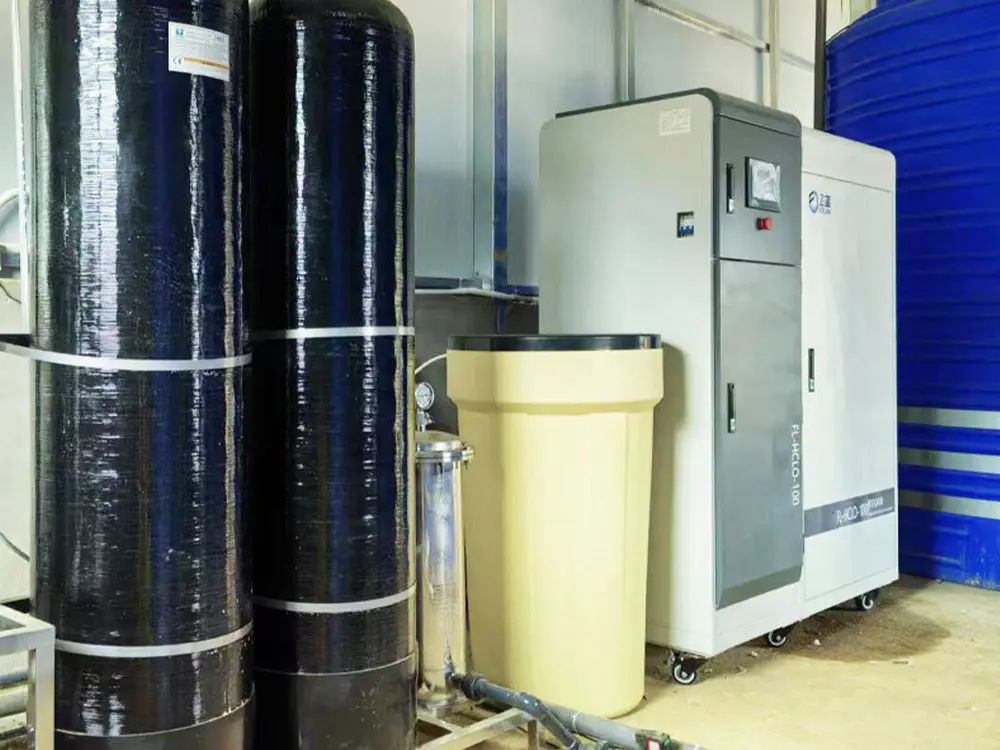

On-site customer feedback
The person in charge of the pig farm said: “Introducing the hypochlorous acid generator is a key strategy for us to enhance the biosecurity level. The hypochlorite generator can significantly reduce the incidence and mortality rate of pigs. And decrease the use of antibiotics. At the same time, it can completely improve the working environment of the farm. Reduce the conflicts with neighbors caused by odor problems. Fulfill the environmental protection social responsibility of the enterprise. And achieve the sustainable development goals of healthy and green farming.”

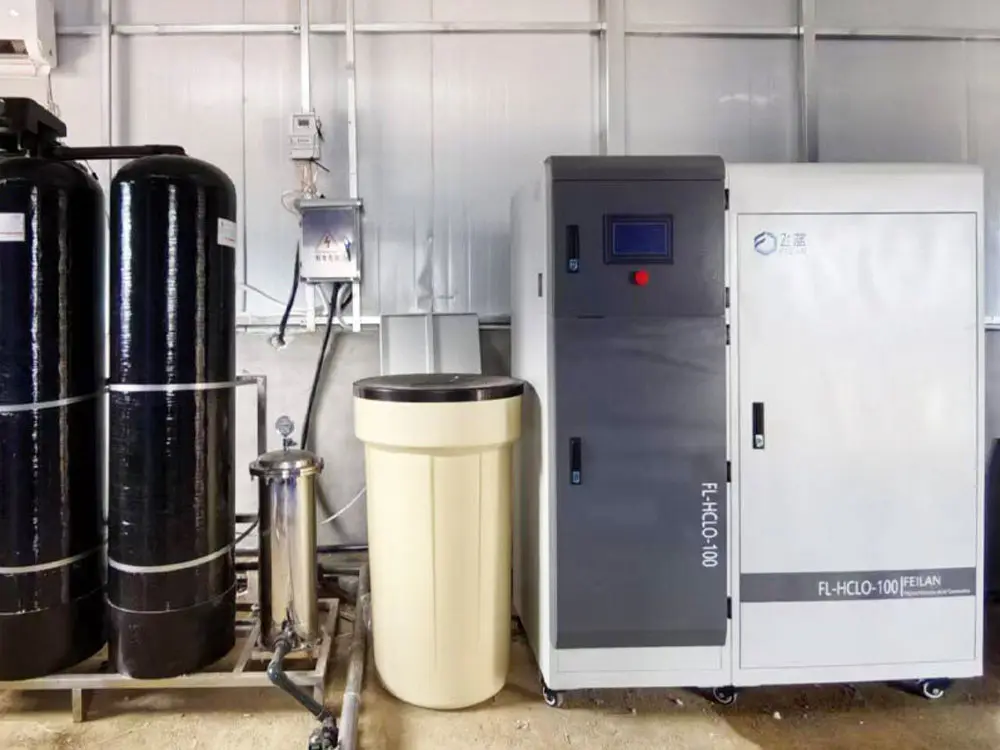
FAQ
Compared with traditional chlorine-based disinfectants (such as 84 disinfectant), what are the core advantages of using hypochlorous acid (HClO) in livestock farms?
Highly effective, broad-spectrum and safe: Hypochlorous acid (HClO) is a small molecule without an electric charge, which can quickly penetrate the cell walls of microorganisms and render them inactive. Its sterilization efficiency is much higher than that of traditional chlorine preparations (such as sodium hypochlorite, the main component of 84 disinfectant). More importantly, it is very friendly to humans, animals and the environment. After its action, it decomposes into water, leaving no harmful residues. This avoids the irritation and stress response of the respiratory mucosa of animals caused by chemical residues, enabling “animal disinfection while carrying them”.
Strong deodorization: The odors in livestock farms mainly come from substances such as ammonia (NH₃) and hydrogen sulfide (H₂S). Hypochlorous acid can directly react with these odor molecules to decompose them into odorless and tasteless substances (such as N₂, water, sodium chloride, etc.), eliminating the odor at its source instead of simply using fragrance to cover it up.
Low cost and convenient to use: The generator only requires salt (or dilute salt water) and water. Through electrolysis, it can produce high-concentration hypochlorous acid solution concentrate on-site. This significantly reduces the cost of long-term purchase and transportation of chemical disinfectants and the logistics risks, achieving “production immediately for use”, ensuring the freshness and effectiveness of the disinfectant solution.