

In the production of bean sprouts. Throughout the entire process from seed soaking and cleaning to cultivation. Microbial control is the key factor determining success or failure. Although traditional disinfection methods (such as sodium hypochlorite, potassium permanganate or chlorine dioxide) can play a certain role, they often come with chemical residues. Irritating odors, effects on germination rate and equipment corrosion problems.
In recent years, with the advancement of agricultural technology. The micro-acidic/weakly acidic hypochlorous acid water produced by hypochlorous acid generators has gradually become a highly regarded “new tool” in the field of intelligent bean sprout production.

The drawbacks of traditional disinfection methods
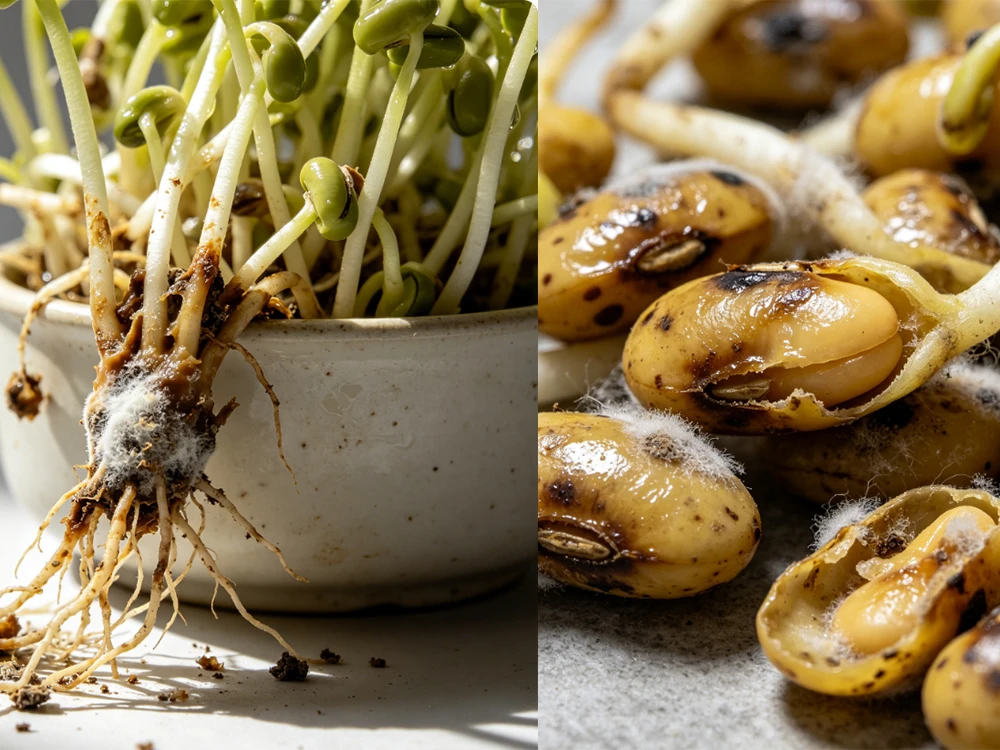
The surfaces of bean sprout seeds (such as green beans, yellow beans, etc.) often carry a large number of microorganisms. Including bacterial and fungal spores that hide in the gaps of the seed coat. Studies have shown that if these pathogenic bacteria cannot be effectively controlled during the initial stage of germination. They will grow exponentially in the high-temperature and high-humidity environment of the germination process. Eventually causing the roots of the bean sprouts to rot. The stems to become sticky, emitting odors, and even resulting in the total spoilage of the batch.
Although high concentrations of sodium hypochlorite soaking can kill some bacteria, it has a strong alkalinity (with a high pH) and the concentration often needs to be as high as 2000-10000 ppm to achieve the desired effect. This can easily damage the seed embryos, resulting in uneven germination or reduced vitality. Moreover, the “chemical odor” often reported by consumers also stems from this.
Comparison of hypochlorous acid generator with other chemical agents
The hypochlorous acid generator electrolyzes dilute hydrochloric acid or table salt to produce high-purity and low-concentration hypochlorous acid water on demand. The effective chlorine form of this water is mainly hypochlorous acid (HClO) molecules.
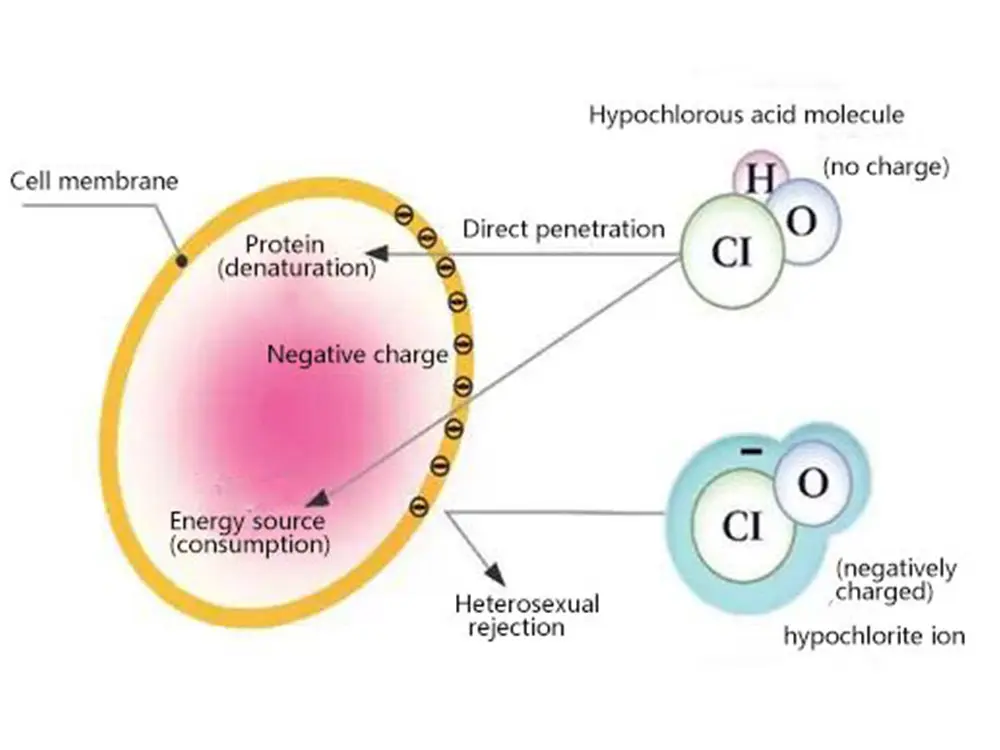
Unlike sodium hypochlorite (bleach), the hypochlorous acid molecule is electrically neutral and can easily penetrate the cell walls of bacteria. Studies have shown that the 30ppm slightly acidic hypochlorous acid water produced by a hypochlorous acid generator has a much stronger sterilization effect than traditional high-concentration disinfectants. Soaking seeds in a 30-100ppm concentration before sowing not only has excellent sterilization effects but also does not affect the germination potential of the seeds at all.
Hypochlorous acid promotes the growth and quality of bean sprouts
Many producers worry that the disinfectants will inhibit sprout growth. However, modern research has found that the appropriate concentration of hypochlorous acid water has a “growth promoting” effect.
- Significant growth promotion effect: The experimental data showed that the length of the embryonic axis and radicle produced by using electrogenic functional water (the main component was hypochlorous acid) were 20.51% and 8.80% higher than that of the tap water control group, respectively.
- Nutritional quality leap: Recent studies (published in 2025) indicate that hypochlorous acid combined with hydro-rich water treatment can significantly improve the nutritional indicators of mung bean sprouts. The soluble protein content was increased by 67.1%. The total phenol content was increased by 30.5%. And the total flavonoid content was increased by 35.2%. And the antioxidant capacity of bean sprouts was significantly enhanced. This means that hypochlorous acid is not only a disinfectant. But also a “growth regulator”.
Hypochlorous acid zero residue safety, goodbye to chemical pollution
The ultimate advantage of hypochlorous water is its “naturalness”. Hypochlorous acid is a substance secrete by the body’s immune system (white blood cells) to kill germs. When it acts on organic matter or in light, it will quickly reduce to water.
In the experiment. Even if the bean sprout was soak in 400ppm hypochlorous acid water. The final product was detect without residual chlorine. This fundamentally solves the food safety pain points of traditional bean sprouts. Such as “heavy taste of bleach powder” and “drug residue”. And is fully in line with the production standards of green food.
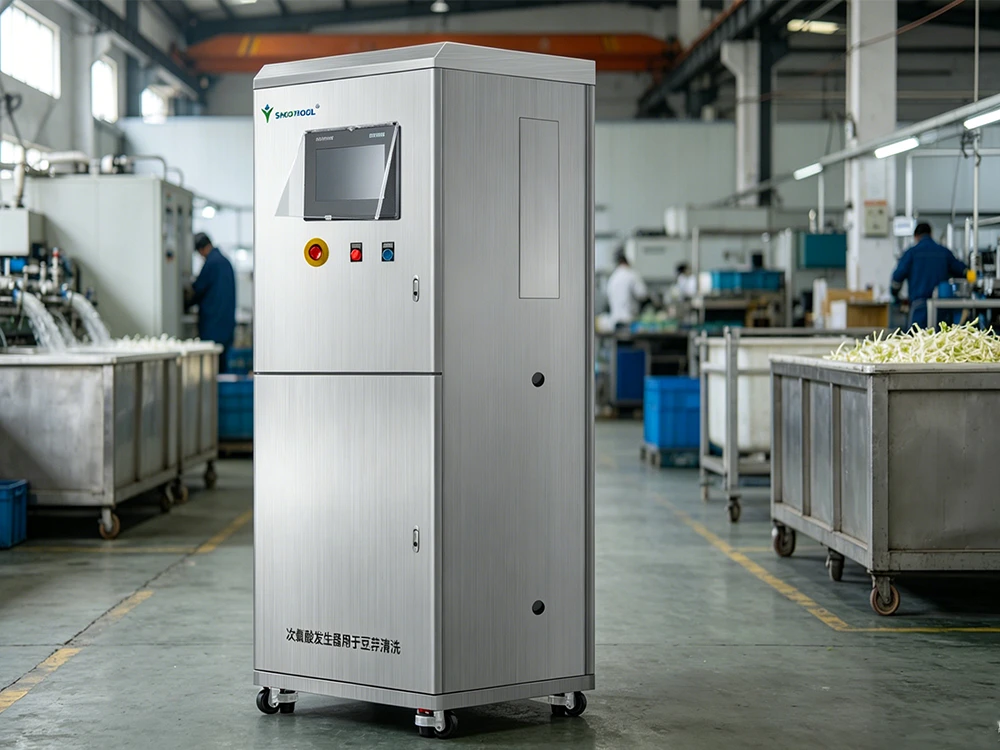
Application scenario of hypochlorous acid generator in bean sprouts
In a modern sprouts factory or home DIY cultivation. With hypochlorous acid generator. The disinfection process can be simplified to a “one-stop” solution:
1,Seed immersion disinfection:
It is common to use 20 to 50ppm of slightly acidic hypochlorous acid water instead of tap water to soak beans. Compared with the traditional long-term soaking for more than 2 hours. Hypochlorous acid water could kill the recessive bacteria in the deep layer of seed coat in a short time. And did not cause seed hypoxia or germ damage.
2,Spray and wash during the incubation period
The sprouts were spray with low concentration (10-30ppm) hypochlorous acid water regularly during growth. This not only inhibits the formation of bacterial biofilm in the incubation container, but also provides a clean water environment for the sprout roots, significantly reducing the rate of root rot (from 10.02% to 3.54% in the study).
3,Clean and keep fresh after harvesting
After harvesting, the bean sprouts are wash with hypochlorous acid water for a short time, which can effectively reduce the total number of initial colonies, prolong the shelf life of bean sprouts under cold storage conditions, and maintain the crisp, tender and white appearance of bean sprouts

For bean sprout production enterprises, the introduction of hypochlorous acid generator is not only an upgrade of equipment, but also an upgrade of food safety concept. It allows each bean sprout to truly return to the natural taste of “water” and “seed”.