

The demand for safe, reliable, and cost-effective water disinfection solutions continues to grow globally. For municipal water treatment plants (WTPs), ensuring the delivery of potable water free from harmful pathogens is paramount. Traditionally, WTPs have relied on bulk chlorine gas or commercially supplied sodium hypochlorite (NaOCl) for disinfection. However, these methods often present significant safety, logistical, and economic challenges.
SHOOT, a leading innovator in water treatment technology, offers a robust and highly efficient solution: the SHOOT Sodium Hypochlorite Generator. This advanced system enables WTPs to produce fresh, high-quality sodium hypochlorite solution on-site, using only common salt, water, and also electricity. This eliminates the need for transporting and storing hazardous chemicals, enhancing safety, reducing operational costs, and ensuring a consistent supply of disinfectant.
The Imperative of On-Site Disinfection in Water Treatment
ffective disinfection is a critical barrier against waterborne diseases. Sodium hypochlorite, often referred to as liquid bleach, is a widely recognized and effective disinfectant, capable of inactivating a broad spectrum of microorganisms, including bacteria, viruses, and protozoa.
However, the conventional methods of acquiring sodium hypochlorite come with inherent drawbacks:
Bulk Chlorine Gas: While highly effective, chlorine gas is extremely toxic and poses a severe safety risk in the event of a leak. Its transportation and storage require stringent safety protocols, specialized equipment, and highly trained personnel, leading to high capital and operational expenditures. Public perception and regulatory pressures are increasingly pushing for alternatives to gaseous chlorine.
Commercial Sodium Hypochlorite Solutions: Pre-manufactured sodium hypochlorite solutions typically contain higher concentrations (e.g., 10-15%) and degrade over time, losing their efficacy. This degradation is accelerated by heat, light, and contaminants, necessitating frequent replenishment and careful storage. Transportation costs, potential for spills, and the need for large storage volumes add to the operational burden.
On-site generation of sodium hypochlorite addresses these challenges directly, offering a safer, more sustainable, and economically advantageous alternative. By producing NaOCl at the point of use, WTPs can:
Enhance Safety: Eliminate the risks associated with handling and storing hazardous chemicals. Salt, the primary raw material, is non-hazardous and easy to manage.
Reduce Costs: Significant savings on chemical procurement, transportation, and specialized storage facilities. The cost of producing NaOCl on-site is often significantly lower than purchasing commercial solutions.
Improve Efficacy: Freshly generated NaOCl is more potent than stored solutions, as it has not undergone degradation, ensuring optimal disinfection performance.
Ensure Supply Security: Self-sufficiency in disinfectant production mitigates supply chain disruptions and ensures continuous operation, even in emergencies.
Simplify Operations: Automated systems reduce the need for manual handling of chemicals, improving operational efficiency.
SHOOT Sodium Hypochlorite Generator: Core Technology and Features
The SHOOT Sodium Hypochlorite Generator is engineered for reliability, efficiency, and ease of use, making it an ideal solution for water treatment plants of all sizes. The system utilizes a proven electrochemical process to convert a dilute brine solution into a low-concentration sodium hypochlorite solution at the same time.
How it Works: The Electrochemical Process
The fundamental principle behind the SHOOT generator is the electrolysis of sodium chloride (salt) solution.
Brine Preparation: High-purity industrial salt (NaCl) is dissolved in softened water to create a saturated brine solution. This brine is then diluted to a specific concentration suitable for electrolysis.
Electrolysis: The dilute brine is fed into an electrolytic cell, which contains a series of electrodes (anodes and cathodes) typically made of dimensionally stable anodes (DSAs) coated with precious metals (e.g., ruthenium and iridium oxide) to ensure high efficiency and durability. A direct current (DC) is applied across these electrodes.
Chemical Reactions:
At the anode (positive electrode): Chloride ions () are oxidized to chlorine gas ().
At the cathode (negative electrode): Water molecules () are reduced to hydrogen gas () and hydroxide ions ().
In the bulk solution, chlorine gas rapidly reacts with hydroxide ions to form hypochlorous acid (HClO) and hydrochloric acid (HCl).
The hypochlorous acid then dissociates to form hypochlorite ions () and hydrogen ions (). The equilibrium between HClO and is pH-dependent. At the typical slightly alkaline pH of generated hypochlorite, the hypochlorite ion is the predominant species.
The net reaction results in the formation of sodium hypochlorite () solution and hydrogen gas ().
Advantages and Features of SHOOT Generators
Modular and Scalable Design: SHOOT generators are available in various capacities, from small units for compact WTPs to large-scale systems capable of producing thousands of pounds per day of equivalent chlorine, allowing for easy expansion as demand grows at the same time.
High Efficiency Electrolytic Cells: Utilizing advanced electrode materials and cell designs, SHOOT generators maximize conversion efficiency, minimizing power consumption and salt usage.
Robust Construction: Built with high-quality, corrosion-resistant materials (e.g., FRP, PVC, CPVC, titanium) to ensure long operational life in harsh WTP environments.
Fully Automated Operation: Integrated PLC and HMI provide hands-off operation, automatic fault detection, and remote monitoring capabilities, reducing operator intervention at the same time.
Advanced Safety Features: Comprehensive safety interlocks, hydrogen detection, and ventilation systems ensure the safe operation of the entire plant. Hydrogen gas is diluted to below its lower explosive limit (LEL) before venting.
Low Maintenance: Designed for ease of maintenance, with accessible components and self-cleaning cycles to minimize scale buildup.
Compliance with Standards: Engineered to meet or exceed relevant international and local standards for water treatment equipment and chemical generation at the same time.
Customization: SHOOT offers customized solutions to integrate seamlessly with existing WTP infrastructure and specific operational requirements.
Factory Acceptance Testing (FAT): Guaranteeing Performance
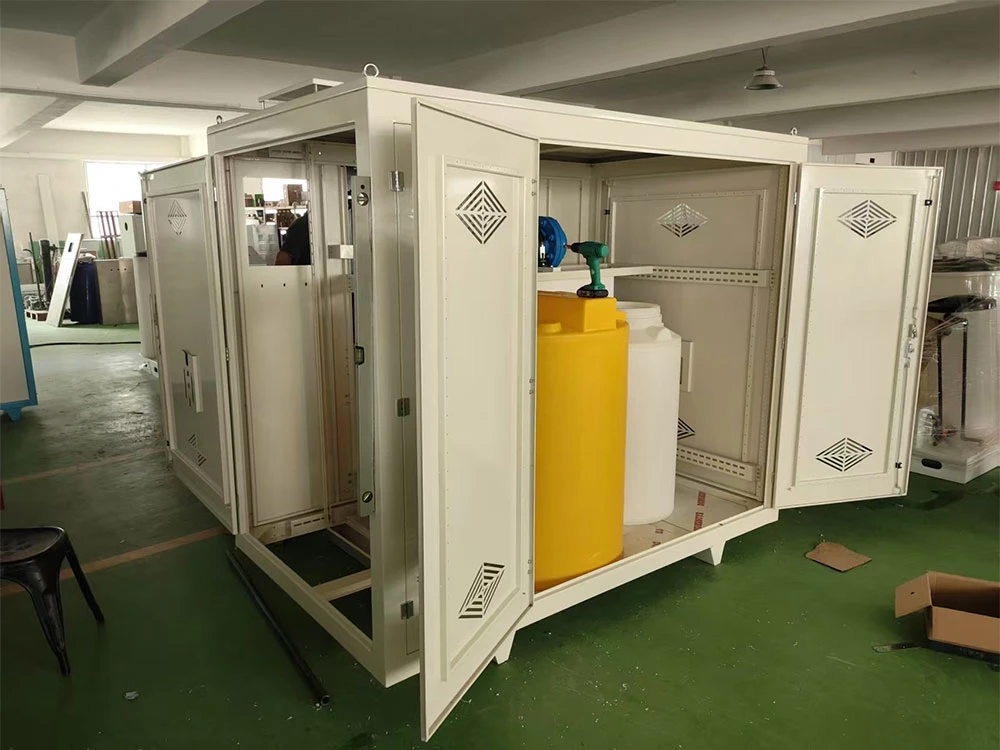
Factory Acceptance Testing (FAT): Guaranteeing Performance
Before any SHOOT Sodium Hypochlorite Generator leaves our facility, it undergoes a rigorous Factory Acceptance Test (FAT). The FAT is a critical verification step that ensures the system meets all design specifications, performance criteria, and the client’s contractual requirements. This typically involves:
Visual Inspection: A comprehensive check of the entire system for proper assembly, material quality, workmanship, labeling, and completeness according to approved drawings.
Functional Testing: Each subsystem (brine preparation, water softening, electrolysis, degassing, control system) is individually teste for proper operation.
Pump and Valve Operation: Verification of all pumps, valves, and actuators.
Sensor Calibration: Calibration of all critical sensors (flow, pressure, level, temperature, pH, ORP).
Alarm and Interlock Testing: Testing of all safety interlocks and alarm conditions to ensure proper response and shutdown sequences.
HMI and Control Logic Verification: Full simulation of operational scenarios via the HMI to confirm that the PLC programming executes as designed at the same time.
Performance Testing (Simulated or Actual):
NaOCl Production Rate: Measuring the actual production rate of sodium hypochlorite against the design capacity.
Concentration Verification: Chemical analysis of the generated NaOCl solution to confirm the specified concentration (e.g., 0.8% or 1.0%).
Power Consumption: Monitoring and recording the actual power consumption during operation to verify efficiency.
Salt Consumption: Measuring salt usage to confirm efficiency.
Hydrogen Separation Efficiency: Verification of the safe and effective separation and venting of hydrogen gas.
Documentation Review: Review of all accompanying documentation, including operation and maintenance manuals, spare parts lists, P&IDs, electrical schematics, and safety data sheets.
Clients or their representatives are highly encouraged to attend the FAT. This provides an opportunity for them to witness the generator in operation, ask questions, and confirm that the system meets their expectations. Any discrepancies or required adjustments are addressed and resolved before shipment. The successful completion of the FAT provides both SHOOT and the client with confidence in the generator’s quality and readiness for deployment.
Packaging and Shipping: Safe Delivery, Global Reach
Ensuring the safe and secure delivery of SHOOT Sodium Hypochlorite Generators to WTPs worldwide is paramount. Our packaging and shipping procedures are meticulously planne and execute to protect the equipment from damage during transit, regardless of the destination or mode of transport.
Robust Packaging Solutions
Custom-Engineered Crates and Skids:
Heavy-Duty Wooden Crates: For smaller, sensitive components or fully assembled compact units, custom-built wooden crates are use. Meanwhile, these are constructe from heat-treated (HT) timber to comply with international phytosanitary regulations (ISPM 15). The crates are reinforce with steel bracing where necessary.
Steel Pallets/Skids: Larger, heavier generator units or modular components are typically mounte on robust steel pallets or skids. These provide a stable base for lifting and handling with forklifts or cranes.
Protective Barriers: Internal packaging layers include heavy-duty shrink wrap, anti-static bubble wrap, foam inserts, and custom-fit blocking and bracing to prevent movement and absorb shocks.
Corrosion and Moisture Protection:
VCI (Volatile Corrosion Inhibitor) Films/Emitters: All metallic components and sensitive electronics are protecte with VCI films or emitters within the packaging to prevent rust and corrosion, especially during long sea voyages or storage in humid environments.
Desiccants: Moisture-absorbing desiccants (e.g., silica gel packets) are strategically place within seald packaging to control humidity and prevent condensation.
Vapor Barrier Bags: Critical electronic components and control panels may be seale in multi-layer vapor barrier bags to provide an additional layer of protection against moisture.
Clear Labeling and Handling Instructions:
Each package is clearly labeled with:
Product Name and Model Number: For easy identification.
Destination Address: Comprehensive shipping details.
Weight and Dimensions: Essential for logistics and handling.
Handling Symbols: International standard symbols for “Fragile,” “This Side Up,” “Keep Dry,” “Center of Gravity,” and “Slinging Points” to guide handling personnel.
Batch Number/Serial Number: For traceability.
Company Contact Information: In case of any issues during transit.
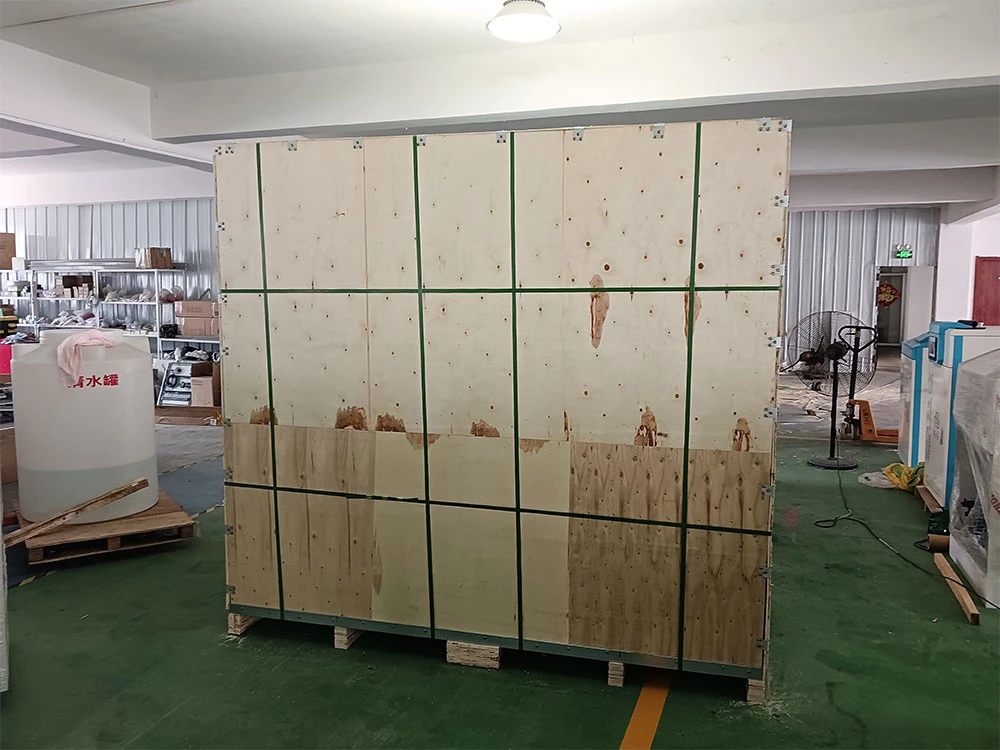
Packaging and Shipping: Safe Delivery, Global Reach
Ensuring the safe and secure delivery of SHOOT Sodium Hypochlorite Generators to WTPs worldwide is paramount. Our packaging and shipping procedures are meticulously planne and execute to protect the equipment from damage during transit, regardless of the destination or mode of transport.
Robust Packaging Solutions
Custom-Engineered Crates and Skids:
Heavy-Duty Wooden Crates: For smaller, sensitive components or fully assembled compact units, custom-built wooden crates are use. Meanwhile, these are constructe from heat-treated (HT) timber to comply with international phytosanitary regulations (ISPM 15). The crates are reinforce with steel bracing where necessary.
Steel Pallets/Skids: Larger, heavier generator units or modular components are typically mounte on robust steel pallets or skids. These provide a stable base for lifting and handling with forklifts or cranes.
Protective Barriers: Internal packaging layers include heavy-duty shrink wrap, anti-static bubble wrap, foam inserts, and custom-fit blocking and bracing to prevent movement and absorb shocks.
Corrosion and Moisture Protection:
VCI (Volatile Corrosion Inhibitor) Films/Emitters: All metallic components and sensitive electronics are protecte with VCI films or emitters within the packaging to prevent rust and corrosion, especially during long sea voyages or storage in humid environments.
Desiccants: Moisture-absorbing desiccants (e.g., silica gel packets) are strategically place within seale packaging to control humidity and prevent condensation.
Vapor Barrier Bags: Critical electronic components and control panels may be seale in multi-layer vapor barrier bags to provide an additional layer of protection against moisture.
Clear Labeling and Handling Instructions:
Each package is clearly labeled with:
Product Name and Model Number: For easy identification.
Destination Address: Comprehensive shipping details.
Weight and Dimensions: Essential for logistics and handling.
Handling Symbols: International standard symbols for “Fragile,” “This Side Up,” “Keep Dry,” “Center of Gravity,” and “Slinging Points” to guide handling personnel.
Batch Number/Serial Number: For traceability.
Company Contact Information: In case of any issues during transit.
Shipping Logistics and Partner Networks
SHOOT leverages a global network of reputable logistics partners to ensure efficient and reliable delivery:
Mode of Transport Selection:
Sea Freight: The most common and cost-effective method for international shipments of large equipment. SHOOT works with experienced freight forwarders to arrange containerized shipping (full container load – FCL or less than container load – LCL) or breakbulk cargo for oversized units.
Air Freight: Utilized for urgent deliveries or smaller, high-value components where speed is critical, despite higher costs.
Road/Rail Freight: For domestic or regional deliveries, employing specialized trucks with suitable lifting and securing capabilities.
Customs and Documentation:
SHOOT’s logistics team prepares all necessary export documentation, including commercial invoices, packing lists, certificates of origin, bills of lading/airway bills, and any specific permits. Or certifications required by the destination country (e.g., for electrical equipment or pressure vessels).
We work closely with customs brokers to facilitate smooth customs clearance, minimizing delays.
Transit Monitoring and Insurance:
Shipments are typically insured against loss or damage during transit.
Tracking information is provided to clients, allowing them to monitor the progress of their delivery.
Dedicated logistics personnel are available to address any issues that may arise during transit.
Upon arrival at the client’s site, detailed unpacking and installation instructions are provided. SHOOT can also offer supervision or full installation and commissioning services by our experienced field engineers. Ensuring a seamless transition from delivery to operational readiness.

FAQ
Q1: What is the primary raw material for a SHOOT Sodium Hypochlorite Generator?
A1: The primary raw material is common industrial-grade sodium chloride (NaCl), or salt, along with softened water and electricity.
Q2: What concentration of sodium hypochlorite does the SHOOT generator produce?
A2: SHOOT generators typically produce a dilute solution of sodium hypochlorite, generally in the range of 0.8% to 1.0% (8,000 to 10,000 ppm) equivalent chlorine. This lower concentration is inherently safer to handle than commercial solutions (often 10-15%).