

Access to safe drinking water is a fundamental right. However, rural areas and small towns often face unique challenges. Infrastructure is limited. Budgets are tight. Technical expertise is scarce. Our mission is to bridge this gap. We provide reliable, cost-effective, and user-friendly sodium hypochlorite generators designed specifically for these environments.
With years of experience in rural drinking water projects, we understand what it takes to make a system work in the real world. We don’t just sell hardware; we provide a complete solution for community health at the same time.
The Power of On-Site Generation
Why choose a sodium hypochlorite generator instead of buying commercial bleach or using chlorine gas? The answer lies in safety and stability.
1. Safety First
Chlorine gas is effective but dangerous. It requires pressurized tanks and specialized safety protocols. If a leak occurs in a remote village, the consequences can be catastrophic. On the other hand, our generators produce a low-concentration sodium hypochlorite solution (usually around 0.8%). This solution is non-combustible and also non-explosive. It is much safer for operators and also the surrounding community.
2. Freshness Matters
Commercial sodium hypochlorite degrades over time. By the time a truck reaches a remote water plant, the concentration may have dropped significantly. Our generator produces the disinfectant right when you need it. You get a fresh, potent solution every single time.
3. Simple Raw Materials
Our system only requires three things: water, electricity, and also common salt. These are easy to source even in the most isolated regions. This simplicity eliminates the need for complex chemical supply chains at the same time.
Engineering Excellence: The Core Components
Our generator is a masterpiece of compact engineering. Every part serves a specific purpose to ensure the highest efficiency.
1. The Electrolytic Cell
This is the heart of the system. We use high-quality titanium electrodes coated with ruthenium and also iridium. This special coating prevents corrosion and extends the life of the cell.
2. The Power Supply
The system uses a high-frequency DC constant current power supply. It converts local AC power into the precise voltage needed for electrolysis. This unit is energy-efficient and also includes protection against over-voltage and overheating.
3. The Control System
We utilize a PLC (Programmable Logic Controller) system. It monitors the entire process. From water flow to salt concentration, the PLC keeps everything in balance at the same time. The user interface is a simple touch screen. Operators can see the system status at a glance.
Our Process: Factory-Tested, Field-Ready
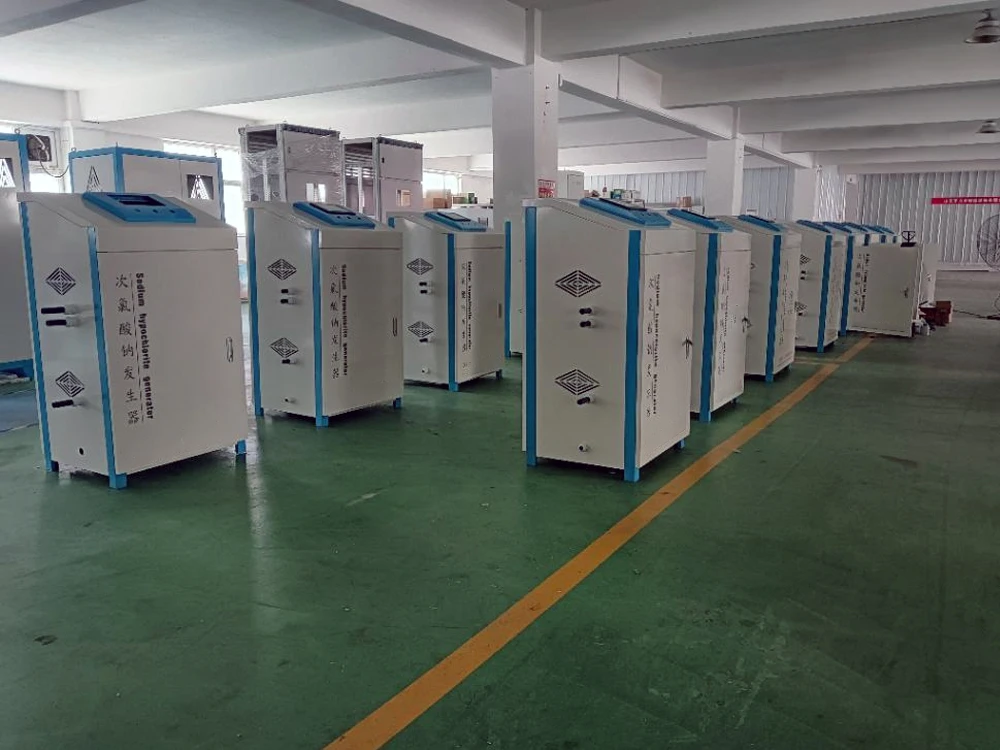
One of the biggest hurdles in rural projects is installation. Often, there are no specialized technicians on-site. We solved this problem through our rigorous Factory-to-Field (F2F) workflow at the same time.
Total Factory Debugging
We do not ship “parts.” We ship “solutions.” Before any unit leaves our factory, our engineers assemble it completely. We run a full cycle of tests. We check the salt consumption. Meanwhile, we measure the chlorine output. We stress-test the electronics.
When the equipment arrives at your site, it is already “tuned.” You don’t need to spend days calibrating sensors or adjusting flow rates.
Plug-and-Play Installation
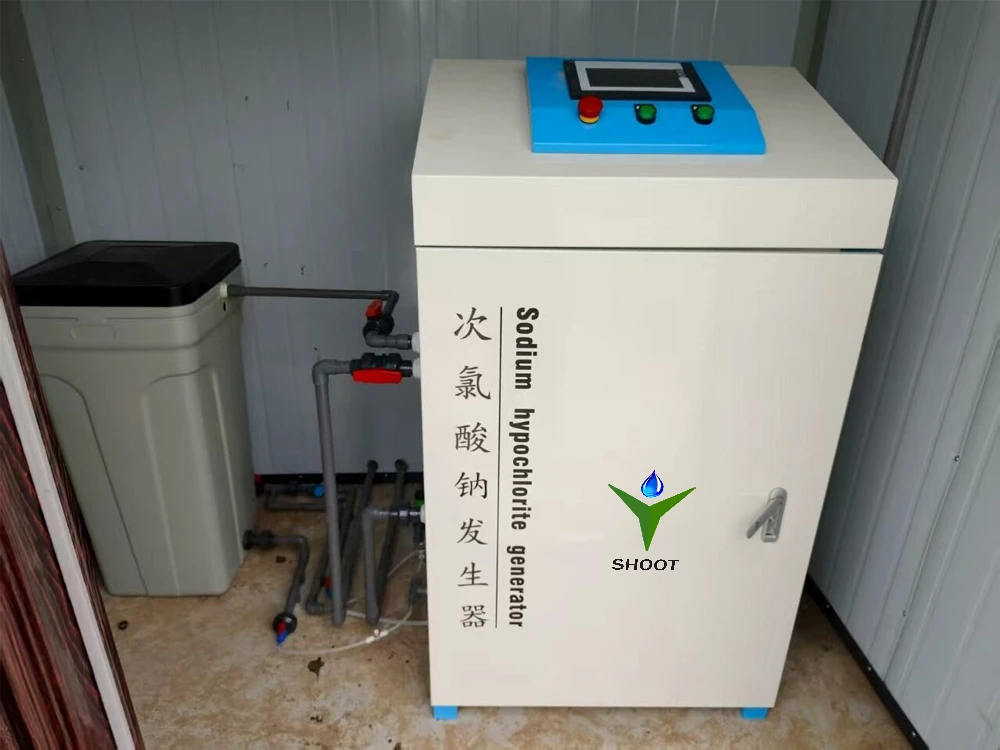
Because we handle the debugging at the factory, the field installation is incredibly simple. Your team only needs to connect the water inlet, the product outlet, and the power cable. In most cases, the system can be up and also running in a few hours.
The Economic Impact for Rural Communities
Cost is always a factor in small-scale water treatment. Our generators offer a significant return on investment.
Low Operating Costs
The main costs are salt and electricity. To produce 1 kg of available chlorine, our system typically uses:
3.2 kg of salt
4.5 kWh of electricity
Compared to the cost of purchasing, transporting, and storing liquid bleach, the savings are massive. Most plants see the equipment pay for itself within 18 to 24 months.
Real-World Success Stories
Over the years, we have completed hundreds of rural drinking water projects.
In one mountain village, the water source was a distant spring. The water was often contaminated after heavy rains. The village had no road for large chemical trucks. We installed a compact generator. Today, the village manages its own water safety using locally bought salt. The incidence of waterborne diseases has dropped to nearly zero.
In another project for a small town, the existing chlorine gas system was leaking. The local government wanted a safer alternative. We replaced the old system with our automated sodium hypochlorite generator. The operators are no longer afraid to go to work, and also the community feels much safer.
Conclusion: A Future of Safe Water
Small-scale water treatment doesn’t have to be complicated or dangerous. By choosing an on-site sodium hypochlorite generator, you choose a path of self-reliance, safety, and also efficiency.
We take pride in our “no-hassle” approach. We test the equipment. Meanwhile, we simplify the installation. We provide the expert guidance you need. Whether you are upgrading an old plant or building a new one for a rural community, we are here to ensure every drop of water is safe to drink.
FAQ
What is the concentration of the sodium hypochlorite produced?
Our standard generators produce a concentration of 6000 ppm to 9000 ppm (0.6% to 0.9%). This low-concentration solution is highly active and much safer to handle than high-concentration commercial bleach (12% or higher).