

Stop Wasting 90% of Your Disinfection Budget on Bottled Chemicals—Here Is How On-Site Generation Cuts Costs and Protects Your Bottom Line
You already know the science behind Hypochlorous Acid (HOCl). You know it kills 99.999% of foodborne pathogens like E. coli and Listeria in just 5 seconds and also know it has a neutral pH, leaves zero chemical residue, and eliminates the need for a second rinse.
The Hidden Risks of Bottled HOCl
However, if you are still buying bottled HOCl, or if your new generator is sitting on your installation calendar, you need to look closely at your operating margins. Purchasing pre-mixed, bottled HOCl feels easy at first. Yet, it creates two major problems: high costs and rapid degradation. Liquid HOCl breaks down quickly when exposed to light, heat, or long storage times. A drum that leaves the supplier at 200 ppm might drop below effective levels before your team even opens it. Effectively, you are paying high shipping rates to transport plain water around the country.

The Direct Math Behind On-Site Generation
Now, consider the real math of on-site generation. Premixed HOCl solution costs roughly 0.40 to 0.60 per liter. In contrast, an on-site generator uses only soft water, pure sodium chloride (salt), and electricity. With an on-site system, your production cost drops to less than 0.01 per liter.
A Real-World Financial Comparison
Let us run the numbers for a medium-sized vegetable processing line using 2,000 liters of sanitizer per day:
Bottled HOCl (at 0.40L):800 per day → 240,000 per year
On-Site Generator (at 0.01L):20 per day → 6,000 per year
That is an immediate 97.5% reduction in raw sanitizing costs. Most food facilities pay off their initial hardware investment within 6 to 9 months.
Operational Benefits for Everyday Production
Besides raw material savings, on-site generation optimizes your daily operations:
Zero Storage Waste: Free up 90% of the warehouse space previously blocked by heavy plastic drums.
Labor Efficiency: Eliminate physical barrel handling. Instead, pipe fresh HOCl directly to your washing flumes, CIP systems, and fogging lines.
Guaranteed Potency: Produce fresh solution on demand at exact target concentrations (50-200 ppm). Therefore, you never fail a quality audit due to expired chemicals.
Reduced Water Bills: Because HOCl is safe for food contact, you skip the post-sanitization rinse step. This saves up to 30% on total process water usage.
Key Checklist Before System Installation
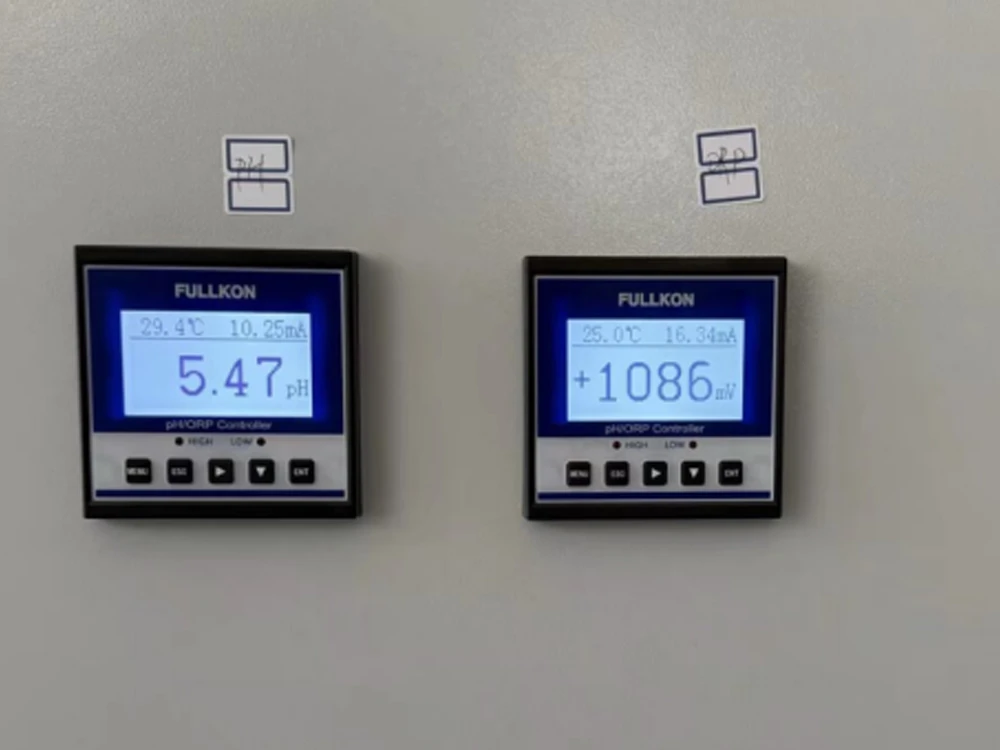
If your plant is preparing to install a system this month, focus on your setup parameters right away. First, check your incoming water hardness, as hard water causes scaling on electro-catalytic plates. Second, install inline sensors to monitor free available chlorine (FAC) continuously.
The Final Bottom-Line Choice
Ultimately, sticking with legacy chemicals or bottled solutions hurts your bottom line. Switching to on-site generation protects your products, safeguards your workers, and cuts your sanitization budget by tens of thousands of dollars every single year.
FAQ
How much money can an on-site generator save compared to bottled HOCl?
Pre-mixed bottled HOCl typically costs 0.40-0.60 per liter due to packaging and freight. On-site production using water, salt, and electricity costs less than 0.01 per liter—delivering up to a 97.5% reduction in raw sanitizer costs. Most processing plants recover their equipment investment within 6 to 9 months.