

Firstly As the core facilities of diagnosis and treatment. The dental comprehensive treatment table waterway (DUWLs) is prone to the formation of biofilms and the breeding of pathogenic bacteria such as Pseudomonas aeruginosa and Staphylococcus aureus due to narrow pipes. Slow water flow and long-term humidity. Our country’s health standard clearly requires that the total number of bacterial colonies in dental diagnosis and treatment water be less than 100 CFU/mL. However, the traditional disinfection methods (such as chlorhexidine and hydrogen peroxide) have defects such as incomplete sterilization. Corrosion of pipelines, residual toxicity. And so on. Which makes it difficult to solve the problem of biofilm removal. The emergence of hypochlorous acid (HOCl) generator has achieved a technological breakthrough – weakly acidic (pH 5.5-6.5) hypochlorous acid disinfectant is generated by electrolysis of tap water.
So Its bactericidal mechanism is consistent with the natural antibacterial principle of human neutrophils.At the same time. At the same time Which can penetrate the biofilm to oxidise and destroy the microbial cell membrane and enzyme system. And kill 99.999% pathogenic bacteria within 30 seconds. So The decomposition products are only water and trace sodium chloride. Which solves the contradiction between safety and efficiency from the root.

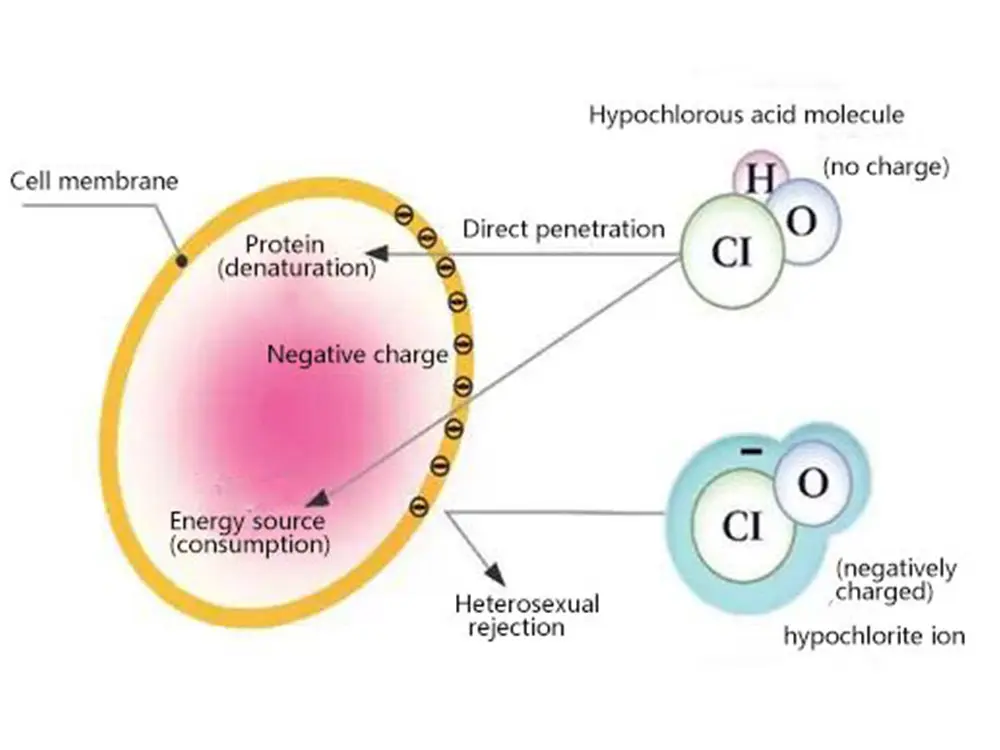
Analysis of the core advantages of hypochlorous acid generator
1,Efficient sterilization and biofilm removal: Due to The sterilization efficiency of hypochlorous acid is 80 times that of traditional sodium hypochlorite. And more than 90% of the biofilm can be removed in 1 minute. So It can quickly inactivate poliovirus. Hepatitis B virus, and new coronavirus. Which is in line with international and domestic standards such as BS EN 14476 and GB 27950-2020.
2,Dual guarantee of safety and compatibility:Due to pH value is close to neutral. No stimulation to oral mucosa. No cytotoxicity, and no risk of DNA damage confirmed by OECD 471 standard test. Effective chlorine concentration ≤5ppm. Far lower than the pipeline corrosion threshold. Compatible with metal pipes. Rubber seals and other equipment materials. So Prolong the service life of dental chair.
3,Environmental protection and economic sustainability: on-site production without packaging and transportation. Low carbon footprint is significant. The single use cost is only 1/5 of the chemical disinfectant. The annual maintenance cost is reduced by 60%. And the disinfection data can be automatically recorded. Which meets the traceability requirements of WS/T 628 oral comprehensive treatment table waterway disinfection technical specification.
4,Flexible adaptation of the whole scene: multiple diagnosis and treatment chairs can be connected to realize real-time elimination. Support daily disinfection. Pretreatment of new equipment. Epidemic prevention and control and other multi-scene applications. And the operation only needs to be started with one key. Greatly reducing the workload of medical staff.
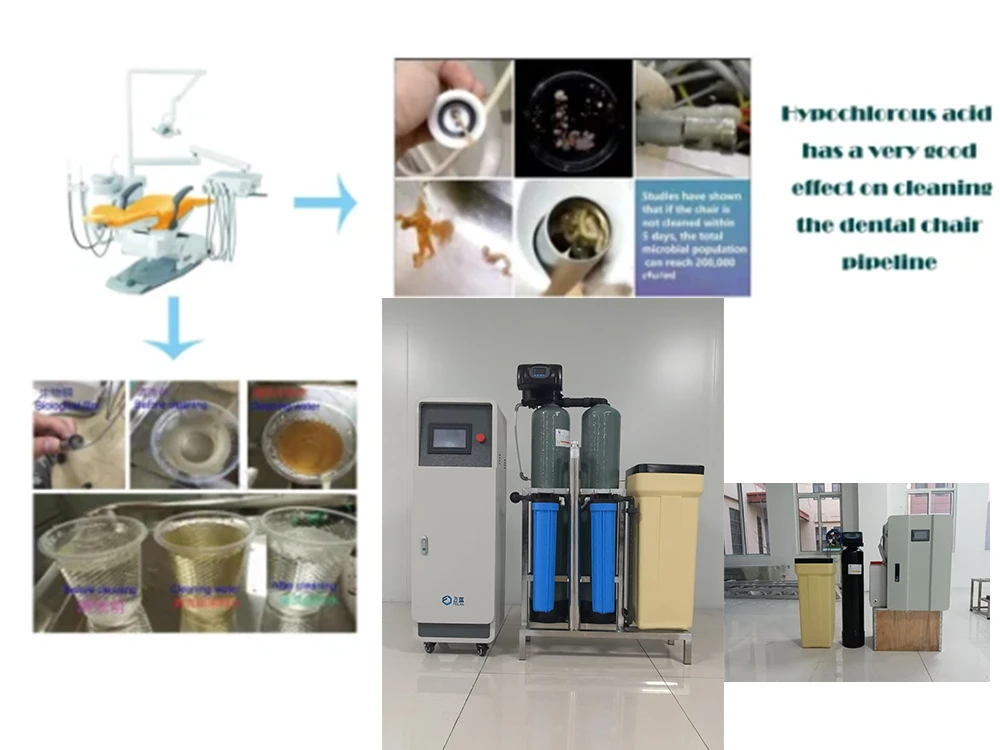
Actual combat case: Clinical application effect of hypochlorous acid generator
1,A chain dental clinic in Tokyo, Japan
Background: The 12 dental chairs in this clinic have been plague by aquatic biofilm for a long time. And the bacterial load often reached 10⁵ CFU/mL. The postoperative infection rate of patients was about 3.2%.
Scheme: shoot hypochlorous acid generator was use to set 5ppm concentration to continuously rinse the pipeline. And disinfection was perform once a day before the diagnosis. Between diagnosis and treatment, and after the diagnosis was close. 3 minutes each time.
Results: After 1 month of implementation. The bacterial load in waterways was reduce to < 10² CFU/mL. Which met the standards of the Ministry of Health. Labor and Welfare of Japan. The 6-month follow-up showed that the postoperative infection rate of patients decreased by 67%. The complaints of respiratory discomfort of medical staff were eliminate. And the clinic’s word-of-mouth score increased by 23%.
2,Department of Stomatology of a hospital in Shanghai
Background: As a key department of a tertiary hospital, the department has 30 diagnosis and treatment chairs, with an average daily attendance of more than 200 person-times. It needs to balance the efficiency of disinfection and patient experience.
Program: shoot FL-SAEW-2000 hypochlorous acid generator was introduce to produce 240 liters of disinfector per hour, which was simultaneously apply to pipeline disinfection, instrument cleaning, oral irrigation and air sterilization (with FL–2000 humidifier).
Results: The qualified rate of water disinfection increased from 78% to 100%, and the clearance rate of microorganisms in the air of the diagnosis and treatment environment reached 90%. Patients’ satisfaction with “stimulation-free disinfection” reached 96%, and no cross-infection events occurred throughout the year. The relevant experience was include in the hospital infection control demonstration case.
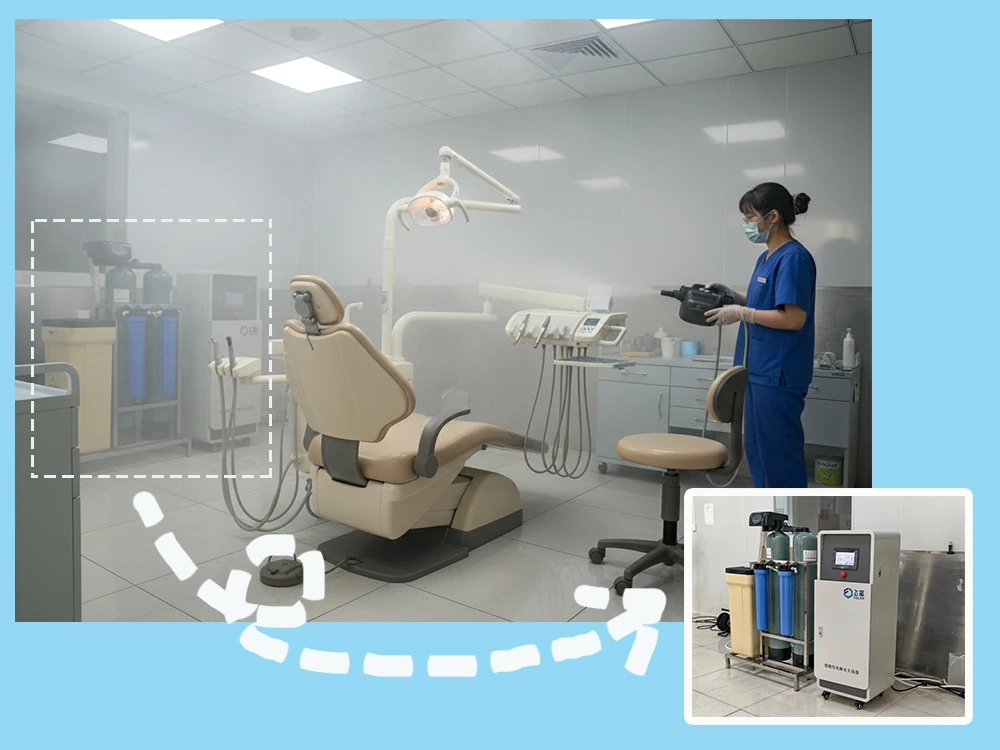
Industry trends and application recommendations
The hypochlorous acid generator has been certified by the European Union BPR regulations and recommended by the American Dental Association (ADA). It is widely use in 80% of private dental clinics in Japan, and has also enter the stage of large-scale promotion in China. For dental institutions, it is necessary to focus on the accurate concentration control, Internet of things monitoring function and compatibility of the equipment when selecting. It is recommend to choose models with water production of 100-300L per hour combined with the amount of diagnosis and treatment, and establish a standardized process of “basic disinfection 3 times a day + deep cleaning weekly”. With the development of intelligent technology, a new generation of equipment with integrated concentration automatic adjustment and remote fault warning will become the mainstream, providing more solid technical support for the prevention and control of oral medical infection.