

With the vigorous development of green agriculture and circular economy today. As the core input of improving soil and improving crop quality. The environmental protection and safety issues in the production process of organic fertilizer have been paid more and more attention. However, in the process of fermentation and maturation of organic wastes such as livestock and poultry manure and straw. The volatilization of malodoring gases and the residue of harmful eggs and pathogenic bacteria have always been two major pain points that have plagued organic fertilizer production enterprises.
Traditional chemical deodorants often have the risk of secondary pollution and high cost. However, pure physical coverage cannot fundamentally solve the problem of microbial spoilage. In this context, hypochlorous acid generator is gradually becoming an ideal solution for environmental control and quality improvement of organic fertilizer production workshop by virtue of its high efficiency. Safety and broad spectrum of sterilization and deodorization characteristics.

What is hypochlorous acid?
Hypochlorous acid (HClO) is a kind of small molecule neutral substance with strong oxidation ability. Through hypochlorous acid generator. Salt and water as raw materials, through electrolysis to produce high concentration hypochlorous acid solution.
Different from the traditional sodium hypochlorite (the main component of 84 disinfectant). Hypochlorite has the characteristics of no stimulation, no residue. And can quickly degrade into salt and water in the natural environment. It has been recognized by FDA of the United States and Health Commission of our country as a highly effective disinfectant that can be used for food contact surface and skin and mucosa. This perfect combination of “efficient sterilization” and “intrinsic safety” makes it very suitable for application in organic fertilizer production scenarios with high ecological safety requirements.
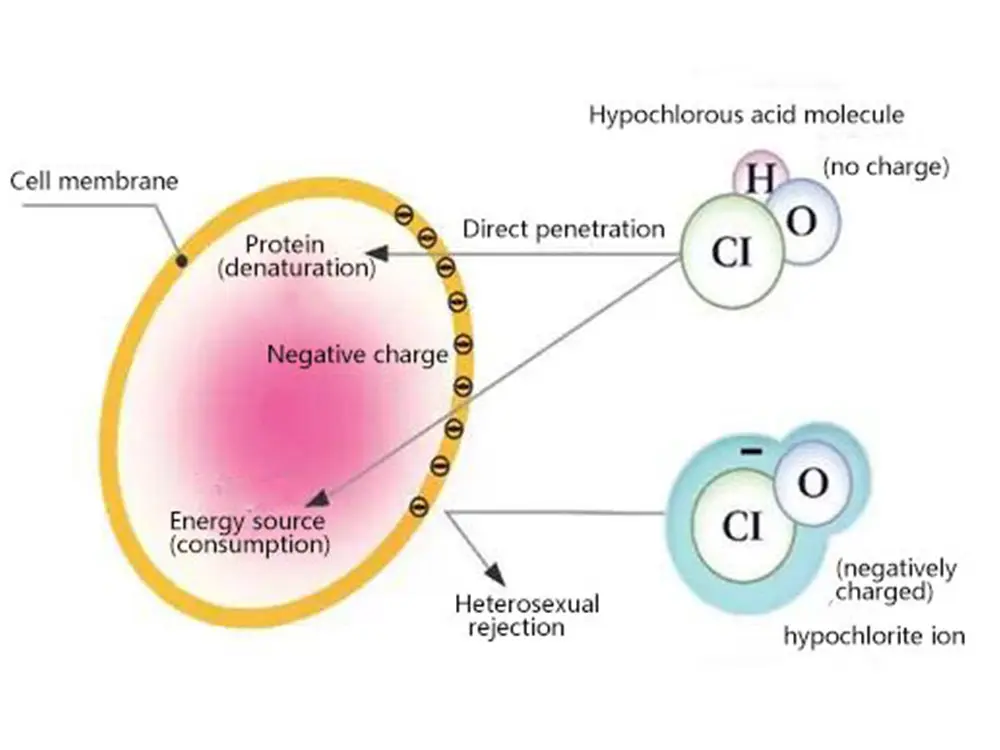
Hypochlorous acid has efficient deodorization, not physical cover, but chemical decomposition
Ammonia (NH₃), hydrogen sulfide (H₂S) and volatile organic amines (e.g. skatole) are the main sources of malodor produced during the fermentation process of organic fertilizers. Traditional deodorization methods mostly use essence cover up or a lot of water washing, cure the symptoms but not the root cause.
The application of hypochlorous acid generator in deodorization achieves source control through the following two mechanisms
Oxidative decomposition odor source: hypochlorous acid has strong oxidation. Can oxidize hydrogen sulfide to elemental sulfur or sulfate. Oxidize ammonia to nitrogen or nitrate. And decompose organic amines into odorless carboxylic acids. This process directly destroys the chemical structure of the odorant. Fundamentally eliminating the odor, rather than simply “cover up”.
Inhibition of odour-producing microorganisms: spoilage bacteria in organic fertilizers are the root cause of malodor. By spraying slightly acidic hypochlorous acid solution at high frequency in the fermentation workshop. Raw material stacking area and flipping operation. The metabolic activity of odor-producing microorganisms can be effectively inhibited. And the production of ammonia and hydrogen sulfide can be reduced.
Application effect: In practical application. The use of atomization system with hypochlorous acid generator. Forming a micro fog barrier above the organic fertilizer fermentation tank. Can reduce the concentration of ammonia at the factory boundary by 70%-90%. Effectively solve the problem of environmental complaints caused by odor disturbance. And realize the friendlier environment of the factory.
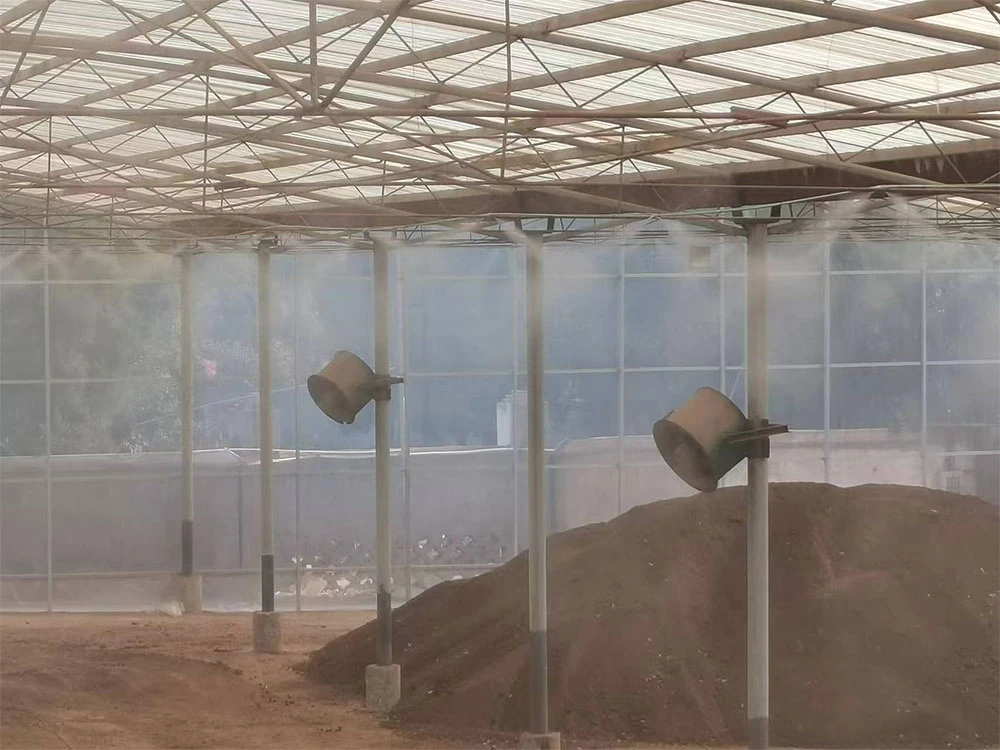
Hypochlorous acid kill eggs: stop the reproduction of pests and diseases
Organic fertilizer raw materials (especially chicken manure, pig manure, etc.) often carry a large number of ascaris eggs. Threadworm eggs and fly maggots. If not thoroughly killed. These eggs with organic fertilizer applied to farmland. Will cause serious soil-borne diseases. Resulting in crop production.
1,Limitations of high temperature fermentation:
Although the traditional high-temperature compost (55℃-65℃ for more than 7 days) can kill the eggs in theory. In actual production. Due to the uneven size of the pile. Incomplete flipping or low temperature in winter. The phenomenon of “sandwich” often occurs. Resulting in incomplete inactivation of eggs.
2,Targeted inactivation of hypochlorous acid
The disinfectant prepared by hypochlorous acid generator can be use as an auxiliary strengthening method in the following links:
Raw material pretreatment: Before livestock and poultry feces enter the fermentation tank. Spray high concentration hypochlorous acid solution for pre-disinfection, and quickly kill eggs and larvae.
Flip and throw cooperation: spray synchronously during the flip and throw machine operation. And use the strong permeability of hypochlorous acid to penetrate the chitin shell of the egg. So that the egg protein solidification denaturation and DNA breakage.
3,Authoritative data Support
According to the test of the relevant agricultural technology extension center. The killing rate of AScaris eggs can reach 100%. And the killing rate of E. coli and Salmonella can reach more than 99.99% by using slightly acidic electrolyzed water (hypochlorous acid) to treat chicken manure. This data is far higher than the natural inactivation rate of ordinary compost, and provides a solid guarantee for the production of high-quality organic fertilizer with “sterile and insect eggs free”

Hypochlorous acid generator equipment advantages
Compared with outsourcing chemical agents, deploying hypochlorous acid generators in organic fertilizer plants has significant economy and convenience:
- Low cost operation: The raw materials are only salt (or low concentration hydrochloric acid) and water, the operation cost is much lower than the purchase of commercial disinfectant or deodorant.
- High activity: The stability of hypochlorous acid is relatively low, but the method of on-site preparation and immediate use ensures that the available chlorine concentration is at the highest peak, avoiding degradation loss in the storage process.
- High degree of automation: modern hypochlorous acid generator is usually equipped with PLC control system, according to deodorization or disinfection needs, automatically adjust the concentration and the amount of liquid, to achieve the flip machine, atomization spray system linkage.
- Environment-friendly: THE hypochlorous acid decomposes into chloride ions, water and trace oxygen after use, and will not remain harmful heavy metals or chlorates in organic fertilizers, which meets the strict requirements of organic agricultural inputs.

For organic fertilizer production enterprises, the introduction of hypochlorous acid generator is not only a set of deodorization equipment, but also a set of comprehensive solutions to improve the added value of products and reduce environmental risks. It makes organic fertilizer truly realize the green cycle of “turning waste into treasure”, and contributes scientific and technological strength to protect soil health and agricultural product safety.
FAQ
Can hypochlorous acid kill eggs?
Yes, but the effect depends on the type of eggs and the concentration of hypochlorous acid, the time of action