

Due to The water system of a dental treatment unit is complex and sophisticated. Therefore Directly connecting instruments used during treatment. Such as a three-way nozzle, high-speed handpiece, and ultrasonic scaler. The stagnant water flow, narrow pipes, and suitable temperature create a breeding ground for bacteria (especially Pseudomonas aeruginosa and Legionella), fungi, and biofilms. Even when using sterile saline or distilled water. It is difficult to completely sterilize the internal piping of the treatment unit.
Industry pain point: the invisible risk of being ignored -- water pollution
- Risk of cross-infection: Bacteria can directly enter the patient’s oral cavity or the respiratory tract of healthcare workers via water mist or aerosols.
- Persistent biofilm problem: Traditional chemical disinfectants are ineffective at completely removing existing biofilms. Leading to incomplete disinfection and repeated contamination.
- Chemical residues and corrosion: Frequent use of chlorine-containing disinfectants or peracetic acid for pipeline disinfection may corrode delicate components of the treatment unit. And residues may affect the quality of the treatment water.
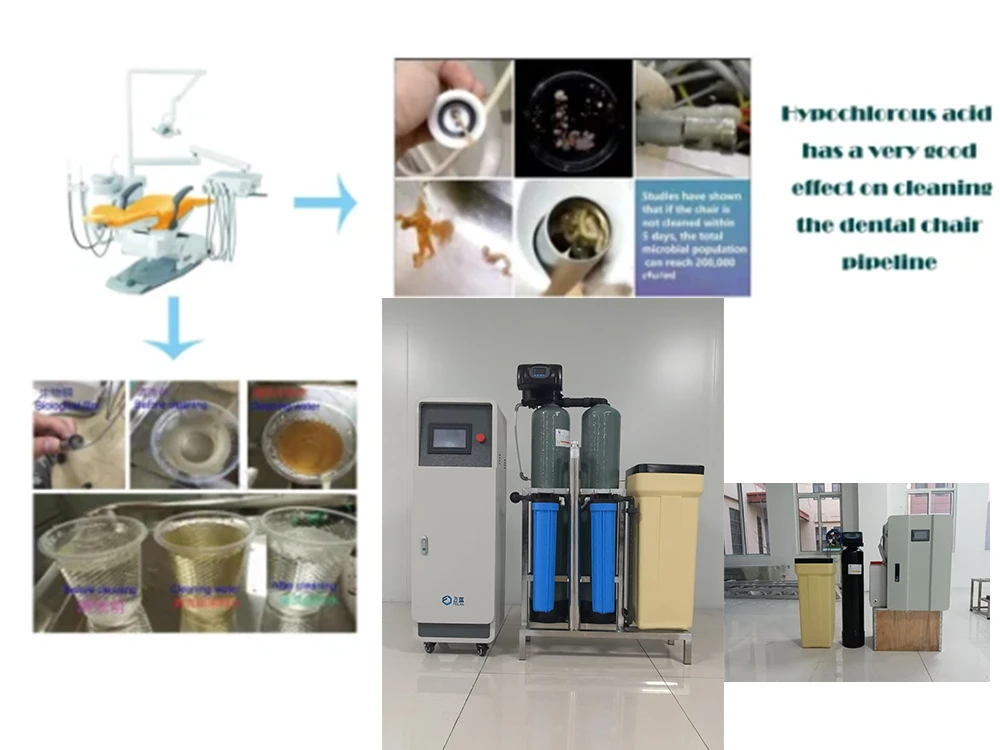
Technological Breakthrough: The Immediate-to-Use Smart Guardian—Hypochlorous Acid Generator
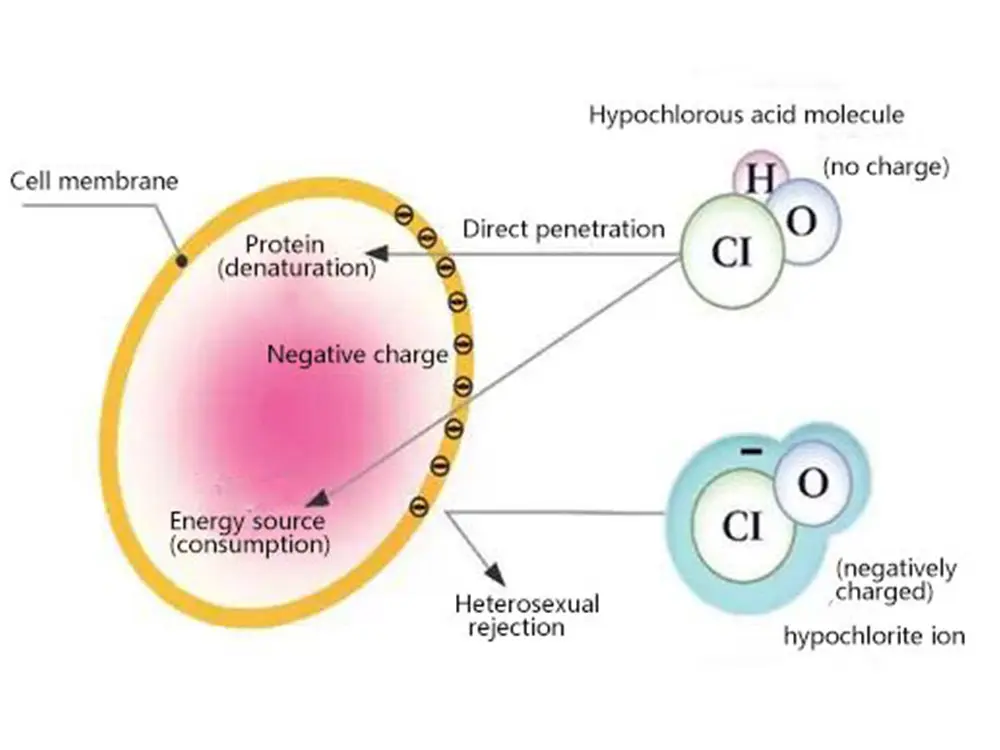
Due to Hypochlorous acid (HClO) is a bactericidal substance naturally secreted by human immune cells (neutrophils).At the same time Its bactericidal mechanism involves penetrating the cell wall of microorganisms and destroying their protein and nucleic acid structures. Compared to traditional chlorine-containing disinfectants (such as sodium hypochlorite, i.e., 84 disinfectant), hypochlorous acid has the following unique advantages:
- Highly effective and broad-spectrum: Its bactericidal speed is 80-100 times that of sodium hypochlorite, rapidly killing bacteria, viruses, fungi, and spores.
- Safe and non-toxic: At appropriate concentrations (typically 80-200 ppm). It is non-irritating to human mucous membranes. leaves no toxic residue. And is environmentally friendly and biodegradable.
- Extremely penetrating: Effectively disrupts and removes biofilms. Solving the fundamental problem of water disinfection.
Integrating or attaching a miniature hypochlorous acid generator to a dental treatment unit represents a significant advancement in infection control. Its working principle typically involves electrolyzing dilute saline or hydrochloric acid solutions to generate a low-concentration. Highly active hypochlorous acid disinfectant in real time.
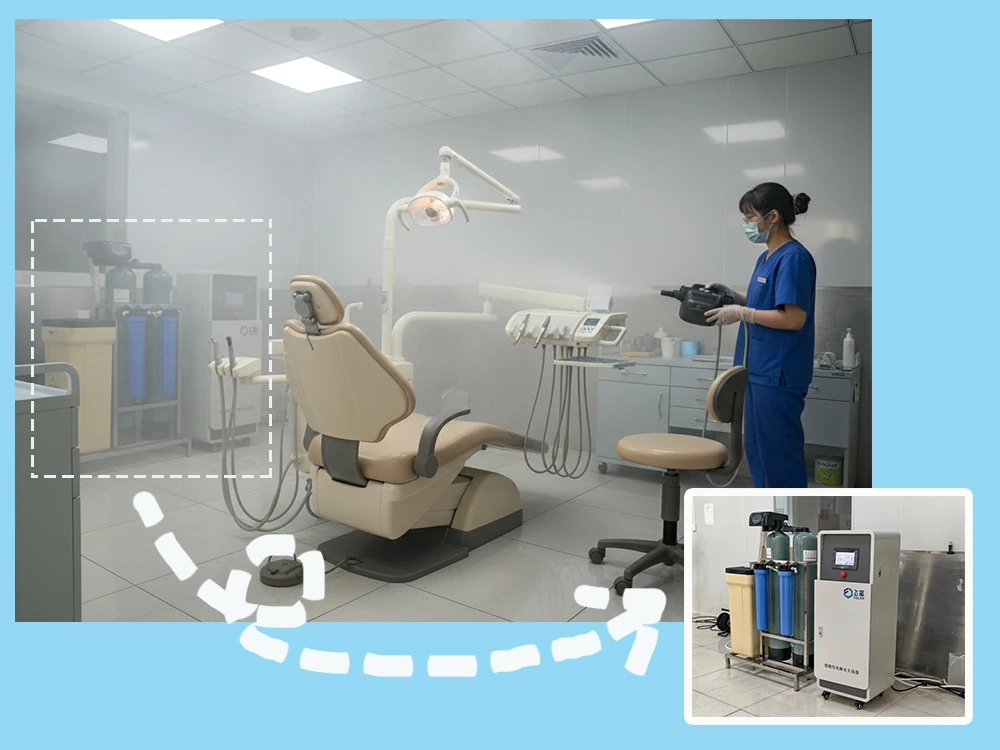
Advantages of using hypochlorous acid generators in dental treatment units
1,Real-time online disinfection mode
- The hypochlorous acid disinfectant (typically at a concentration of 1-5 mg/L, or 1-5 ppm) generated by the generator is continuously injected into the treatment table’s water system at an extremely low concentration.
- This concentration is sufficient to inhibit the growth of microorganisms in the water system and continuously shed biofilms. While fully meeting safety standards for human contact. Achieving “real-time sterilization” of the treatment water. This safe disinfectant is used when patients rinse their mouths and when doctors rinse.
2,Independent disinfection and rinsing modes
- In situations requiring higher concentrations of disinfection (such as postoperative rinsing or treatment of infected wounds). A higher concentration of hypochlorous acid solution (e.g., 50-100 ppm) can be provided through an independent tubing for local rinsing of the oral cavity. Accelerating healing and reducing infection.
3,Terminal pipeline disinfection mode
- After each day’s treatment. The system can automatically switch to a high-concentration circulation mode to powerfully flush and disinfect all water circuits. Thoroughly removing any pollutants that may have accumulated that day.
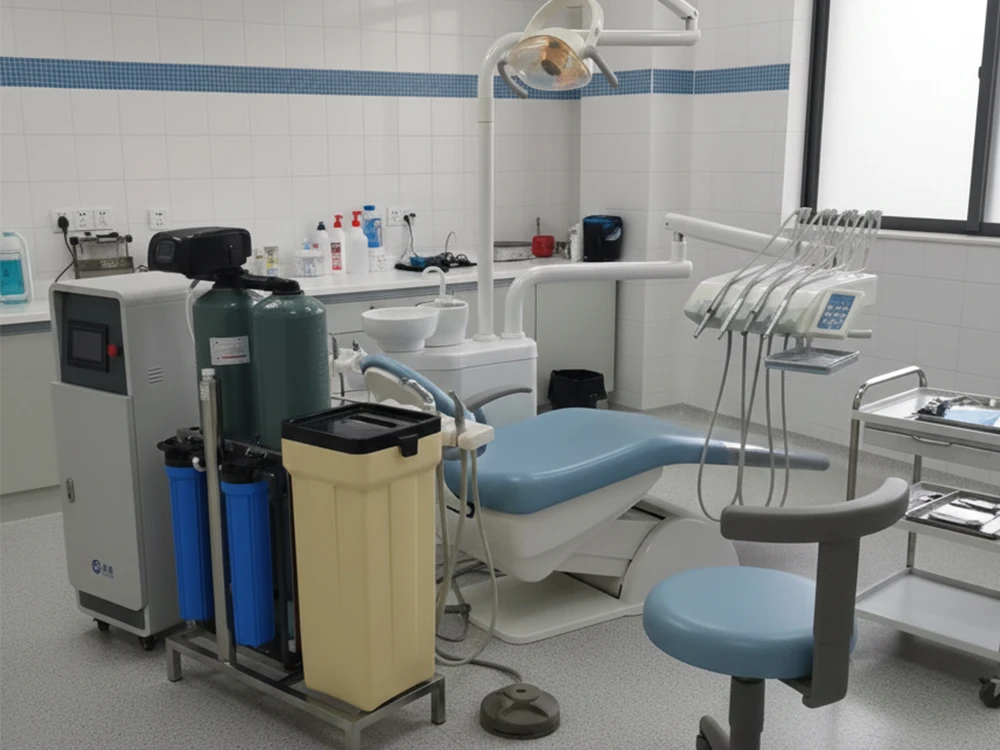
The core value that hypochlorous acid generators bring to dental clinics
- Comprehensive Improvement of Infection Control Level: Transforming passive. Intermittent disinfection into proactive. Continuous protection significantly reduces the risk of cross-infection between medical staff and patients. Meeting the highest domestic and international infection control standards such as JCI and CNAS.
- Extended Equipment Lifespan and Reduced Maintenance Costs: Avoids damage to delicate tubing from highly corrosive chemical disinfectants. Reduces instrument malfunctions caused by biofilm blockage. And lowers long-term maintenance costs.
- Optimized Treatment Processes and Patient Experience: Eliminates the need for frequent and tedious daily tubing disinfection preparation. Equipment is ready to use at any time. Treatment water is safe and odorless, enhancing patient trust and comfort.
- Green and Environmentally Friendly: Hypochlorous acid ultimately decomposes into water and trace amounts of salt. With no harmful chemical emissions. Making it environmentally friendly.
With the increasing adoption of minimally invasive treatments and comfortable dentistry, the requirements for the safety of the treatment environment will only continue to rise. Intelligent dental treatment units integrating hypochlorous acid generators will become standard equipment in modern, high-standard dental clinics. This is not only a technological upgrade, but also a reflection of a medical service philosophy centered on patient safety.
In the future, combined with IoT technology, this device will be able to achieve functions such as real-time monitoring of disinfectant concentration, automatic reminders for consumables, and automatic uploading of disinfection data, helping dental clinics to achieve digital and intelligent management of infection control.
FAQ
1,What concentration of hypochlorous acid is typically used in dental treatment water?
We recommend using 10 PPM water for clinical use.
2,In dental departments, what concentration of hypochlorous acid is used for routine surface disinfection?
For routine surface disinfection, it is recommended to use 40PPM.