

As the prepared dish industry has entered the “trillion level” market. Consumers have become more and more concerned about “safety and health” while pursuing convenience. However, there are many links from raw material cleaning. Processing to packaging. And pre-prepared dishes are highly susceptible to microbial contamination. Traditional disinfection methods. Such as sodium hypochlorite (84 disinfectant), alcohol or ozone. Often have pain points such as strong corrosion. Irritating residue, and unstable bactericidal effect
In this context, hypochlorous acid generator, as a new type of disinfection technology for on-site preparation, is becoming a “secret weapon” to ensure food safety and extend the fresh-keeping period of premade vegetable enterprises.

What is hypochlorous acid? Why is it considered more advanced?
Many people hear the word “chlorine” and associate it with the pungent smell of disinfectant water. But hypochlorous acid (HClO) is different.
Scientific research has found that hypochlorous acid is a bactericidal substance naturally produced by human neutrophils to swallow invading bacteria. This means that it has a high affinity and safety for the human body and the environment.
Compared with the traditional sodium hypochlorite (the main component of 84 disinfectant), hypochlorous acid is 80-150 times more bactericidal. Hypochlorous acid generator through electrolysis (electrolysis of dilute hydrochloric acid or brine). On-site preparation of high purity. Low concentration of hypochlorous acid water. It is not only no stimulation, no corrosion, and even can be directly reduced to water after the action, truly “no residue”.

Application scenario of hypochlorous acid generator in prepared dishes
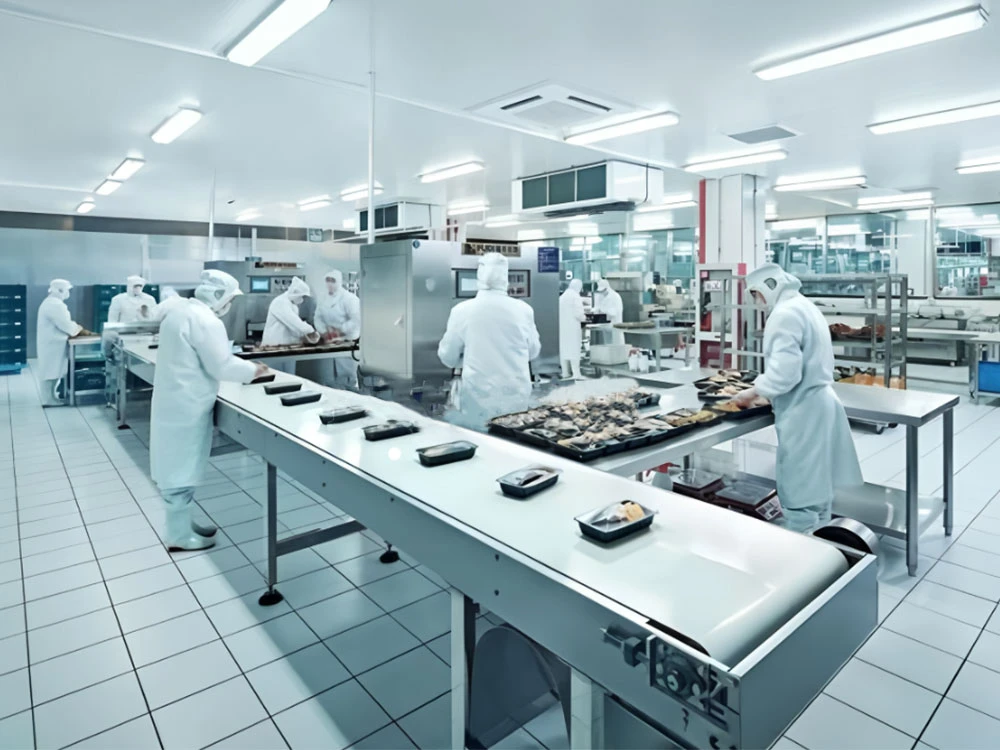
Hypochlorous acid generator is widely used in the processing of prepared dishes. Which is equivalent to a flowing “safety guard” throughout the whole production process:
1.Raw material pretreatment (removal of pesticide residues and sterilization)
Vegetables, fruits, meat before entering the production line. The most afraid of microbial contamination. Using hypochlorous acid water (effective chlorine concentration of 50-100ppm) for soaking or spraying. Not only can kill more than 99.9% of E. coli and Salmonella within 30 seconds. But also can effectively remove pesticide residues.
Experimental data: Some studies have shown that the use of slightly acidic electrolytic water to clean lettuce. Stored for 86 hours before the detection of microorganisms; Microorganisms were detect in lettuce wash with ozonated water at 0 hours. This greatly slows down the spoilage of fruits and vegetables.
2.Deep disinfection of perishable foods such as soy products
Products high in protein and moisture, such as tofu, are highly perishable. An experiment by China Agricultural University has proved that soaking tofu in slightly acidic hypochlorous acid water for 20 minutes can reduce the total number of bacteria by 1 log value, and does not affect the color. Hardness and taste of tofu. Which perfectly solves the pain point of soybean products.
3.Disinfection of equipment and environment
The conveyor belts, knives, the ground and the air in the preparation workshop are all sources of cross-contamination. The hypochlorous acid generator can be connected to the pipeline, and the equipment can be cleaned in situ through the CIP cleaning system, or the workshop air can be purified through the atomization device, which significantly reduces the number of settling bacteria in the environment.
4.Packing and preservation
The final spray of the finished product before packaging, or the use of hypochlorous acid water to make “sterile ice” for aquatic preservation, can effectively inhibit the breeding of microorganisms in the transportation process, extend the shelf life of the product by more than 30%, and avoid the water pollution problems caused by traditional ice packaging
Lorem ipsum dolor sit amet...
Many companies wonder: why not just buy ready-made disinfectant?
This is precisely the core advantage of hypochlorous acid generators—they produce and use the solution immediately.
- Stability: Hypochlorous acid nature lively, long-term storage easy to decompose failure. The generator ensures that every drop of disinfectant water maintains the highest bactericidal activity by “making it on the spot”.
- Cost control: The equipment uses water and low-concentration salt/hydrochloric acid as raw materials, and can produce 6-8 tons of sterilized water per KWH, which greatly reduces the cost of purchasing and warehousing logistics.
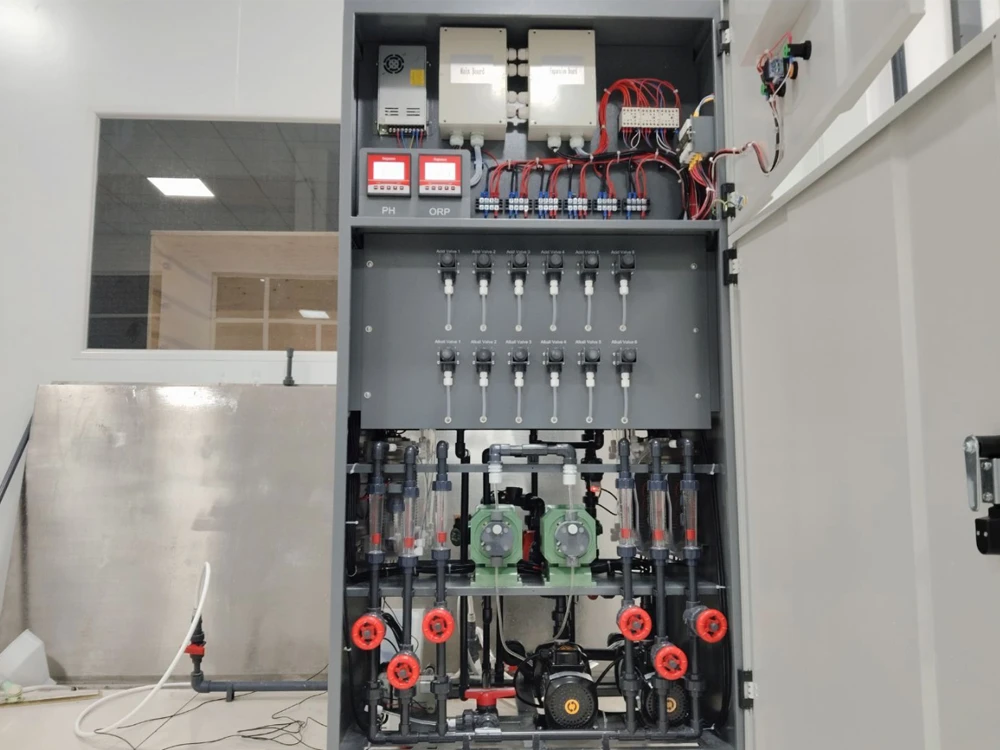
- Standardized management: The advanced hypochlorous acid generator is equip with PLC control and Internet of things technology, which can accurately control the effective chlorine concentration (such as 10-1000ppm adjustable) and pH value to avoid the concentration of substandard or waste caused by artificial matching.
International Recognition and Industry Trends
Currently, hypochlorous acid technology is quite mature globally.
International Certification: The Japanese Ministry of Health, Labour and Welfare and the US FDA have approved slightly acidic electrolyzed water as a sterilizing ingredient in food additives, suitable for processing and cleaning meat, fruits, vegetables, and seafood.
Leading by Industry Giants: In Japan, over 70% of food processing companies have adopted it as standard equipment in their factories; in China, many leading companies have also gradually introduced electrolyzed water technology to replace traditional decentralized disinfection methods.

FDA
Can hypochlorous acid really be use for food preservation?
Yes, hypochlorous acid (especially slightly acidic hypochlorous acid water) has been widely use in the field of food preservation. Its principle is to use strong oxidation to kill pathogenic microorganisms (such as bacteria, fungi) on the surface of fruits and vegetables to delay the decay process. At the same time, hypochlorous acid can break down ethylene (the ripening hormone naturally released in fruits and vegetables), further inhibiting the rate of ripening.