

In the catering industry and commercial dishwashing facilities. The core pain points of tableware cleaning and disinfection are nothing more than two: removing stubborn grease and killing pathogens. Traditional washing methods often rely on chemical detergents to remove grease. Followed by high temperatures or chlorine-containing disinfectant tablets for disinfection. This process is not only cumbersome, but also carries the risk of chemical residues.
Today, with the maturity of electrolysis technology. Hypochlorous acid generators are revolutionizing this traditional model. They can not only produce high-purity disinfectants on-site. But also simultaneously generate “alkaline water” with powerful cleaning capabilities. One set of equipment, working in tandem, perfectly solves two major problems in the dishwashing area.
Phase 1: Alkaline water – breaking down heavy oil stains
The biggest challenge in the initial and main washing stages of tableware cleaning is grease. If only ordinary tap water is used to rinse, the oil is easy to adhere to the surface of the tableware and the inner wall of the pipe, and the long-term accumulation will produce odor and breed bacteria.
Hypochlorous acid generators electrolyze a solution containing a low concentration of sodium chloride (salt). First separating alkaline electrolyzed water with a high pH value in the electrolysis tank. This alkaline water has the following significant advantages:
- Superior Emulsifying and Degreasing Power: Due to alkaline water has low surface tension and strong penetrability. Allowing it to quickly penetrate and emulsify stubborn animal and vegetable oils. Breaking them down into tiny particles suspended in the water and flushed away through the drainage system. It achieves or even surpasses the cleaning effect of traditional detergents without the need for large amounts of chemical dishwashing powder.
- Environmentally Friendly and Residue-Free: Alkaline water reverts to ordinary water after use. It is non-toxic, non-irritating, and surfactant-free. This means that no harmful chemicals will remain on the dishes after rinsing. Making it especially suitable for infant tableware or high-end restaurants where detergents are sensitive.
- Equipment Protection: Using alkaline water effectively breaks down grease buildup in pipes. Reducing pipe blockage and extending the dishwasher’s lifespan.
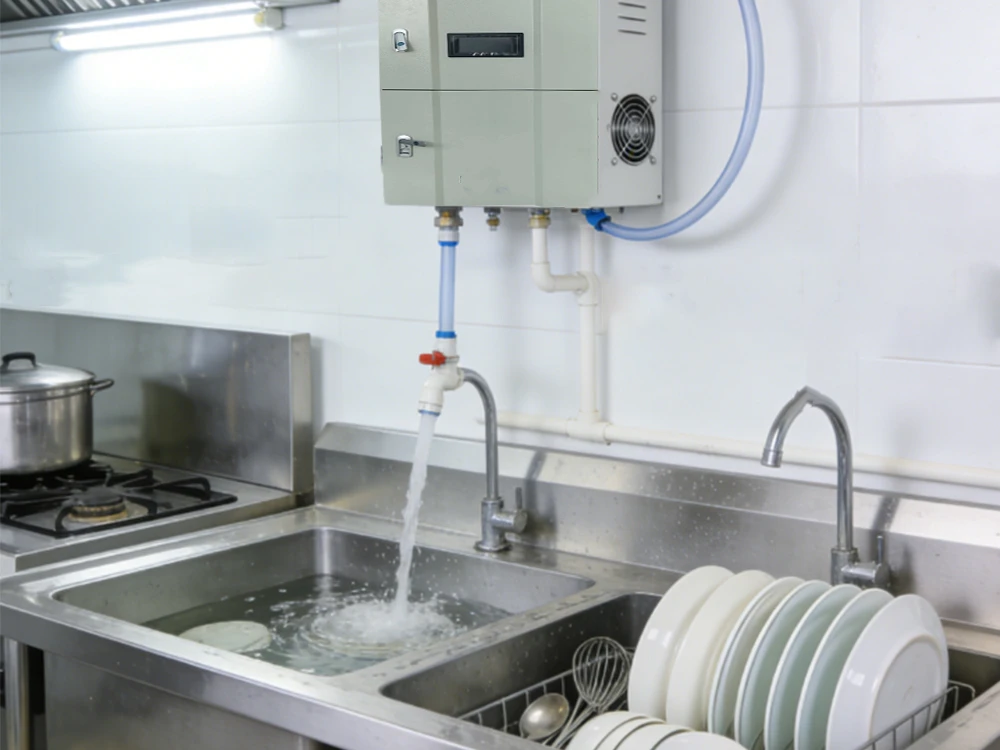
Hypochlorous acid generator for efficient sterilization
After tableware is washed with alkaline water. Although the surface is clean. Pathogenic microorganisms such as E. coli, Staphylococcus aureus. And even Helicobacter pylori may still remain. At this point, another byproduct simultaneously produced by the hypochlorous acid generator—high-purity hypochlorous acid (HOCl)—begins to play a crucial role.
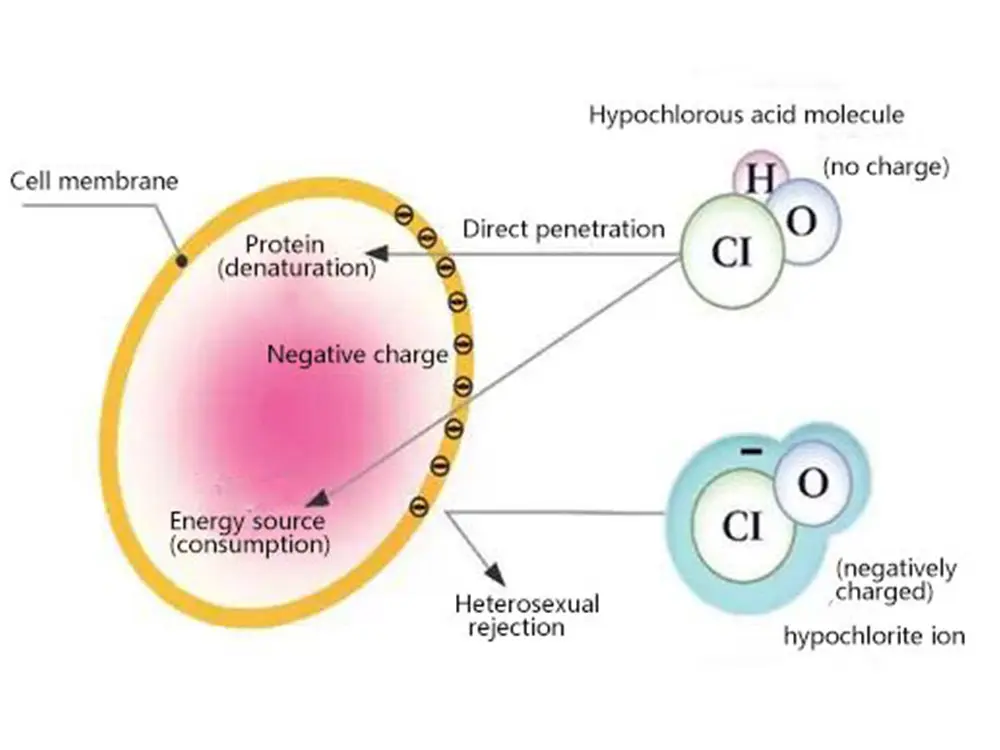
Hypochlorous acid is recognized by the World Health Organization (WHO) as a highly effective disinfectant. And its bactericidal mechanism is completely different from that of traditional 84 disinfectant (sodium hypochlorite):
- Extremely fast and thorough sterilization: Due to hypochlorous acid molecules are extremely small and uncharged. Therefore allowing them to easily penetrate bacterial cell walls and viral capsids. At the same concentration (typically 30-50 ppm). Its sterilization speed is 80-100 times that of sodium hypochlorite. In the final stage of rinsing tableware. Just a few seconds of spraying or soaking is enough to achieve a 99.999% sterilization rate.
- Safe for consumption: This is the most revolutionary feature of hypochlorous acid. It is very similar to the bactericidal substances produced by the human immune system and is non-irritating to skin and mucous membranes. No secondary rinsing is required after use for tableware disinfection. Even if a small amount of residue remains. It will quickly decompose into water (H₂O) and trace amounts of salt, completely harmless to the human body.
- Non-corrosive and odorless: Unlike traditional chlorine-based disinfectants, low-concentration hypochlorous acid solutions have almost no irritating odor and are non-corrosive to stainless steel, ceramic, and plastic tableware, producing no “disinfectant smell” and ensuring clean and fresh tableware.

Overall benefits: Hypochlorous acid generators provide a one-step solution from cleaning to disinfection.
The combination of “alkaline water cleaning + hypochlorous acid disinfection” has brought obvious changes to the tableware cleaning area:
- Cost reduction and efficiency: significantly reduce or even replace the cost of chemical detergents and procurement of finished disinfectants. Only salt, water and electricity are consumed, and the operation cost is extremely low.
- Simplified process: seamless connection between cleaning and disinfection. Alkaline water is responsible for cleaning oil, hypochlorous acid is responsible for instant sterilization, no additional water link after cleaning, improve the turntable rate.
- Food safety upgrade: completely eliminate food safety risks caused by chemical detergent residues and meet the most stringent health supervision standards.
- Environmentally friendly: The resulting wastewater contains almost no phosphorus, no surfactant, and is extremely environmentally friendly.

If you are looking for a solution that can not only solve stubborn oil pollution, but also achieve no residue and efficient disinfection of tableware treatment, hypochlorous acid generator is undoubtedly the best choice under the current technical conditions. Wash greasy with alkaline water, protect health with hypochlorous acid, double sword combination, so that each tableware is truly “clean as new, sterile and wordless”
FAQ
Can sodium hydroxide remove oil stains?
Yes, sodium hydroxide can effectively remove oil stains. It is one of the core components of many industrial and household cleaners (such as pipe dredging agents, heavy oil cleaning agents).
Principle:
Sodium hydroxide (NaOH) is a strong base that can saponify oil. Oils (animal and vegetable oils) are hydrolyze by alkali to produce water-soluble glycerol and fatty acid salts (the main ingredients of soap), which are wash away by water.