

Currently, most livestock farms are troubled by persistent ammonia odor and breeding bacteria. Meanwhile, traditional deodorants merely cover the smell instead of removing it fundamentally. In addition, chemical disinfectants often cause respiratory irritation to livestock and leave harmful residues. Therefore, many farmers are struggling to balance effective deodorization and safe breeding environments. Are you facing the same farm sanitation troubles?
Precise HOCl ppm Solution for Livestock Scenarios
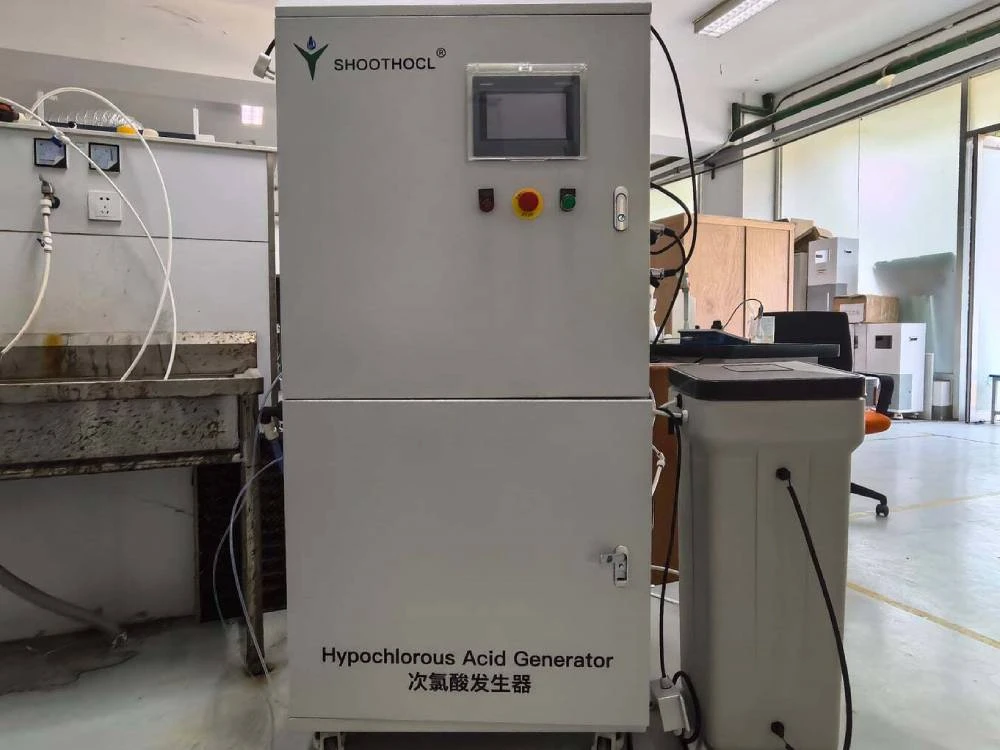
To solve the above pain points, our professional HOCl generator provides stable on-site disinfection and deodorization. Specifically, we support multi-grade adjustable concentration for different breeding demands, and all ranges are practically verified:
80–100 ppm: Air deodorization and environmental spraying for pens and aisles
100–150 ppm: Daily sanitization for water lines, feeding equipment and farm tools
150–200 ppm: Intensive disinfection for high-risk areas before livestock turnover
Furthermore, the generated HOCl eliminates odor by decomposing ammonia substances and achieves a 99.99% sterilization rate. As a result, it greatly improves farm air quality and biosecurity level.
Economical and Eco-Friendly Farm Sanitation Upgrade
Compared with traditional purchased disinfectants, our on-site generation system saves huge logistics and inventory costs. Moreover, HOCl is non-toxic, residue-free and animal-friendly, with no corrosion to farm facilities. Ultimately, the whole system realizes low-cost, long-term and stable farm sanitation management.
Contact us now to obtain professional customized livestock deodorization and disinfection solutions with factory direct prices.
FAQ
Will HOCl hurt livestock or corrode farm equipment?
A3: HOCl generated by our machine is non-toxic and residue-free. Moreover, it has low corrosivity, so it will not damage metal feeders, water pipes or irritate livestock respiratory tracts when used at recommended ppm.