

Hypochlorous acid generator in food factory. In the modern food processing industry, safety and quality are the lifeline of the enterprise. From the raw material into the factory to the product out of the factory. Every link is accompanied by the game with microorganisms. Although traditional chemical disinfectants (such as sodium hypochlorite, chlorine dioxide, etc.) have bactericidal effects. They also bring many pain points such as irritating odors, chemical residues, equipment corrosion and difficulties in wastewater treatment.
In recent years, hypochlorous acid (HClO) generator, as an online disinfection technology with high efficiency, safety and environmental protection, is gradually becoming the core equipment of food processing plants (especially fruit and vegetable processing. Prepared vegetables and purified vegetables production). With the unique advantages of “high efficiency sterilization, safety and no residue, no corrosion”, it is setting off a green revolution of food factory hygiene.
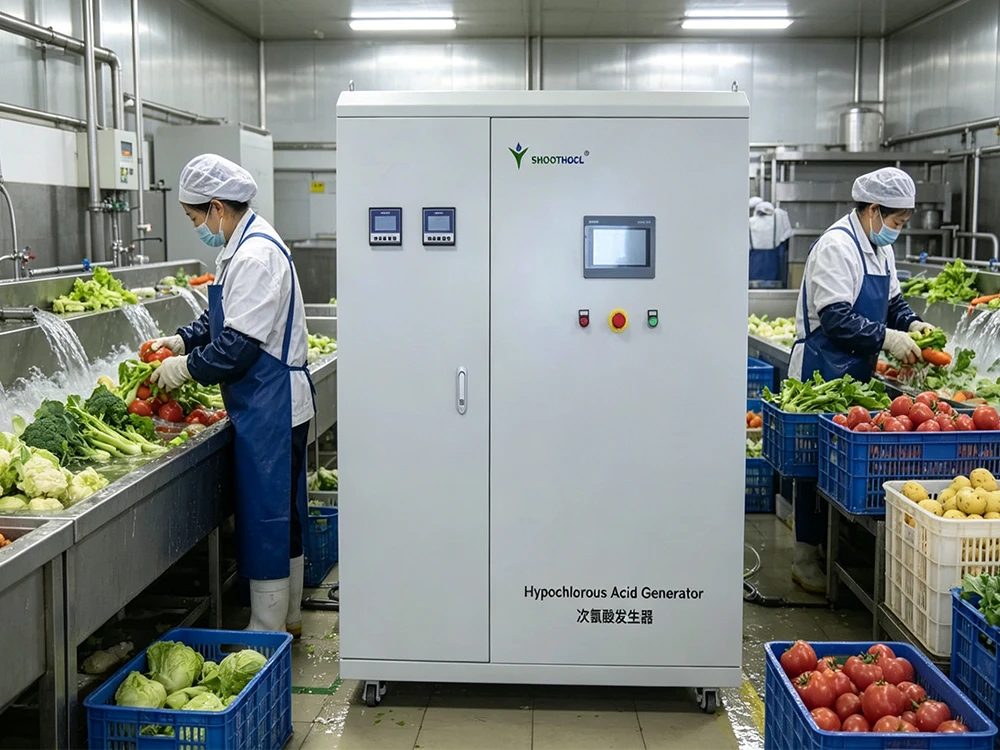
1,Fruit and vegetable cleaning and disinfection: efficient killing pathogenic bacteria
During the process of growing, harvesting and transportation. The surface of fruits and vegetables is easily enriched with microorganisms such as E. coli, Salmonella, Staphylococcus aureus and mold.
At the same time the hypochlorous acid generator generates high-purity hypochlorous acid water in real time (the pH value is usually controlled in the slightly acidic range of 5.0 — 6.5) by on-site electrolysis of low-concentration brine.
- Super bactericidal power: in this pH range. The proportion of HClO molecules with bactericidal activity is as high as 95%. Because hypochlorous acid molecules have no charge. It can easily penetrate the cell wall of bacteria and viruses, directly destroy their enzyme systems and DNA. Sterilization speed is 50 to 80 times that of traditional sodium hypochlorite (ClO-).
- Degradation of part of agricultural residues: Hypochlorous acid strong oxidation can not only kill pathogenic bacteria and eggs on the surface. But also oxidative degradation of part of organic phosphorus and caramic acid esters in the cleaning process, improving the overall safety of raw materials.
2,Lock fresh life extension: effectively extend the shelf life of fruits and vegetables
For food factories, controlling the decay rate of fruits and vegetables and extending the Shelf Life of products is directly related to the economic benefits of enterprises.
Inhibition of respiration and enzyme activity: fruits and vegetables still have respiratory effects after harvesting. The use of hypochlorous acid water for cleaning can moderately inhibit the respiratory intensity of the surface of fruits and vegetables. Slow down their metabolism and water evaporation.
Eradicating rot mold: The main culprit of fruit and vegetable rot is mold and fungal spores (such as gray mold, penicillium, etc.). Hypochlorous acid can accurately remove these pathogenic bacteria in the incubation period. Cut off the cross-contamination source. And curb the chain reaction of “one rotten basket” from the source.
Extend the fresh-keeping period of 2-3 times: after hypochlorous acid water cleaning and leaching of vegetables or fruits and vegetables. Under the cold chain conditions, the fresh-keeping period is usually 48 to 72 hours longer than ordinary washing. Greatly expanding the radiation sales radius of the enterprise.
3,Zero residue and sensory lossless: ensure the pure taste of food
Food safety ultimately comes down to the mouths of consumers. The physical and chemical characteristics of hypochlorous acid determine that it will not sacrifice the quality of food while ensuring safety.
- Completely zero residue: Hypochlorous acid is extremely unstable. And will quickly reduce and decompose into water and trace sodium chloride (salt) after the completion of the sterilization task. Contact with organic matter. Or exposure to light and air. There is no chemical residue on the surface of the product. Which fully conforms to the processing concept of green and organic food.
- Retain natural flavor and color: Because the concentration of hypochlorous acid is usually low (30 — 100 ppm). It will not destroy the natural waxy layer on the surface of fruits and vegetables. Nor will it cause the separation of the plasmolysis wall of fruit and vegetable cells. After cleaning, the fruits and vegetables can maintain the original crisp taste. Bright color and natural aroma, without the harsh “potion taste” brought by traditional bleach or sodium hypochlorite.
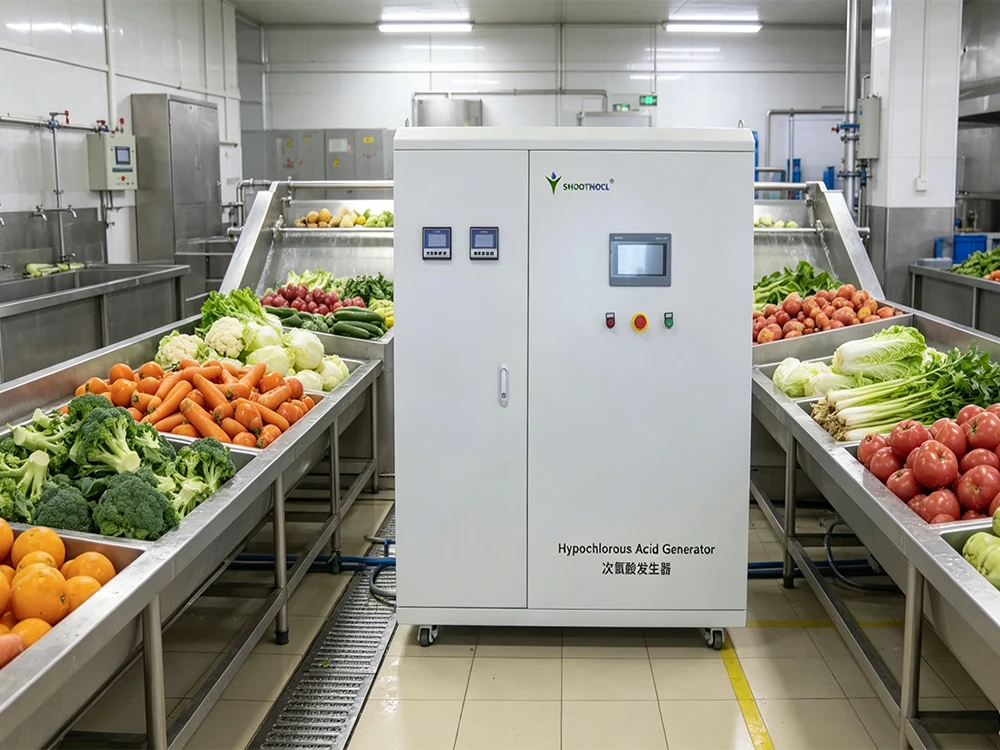
Protect assets: zero corrosion to field equipment and pipelines
The long-term use of traditional strong alkaline disinfectants or strong acid industrial products will cause irreversible corrosion to expensive automated production lines (such as stainless steel conveyor belts, cutting machines, packaging machines) and workshop epoxy floors in food factories.
Advantages of slightly acidic hypochlorous acid generator
The slightly acidic water prepared by hypochlorous acid generator has a pH value close to that of human skin. Because it does not contain harmful free bases. And its conductivity and chloride ion concentration are very low. It is basically non-corrosive to food grade metal materials such as 304 and 316 stainless steel.
This means that the food factory can be assured to introduce the hypochlorous acid water into the CIP (online cleaning) system, or for the workshop tools, the ground, and even the air space atomization spray disinfection, while ensuring the full range of environmental health, greatly extending the service life of the plant equipment assets, reducing maintenance costs.

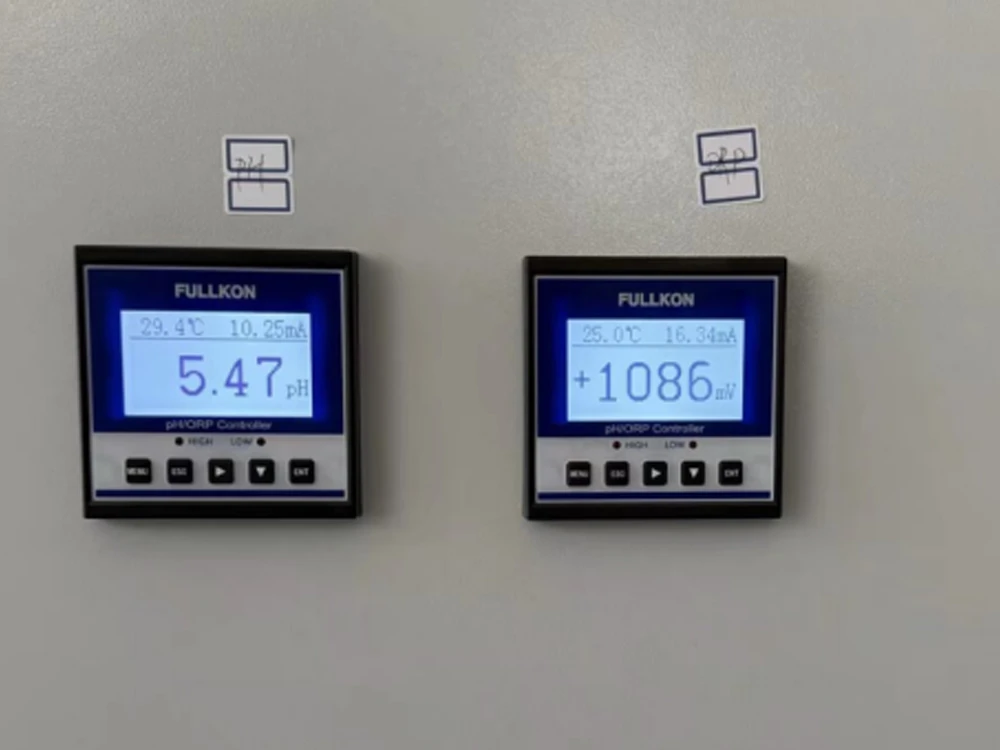
Hypochlorous acid generator integrates “preparation, transportation, cleaning, disinfection” into one, providing a low-cost, high-efficiency, fully independent health solution for food processing plants. It not only solves the core process problem of fruit and vegetable cleaning and disinfection and fresh-keeping to extend the shelf life, but also helps food enterprises to meet the strict environmental protection and food safety regulations of the state while improving the core competitiveness of the product market.