

Due to In food processing, raw material cleaning. Equipment disinfection and finished product preservation are the three core levels to ensure food safety. Firstly Traditional disinfection methods have many limitations: the concentration of chlorine-containing disinfectants (such as 84 disinfectant) is difficult to control. At the same time. And the residue is easy to cause corrosion and food safety risks.Second of all Alcohol. Quaternary ammonium salt products have a narrow bactericidal spectrum. And the resistance to spores and mold is weak. Ultraviolet and high temperature disinfection are limited in scene applicability and cannot cover complex equipment gaps and liquid raw materials. With the upgrading of consumption and the increasing stringency of food safety regulations. The industry urgently needs a safe and residue free. Efficient and broad spectrum cleaning and disinfection scheme with strong adaptability. Therefore The emergence of hypochlorous acid generator just fills this gap.
Technical principle and core advantages of hypochlorous acid generator
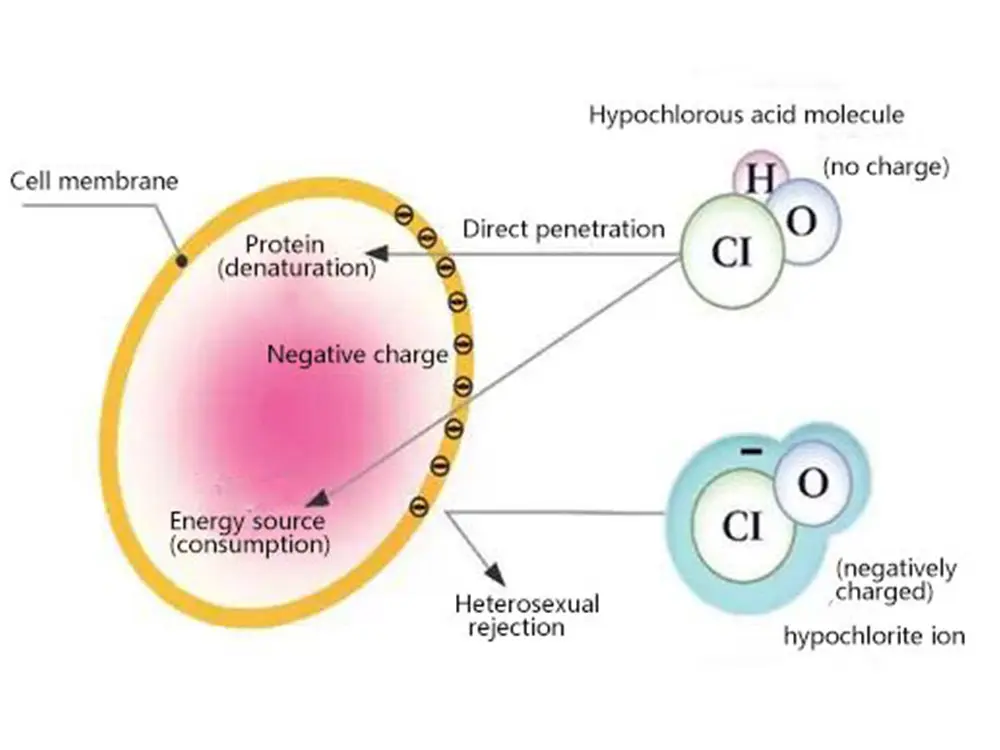
Due to Hypochlorous acid (HClO) is a bactericidal component of the human immune system. Which has strong oxidation and can quickly destroy the cell membrane and DNA of bacteria, viruses, mold and other microorganisms. The sterilization rate can reach 99.999%. And it is also effective for stubborn pathogens such as bacillus and Legionella. Hypochlorous acid generators produce hypochlorous acid solutions on-site by electrolysis of dilute brine (without chemical additives). The key advantages of hypochlorous acid generators are as follows
1,Safe and residue-free, conforming to food standards: The pH value of the generated hypochlorous acid solution is close to neutral (5.0-7.0), without irritating odor. And can be quickly decomposed into water and sodium chloride after contact with food. There is no chemical residue and no need for additional washing. It is fully in line with GB 2760, GB 14963 and other national standards of food safety. Avoiding the influence of traditional disinfectants on food flavor and color.
2,High efficiency and wide spectrum, full scene adaptation: the sterilization speed is more than 80 times that of traditional chlorine-containing disinfectants. Which can kill common pathogens such as E. coli, Salmonella, and new coronavirus within 10-60 seconds; The solution is liquid, which can be applied to the whole process of raw material cleaning. Equipment disinfection and air purification through soaking. Spraying and atomization. It is suitable for different food processing scenarios such as meat. Fruits and vegetables, aquatic products and baking.
3, the cost is controllable, environmentally friendly and low-carbon: the raw materials only need salt and water. And the preparation cost is far lower than the finished disinfectant; On-site preparation does not need to store high concentrations of chemicals, reducing the risk of transportation and storage; The product has no pollutant emission, which conforms to the green production concept.

Specific application scenarios of hypochlorous acid generator in food processing
1,Cleaning and disinfection of food raw materials by hypochlorous acid
Fruit and vegetable processing: For lettuce, strawberries, blueberries and other vulnerable fruits and vegetables. Soak in 50-100ppm hypochlorous acid solution for 3-5 minutes. Which can effectively remove surface pesticide residues, E. coli, mold, while maintaining freshness and taste of fruits and vegetables, and extend the shelf life of 2-3 days.
Meat/aquatic product processing: For raw materials such as fresh meat, fish and shrimp. The use of 80-150 PPM hypochlorous acid solution spray or soak. Can quickly kill the slaughter, transportation process contamination of Salmonella, Staphylococcus aureus. Reduce blood water, fishy smell residue, and does not destroy meat fiber.
2,Hypochlorous acid disinfection of food plant equipment and workshop environment
Production equipment: the mixer, conveyor belt, filling machine, cold storage, etc., with 100-200ppm hypochlorous acid solution atomization spray or wipe. Can penetrate the gap of the equipment. Kill the residual microorganisms. Avoid cross contamination; No need to rinse after disinfection, no corrosion of metal, plastic and other materials.
Workshop environment: Through the atomization system. The 50-100ppm hypochlorous acid solution is dispersed in the workshop air. Which can kill the bacteria and mold spores in the air. Reduce the total number of microbial colonies in the workshop. And remove the odor (such as fish smell, meat smell) generated in the processing process.
3,Hypochlorous acid to the preservation of food products and disinfection of packaging materials
Product preservation: For cooked food, pastries. Prefabricated dishes and other products. 30-50ppm hypochlorous acid solution for surface spray or packaging atomization treatment. Can inhibit the microbial breeding in the storage process of finished products. Prolong the room temperature preservation period 1-2 times. Cold chain preservation period increased by more than 30%.
Packaging materials: for food packaging bags, packaging boxes, etc., soak or spray with 50-80ppm hypochlorous acid solution to kill bacteria and mold on the packaging surface to avoid food deterioration caused by packaging pollution.
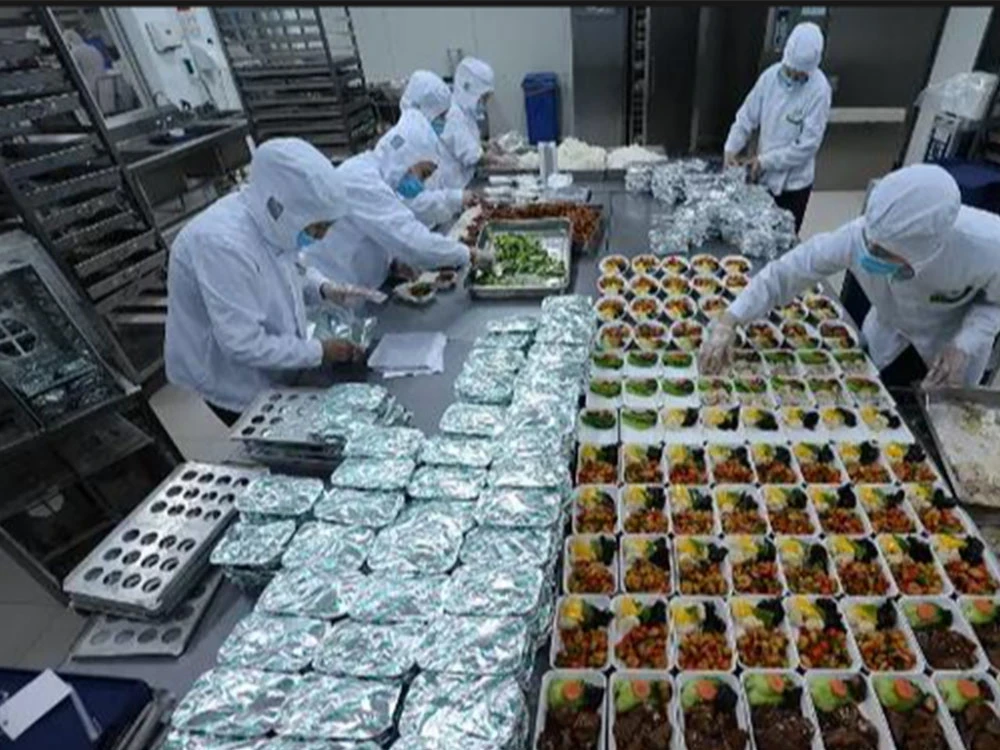

Industry application case and effect verification
After the introduction of hypochlorous acid generator in a large fruit and vegetable processing enterprise, the comparative experiment shows that the qualified rate of microorganisms after raw material cleaning is increased from 82% to 99.5%, the shelf life of finished products is extended from 3 days to 5-6 days, the procurement cost of disinfectants is reduced by 40%, and the risk of product recall caused by disinfection residues is reduced. After the application of another aquatic product processing enterprise. The total number of air colonies in the workshop decreased by 60%. The detection rate of Salmonella in the finished product was 0. And the cost of production wastewater treatment was reduced by 25%. Which realized the double improvement of safety and benefit.
FAQ
Compared with traditional disinfectants (such as 84 disinfectant, alcohol), what are the outstanding advantages of hypochlorous acid in the use of food factories?
Compare with traditional disinfectants, hypochlorous acid is more suitable for the strict needs of food factories, and its core advantages are reflect in three aspects:
Higher safety: 84 disinfectant (containing sodium hypochlorite) is strongly alkaline (pH≥11). Easy to corrode equipment, irritate skin, and residual need a lot of water to wash; Although alcohol (75%) sterilization fast. But flammable and explosive. Can not be used for large areas of environmental disinfection. Food grade hypochlorous acid is neutral or weakly acidic (pH 5.0-7.0), no corrosion, no stimulation, natural degradation after action, no need for a lot of washing. More suitable for food contact scenarios;
The scope of sterilization is wider: it can not only kill bacteria (such as E. coli, Salmonella). Viruses (such as norovirus, new coronavirus). But also effectively remove mold spores (such as aflatoxin producing bacteria). And alcohol is basically ineffective on mold. 84 disinfector has limited effect on killing some viruses;
The operation is more convenient: it can be prepare on the spot by special equipment (only tap water, salt, electricity), avoiding the safety risk of traditional disinfectant storage and transportation (such as alcohol needs explosion-proof storage), and can be directly spray and wipe without dilution ratio (some equipment can automatically control the concentration), reducing the error rate of operation.