

Microbial contamination in fish processing has always been the core problem in the industry. The data showed that nearly 20% of aquatic products may carry Listeria monocytogenes and other pathogenic bacteria. While the traditional cleaning and disinfection methods have multiple limitations. Sodium hypochlorite needs to be used in high concentration (100-1000 PPM), which is easy to produce carcinogenic by-products such as chloroform. And has strong corrosion to equipment. Uv disinfection only acts on the surface and cannot penetrate water bodies or crevices
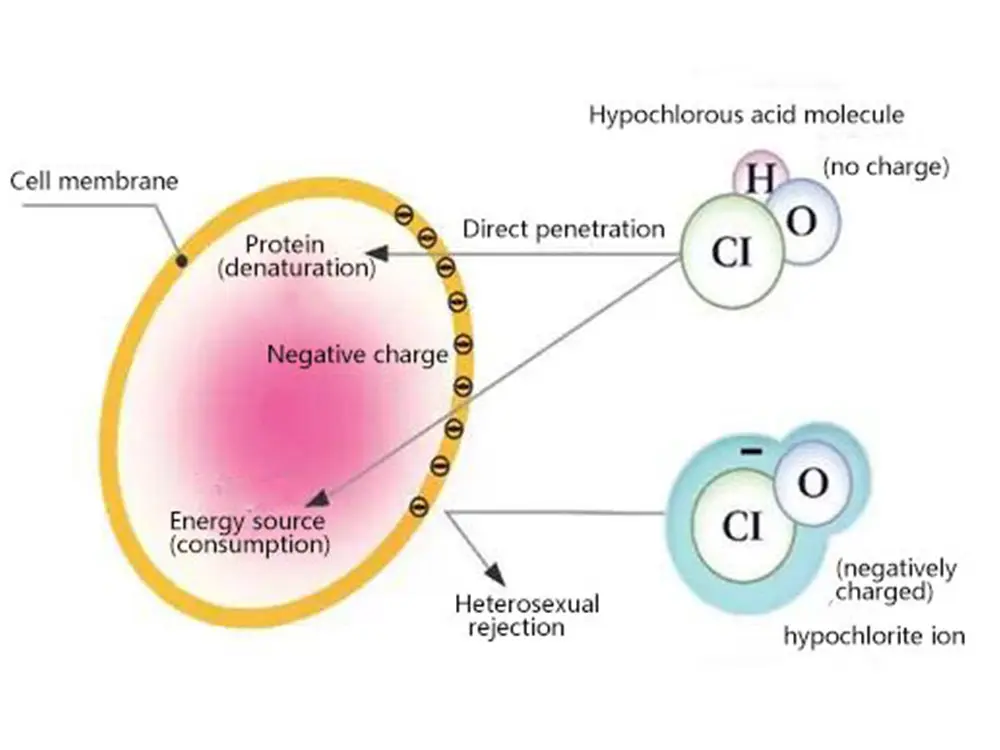
The emergence of hypochlorous acid (HClO) broke this dilemma. As a naturally occurring immune factor in the human immune system. Its electrically neutral molecular structure can easily penetrate the microbial cell wall and destroy proteins and nucleic acids through oxidation. Its bactericidal efficiency is 80-100 times that of sodium hypochlorite. More importantly. It can be effective at low concentrations of 50-200 PPM. And eventually decompose into water and chloride ions without residual risk. In 2002, it has been recognized as “effective food contact substance” by the US FDA.

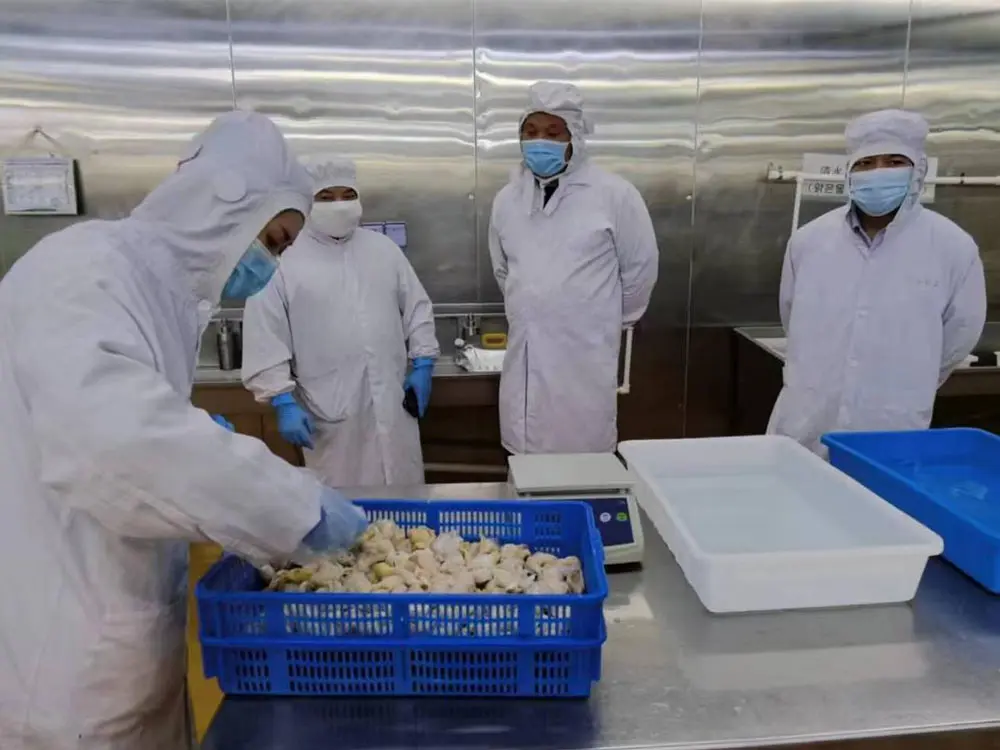
Full scene application of hypochlorous acid in fish processing and cleaning
1,Hypochlorous acid for raw material treatment: sterilization and fresh-keeping double effect
Vibrio parahaemolyticus and Escherichia coli on the surface of fish raw materials are the main causes of spoilage and foodborne diseases. The results showed that 71.4ppm hypochlorous acid could kill Escherichia coli (6.73log₁₀cfu/mL) within 30 seconds and Vibrio parahaemolyticus (6.15log₁₀cfu/mL) within 5 minutes. The treatment of mandarin fish slices showed that soaking in 40-49mg/L hypochlorous acid water for 20 minutes could maximally inhibit the growth of total colonies and volatile basic nitrogen (TVB-N) during cold storage. And significantly prolonged the fresh-keeping period.
In shellfish processing, the advantages of hypochlorous acid water are more prominent. In the study of scallops. It was found that after 8 minutes of hypochlorous acid treatment. The total number of bacteria in the scallops decreased by 65%. The coliform decreased by 74%. And the survival rate remained above 80% at 14 hours. While the survival rate of the untreated group was lower than 72%. This treatment can also reduce the excessive loss of water holding capacity of fish. Taking into account the fresh-keeping effect and edible quality.
2,Hypochlorous acid is used for deep disinfection of equipment and appliances and prevention of cross contamination
Stainless steel operating table, cutting tool. Plastic basket and other utensils in fish processing are easy to breed bacteria and cause cross contamination due to residues. Guangdong Province local standard “Aquatic product processing Plant disinfection method operation Specification” clearly requires that such appliances should be soaked with 100mg/L sodium hypochlorite for 20-30 minutes. But hypochlorite water can achieve more efficient treatment: Morganella morganii (9.11log₁₀cfu/mL). Listeria monocytotica (7.56log₁₀cfu/mL) and other pathogenic bacteria on stainless steel. Ceramic tile and other surfaces were completely kill within 5 minutes.
Compared with traditional disinfectants. Hypochlorous acid water does not need to be dilute and mix. And can be directly use by spraying and wiping. And it is non-corrosive to the equipment. After the application of a fish processing plant. The rust rate of the equipment was reduce by 90%. The cleaning frequency was reduce from once every 4 hours to twice a day. And the first-line operation efficiency was increase by 40%.
3,Hypochlorous acid disinfects the processing environment and personnel to construct a sterile production environment
The ground, wall skirt and hands of the processing workshop are the key links of pollution transmission. According to the specification requirements. The floor of the workshop should be wash with more than 100mg/L sodium hypochlorite. But the hypochlorous acid water has better sterilization effect under the same concentration, and can remove more than 40% of the odor of smelly fish, improve the production environment. In terms of hand disinfection, 50mg/L hypochlorous acid water immersion for 30 seconds can reach the standard. Compared with alcohol disinfection, it is milder, has no risk of skin irritation, and can continuously inhibit bacterial regeneration.
4,Hypochlorous acid prolongs the shelf life of fish
Hypochlorous acid ice technology realizes the coordination of low temperature and disinfection in fish refrigeration. The preservation experiment of pomfret showed that the hypochlorite ice treatment group still maintained good sensory scores after 14 days of storage, and the total number of colonies was significantly lower than that of the common ice and ozone ice groups. This technology is especially suitable for fish products in the processing of prepare dishes, and can be combine with ice temperature storage to extend the refrigerated shelf life of raw materials such as sea bass for more than 6 days.

FAQ
1,Is hypochlorous acid generator suitable for all fish processing links? Do different fish (e.g. freshwater fish, Marine fish) need to adjust the parameters?
It is suitable for the whole process disinfection of fish processing, including the cleaning of raw fish, the disinfection of processing equipment (such as fish dissection table, cutting tools, conveyor belt), the floor/wall disinfection of the workshop, and the disinfection of temporary storage containers of finished products. For different fish, the parameters of hypochlorous acid water should be fine-tune:
Freshwater fish (such as grass carp, carp) : because the surface is easy to carry bacteria (such as Aeromonas hydrophila), it is recommend to use 100-150mg/L concentration of hypochlorous acid water, soaking or spraying time control in 1-2 minutes, can effectively kill surface pathogenic bacteria;
Marine fish (such as cod, salmon) : surface attached Marine bacteria (such as Vibrio parahaemulticus) are more sensitive to chlorine, can be appropriate to reduce the concentration to 50-100mg/L, soaking time 30 seconds to 1 minute, to avoid high concentration of chlorine affect the fish umamity and meat taste;
Regardless of freshwater fish or Marine fish, if you need to eat directly raw after processing (such as salmon sashimi), you should ensure that the hypochlorous acid water meets the food-grade raw material standards (the generator should be prepared with purified water to avoid the introduction of impurities), and rinse with sterile water once after disinfection to further reduce the risk of residue.