

In the process of oral medical diagnosis and treatment. The waterway system of dental chairs is a key infrastructure to ensure the smooth progress of diagnosis and treatment. But the hidden risk of microbial contamination is often overlooked. In recent years, with the continuous improvement of oral medical safety standards. How to effectively solve the problem of waterway pollution in dental chairs has become a focus of industry attention. Hypochlorous acid generators, with their high efficiency, safety and convenience. Have gradually become an innovative solution in the field of waterway disinfection for dental chairs. Building a solid defense line for the safety of oral diagnosis and treatment.
Waterway contamination of dental chairs: A medical safety hazard that cannot be ignored
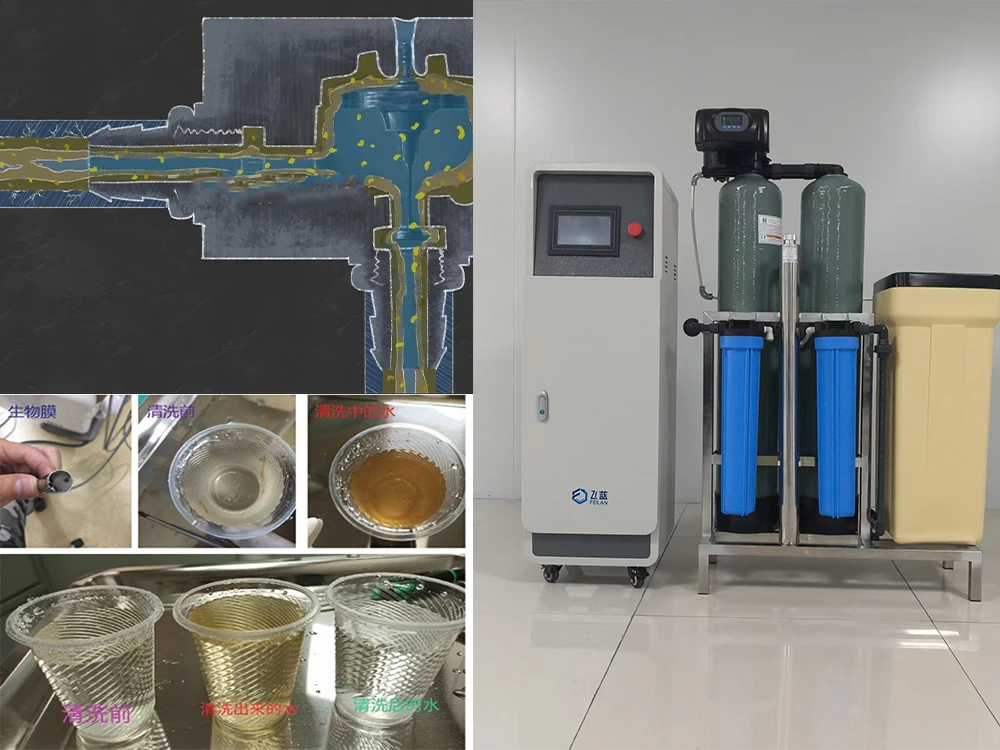
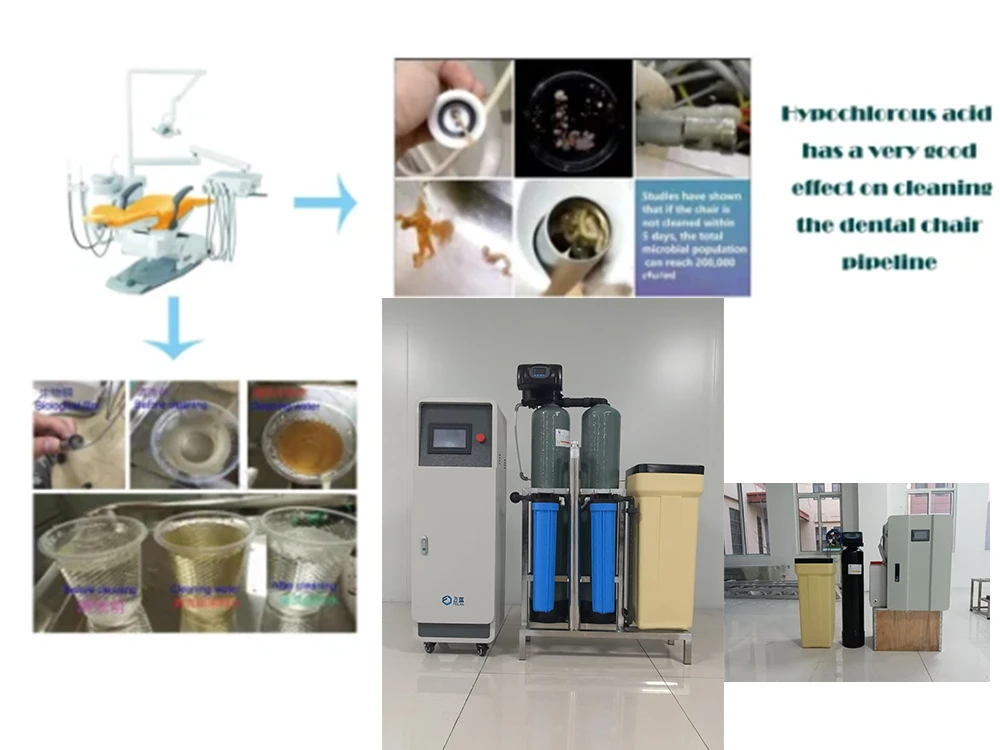
The waterway system of the oral dental chair is composed of components such as water supply pipes, nozzles, three-in-one guns. And high-speed mobile phones. During the diagnosis and treatment process. It continuously outputs water mist or air flow. Directly in contact with the patient’s oral mucosa and wounds. However, due to the long-term damp environment inside the waterway and the easy formation of biofilms on the inner walls of the pipes. It is very easy for bacteria, fungi, viruses and other microorganisms to breed. Among them, common harmful microorganisms include Pseudomonas aeruginosa. Legionella, Escherichia coli, etc.
According to relevant research data. The bacterial colony count at the water outlet of dental chairs that have not been effectively disinfected often far exceeds the requirement of “total bacterial count in oral diagnosis and treatment water ≤200 CFU/mL” stipulated in the “Discharge Standard of Water Pollutants for Medical Institutions”. And in some cases, it even reaches tens of thousands of CFU/mL. Once these contaminated waterways are used in diagnosis and treatment. They may cause cross-infection among patients through aerosol inhalation. Wound contact and other means, especially for the elderly. Children or postoperative patients with lower immunity. The risk of infection is even higher. In addition, waterway pollution may also lead to internal corrosion and blockage of the equipment. Shorten the service life of dental chairs. And increase the maintenance costs of medical institutions.
Hypochlorous acid generator: The ideal disinfection component for the waterways of oral dental chairs
Hypochlorous acid (HClO) is an antibacterial substance naturally present in the human immune system. Produced by white blood cells. It can quickly kill invading microorganisms and is friendly to human cells. It has three core advantages: highly efficient sterilization. Safety and non-irritation. And environmental friendliness. It perfectly meets the disinfection needs of the waterways in oral dental chairs.
1,The hypochlorous acid generator efficiently kills bacteria and rapidly breaks down biofilms
Hypochlorous acid has strong oxidizing properties and can penetrate the cell membranes of microorganisms. Destroying their core structures such as proteins and nucleic acids, thereby achieving broad-spectrum killing of bacteria. Fungi and viruses. Experimental data show that a hypochlorous acid solution with a concentration of 50-200 PPM can achieve a sterilization rate of 99.99% within 30 seconds after coming into contact with bacteria. And can effectively decompose the biofilm on the inner walls of water pipes – an effect that is difficult to achieve with traditional disinfection methods (such as chlorine-containing disinfectants and ultraviolet light). The removal of biofilms not only solves the problem of immediate pollution but also reduces the “breeding ground” for microorganisms from the root. Maintaining the cleanliness of waterways in the long term.
2,The hypochlorous acid generator is safe and non-irritating, making it suitable for oral diagnosis and treatment scenarios
Compared with traditional chlorine-containing disinfectants (such as 84 disinfectant). Hypochlorous acid solution has a pH value close to that of human body fluids (pH 5.0-7.0). Is non-irritating to oral mucosa and skin. And will not cause corrosion to the rubber sealing rings and metal parts of dental chairs like alcohol. Even if there is a small amount of solution residue or aerosol inhalation during the diagnosis and treatment process. It will not pose a threat to the health of patients and medical staff. Fully meeting the safety requirements of “close and frequent contact” in oral diagnosis and treatment.
3,Hypochlorous acid generators are environmentally friendly and reduce the risk of secondary pollution
After completing its disinfection function, hypochlorous acid gradually decomposes into water and sodium chloride. Leaving no residue or odor. It also does not release harmful gases such as chlorine into the air. Thus avoiding the possible secondary pollution caused by the use of traditional disinfectants. Meanwhile, the hypochlorous acid generator adopts the “on-site preparation and immediate use” mode. Eliminating the need to store a large amount of finished disinfectants. This reduces safety hazards such as disinfectant leakage and expiration. And also lowers the hazardous waste treatment costs for medical institutions.


Application Scheme of Hypochlorous acid Generator in the waterway of oral dental chair
The core advantage of the hypochlorous acid generator lies in its “on-demand preparation and immediate use”. Its application process can be seamlessly integrate with the waterway system of dental chairs. Specifically, it is divide into three scenarios: daily disinfection, deep cleaning, and emergency treatment, meeting different cleaning needs.
1,Daily disinfection: Ensure the cleanliness of waterways in real time
Connect the hypochlorous acid generator to the water supply system of the dental chair through a dedicated interface, set the output concentration of the generator (usually 10-100 PPM), and let the hypochlorous acid solution directly enter the waterway of the dental chair. During the intervals of daily medical treatment (such as when patients change), medical staff only need to activate the three-in-one gun, high-speed mobile phone and other components of the dental chair, allowing hypochlorous acid solution to flow through the entire waterway system (for 10 to 20 seconds), to complete the immediate disinfection of the waterway. This method does not require additional disassembly of equipment, does not affect the efficiency of diagnosis and treatment, and can achieve high-frequency protection of “disinfecting the waterway once for each patient treated”, cutting off the chain of cross-infection from the source.
2. Deep cleaning: Regularly remove biofilm
It is recommend that medical institutions conduct a deep cleaning of the waterways of dental chairs every 1 to 2 weeks. At this point, the output concentration of the hypochlorous acid generator can be increase to 40-200 PPM. The hypochlorous acid solution can be inject into the waterway system through a dedicated circulation device. After closing the water outlet, let it soak for 30 minutes to allow the solution to fully penetrate and decompose the biofilm on the inner wall of the pipeline. After soaking, open the waterway to drain the solution and then rinse with clean water for 1 to 2 minutes. Deep cleaning can effectively solve the problem of pipe dead corners that are
3. Emergency Response: Respond quickly to pollution risks
If any abnormality find in the waterway during diagnosis and treatment (such as an unpleasant smell in the water or suspect infection symptoms in the patient), a hypochlorous acid generator can be use immediately for emergency disinfection. At this point, a combination of “high-concentration soaking + circulating flushing” is adopt: First, 200ppm hypochlorous acid solution is injecte into the waterway for soaking for 1 hour. During this period, the dental chair assembly is start every 15 minutes to allow the solution to flow in the pipeline. After soaking, circulate and rinse with a 100ppm hypochlorous acid solution for 30 minutes, and finally rinse thoroughly with clean water. Emergency response can control the spread of pollution in a short time and reduce the probability of infection incidents
FAQ
1,How long can the hypochlorous acid produced by the hypochlorous acid generator maintain an effective sterilization effect in the waterway disinfection of dental chairs?
The effective bactericidal effect of hypochlorous acid is greatly influenced by storage conditions, water flow rate and ambient temperature. In the waterway system of dental chairs, if a seal and light-proof storage method is adopt and the water flow in the waterway is in a slow circulation state (not continuous high-speed flushing), the concentration of hypochlorous acid maintain at 50-80 PPM (the “recommendation effective concentration for waterway disinfection of dental chairs), and the effective sterilization duration is approximately 4-6 hours. It should be note that after each use of the dental chair, it is recommend to replenish the chloric acid solution through the generator to ensure that the concentration of disinfectant in the waterway meets the standard for the next use, avoiding a decline in the sterilization effect due to water drainage or bacterial growth
2,When using a hypochlorous acid generator to disinfect the waterway of dental chairs, will it cause corrosion to the waterway pipes or dental chair accessories?
Under normal and standardized use, it will not cause corrosion to the water pipes and accessories of the dental chair. At present, the commonly used pipe materials for the waterway of dental chairs are medical PVC or silicone. When the concentration of hypochlorous acid is within the range of 50-100 PPM (the commonly used concentration for dental chair disinfection), the corrosion rate of such materials is far lower than the national stand (≤0.005mm/year). Moreover, the hypochlorous acid produced by the generator is neutral (pH value 6.5-7.5), which avoids the oxidation and corrosion of metal joints (such as copper and stainless steel joints) by acidic or alkaline disinfectants. Special attention should be paid: It is strictly prohibit to adjust the concentration of hypochlorous acid to above 150ppm or to mix it with other disinfectants (such as chlorine-containing effervescent tablets, alcohol), otherwise it may damage the pipe material or produce harmful gases.