

Due to In the critical period of intensive and green transformation of modern agriculture. Therefore Hypochlorous acid (HClO), a substance derived from the human body’s own immune system. Is quietly changing the face of agricultural cultivation by virtue of its high efficiency. Safety and no residue characteristics. The popularity of hypochlorous acid generator makes the large-scale and precise application of this “green disinfectant” a reality. Bringing a new solution for agricultural production.
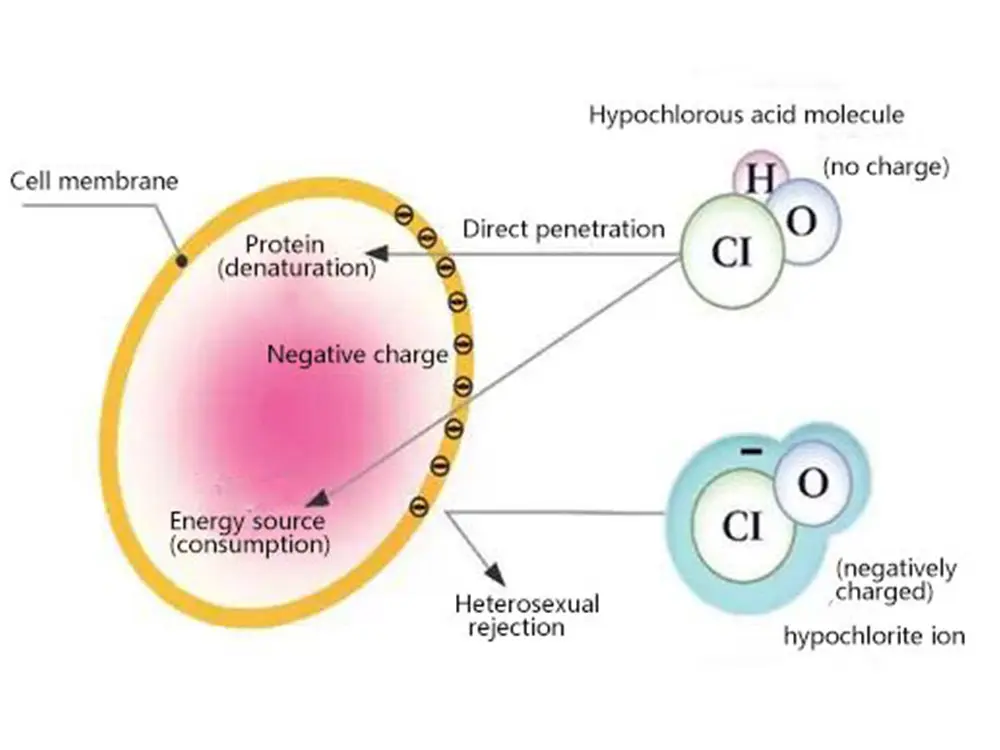
Because Hypochlorous acid is the core component of human white blood cells to resist pathogens.At the same time Its bactericidal mechanism is to destroy the cell membrane and protein structure of microorganisms through oxidation. And it has a broad spectrum of killing effects on bacteria, viruses, fungi and spores. Unlike traditional chlorine-containing disinfectants (such as sodium hypochlorite, that is, 84 disinfectant). Hypochlorous acid has stronger oxidation ability and is reduced to water after action. Without harmful residues. Which is extremely friendly to crops, soil and the environment.
Advantages of hypochlorous acid generator: ready-made for use, precise and controllable
Due to Traditional agricultural disinfection often relies on chemical pesticides or disinfectants with poor stability. Which leads to drug resistance, residue and storage risks. Hypochlorous acid generator through electrolysis technology. Salt (sodium chloride) and water into a predetermined concentration of hypochlorous acid solution, to achieve:
Just-in-time production: On demand preparation ensures maximum activity.
Controllable concentration: The available chlorine concentration can be adjusted
according to different application scenarios (usually 50-200 ppm for agriculture).
Cost reduction: the raw materials are only salt and water, and the long-term use
economy is significant.
Operational safety: the risk of storing and transporting high concentrations of
disinfectant is avoided.
Four core application scenarios of hypochlorous acid: throughout the whole planting cycle
1. Seed and seedling treatment: stop the disease from the source
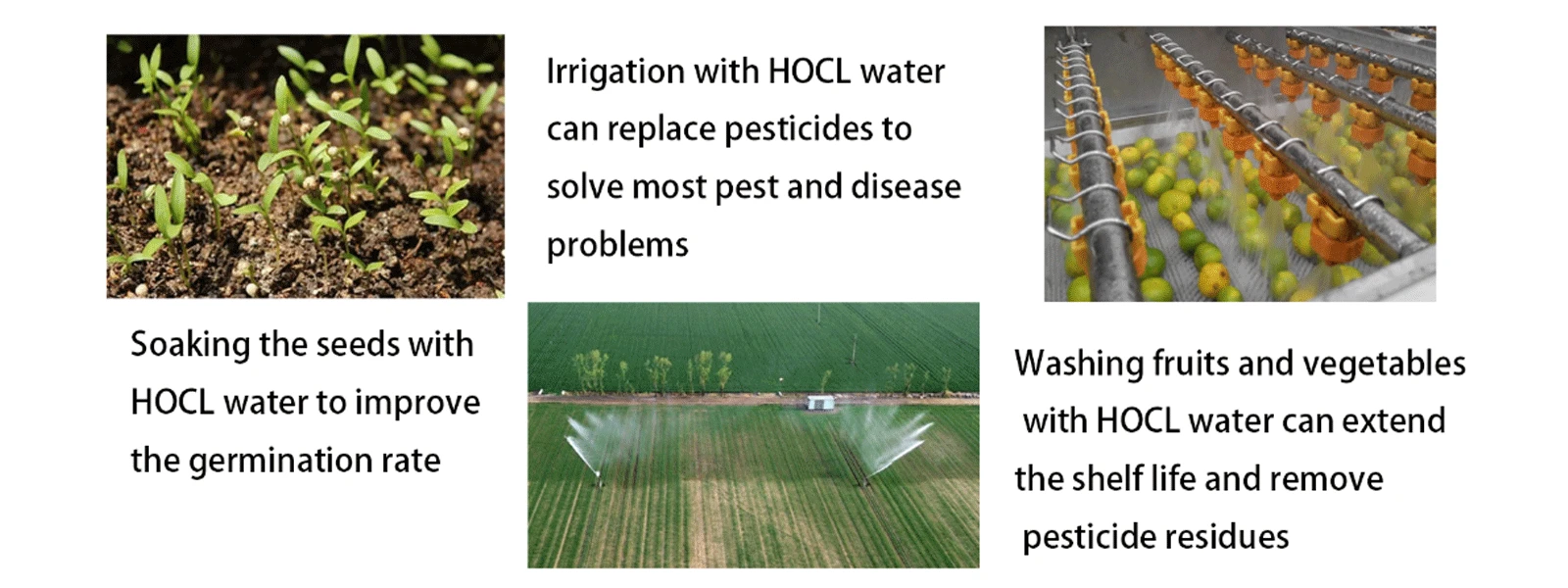
Seed immersion disinfection: Immerse seeds with 50-100 ppm hypochlorous
acid solution, can effectively kill surface pathogens (such as anthrax, blister),
improve germination rate, and no damage to the seeds.
Seedbed disinfection: spray hypochlorous acid solution to disinfect the seedling
substrate and drifter plate, prevent quench disease and root rot at seedling stage,
replace formaldehyde or high temperature steam disinfection, which is safer and
more convenient.
2. Disinfection of irrigation water and nutrient solution: protect root health
Water treatment: Due to adding hypochlorous acid (1-2 ppm continuous injection or 5-10 ppm intermittent treatment) in drip irrigation or
integrated water and fertilizer system can remove the biofilm in the pipeline, kill root rot bacteria and phytophthora in the water,
and significantly reduce soil-borne diseases.
Nutrient solution sterilization: Firstly It is used to disinfect the circulating nutrient solution for soillless cultivation, inhibit the growth of
algae and pathogenic bacteria, and avoid system blockage and disease transmission.
3.Foliation and greenhouse space disinfection: substitute some chemical pesticides
Disease prevention: regular spray of 100-200 ppm hypochlorous acid can prevent downy mildew, powdery mildew, leaf spot and
other common leaf diseases, especially suitable for humid environment of facility agriculture.
Greenhouse fumigation: Spray hypochlorous acid to disinfect the air, skeleton and floor of the greenhouse to reduce the risk of air-
borne diseases (such as gray mold). Use before and after harvest can reduce post-harvest diseases.
Hypochlorous acid generator actual case and benefit analysis
A strawberry base case: After introducing hypochlorous acid generator to treat irrigation water and foliar spray, the incidence of root rot was reduced by 70%, the use of chemical pesticides was reduced by 40%, and the qualified rate of fruits was increased by 15%.
Tomato greenhouse application: Through regular space disinfection, the infection rate of gray mold is reduce by 60%. At the same time, because of no irritating gas, workers do not need to evacuate during operation, greatly improving management efficiency.

FAQ
What are the main functions of hypochlorous acid (HClO) in agricultural planting?
1,Disease control: It has a good prevention and inhibition effect on a variety of plant diseases caused by bacteria, fungi and viruses. For example, it can be use to prevent the spread of leaf spot, canker, downy mildew, and certain soilborne diseases. It can damage the cell membrane or protein structure of pathogenic microorganisms and inactivate them.
2,Treatment of seeds and seedlings: Soaking seeds in low concentration can effectively kill pathogens attached to the surface and improve the germination rate and healthy seedling rate.
3,Irrigation system cleaning: Remove biofilms, algae and bacteria from irrigation pipes and drips to prevent system clogging and disease transmission with the water.
4,Disinfection of seedling trays, tools and facilities: spray or wipe the greenhouse, seedling trays, pruning tools, etc., to cut off the way of cross infection.
Post-harvest treatment: After harvesting fruits and vegetables, cleaning or atomizing with hypochlorous acid solution can significantly reduce surface pathogens and spoilage bacteria, and extend the fresh-keeping period and shelf life.
5,Improve hydroponics system: Adding very low concentration of hypochlorous acid to the hydroponics nutrient solution can inhibit the propagation of harmful microorganisms, maintain the health of the root system, and there is no harmful residue after decomposition, and does not affect the balance of nutrient solution.