

In fields such as medical care, food processing, electronic manufacturing and chemical engineering, rubber gloves. As important protective equipment, their cleanliness and sterility are directly related to production safety. Product quality and personnel health. Traditional cleaning and disinfection methods. Such as soaking in chemical disinfectants and high-temperature sterilization, often have problems like residue risks. Material damage, and complex operations. Hypochlorous acid generators. With their advantages such as on-site preparation, efficient sterilization. Safety and environmental protection. Are gradually becoming the ideal choice in the field of rubber glove cleaning and disinfection. Providing key technical support for the upgrading of industry protection standards.
I. Core Demands for Cleaning and Disinfecting Rubber Gloves and Pain Points of Traditional Methods
Rubber gloves (especially those made of nitrile and latex) are prone to accumulate contaminants such as oil stains, dust, and microorganisms (such as bacteria, viruses, and fungi) on their surfaces during use. If the cleaning and disinfection are not thorough. It will not only lead to a decline in the protective performance of the gloves. But also may cause cross-contamination – such as the risk of hospital infections in medical Settings. The problem of excessive microorganisms in food processing, or the potential contamination of products in the electronics industry.
Traditional cleaning and disinfection methods have obvious limitations:
1. Chemical disinfectants (such as chlorine-containing disinfectants and peracetic acid) : They need to be manually diluted in proportion. And it is difficult to control the concentration. Residual substances may corrode the rubber material. Causing the gloves to age and lose elasticity. Some disinfectants are highly irritating and require professional operation. Moreover. The wastewater discharged needs to be treated separately.
2. High-temperature sterilization (such as high-pressure steam and drying disinfection) : High-temperature environments can easily cause rubber gloves to deform and age. Shortening their service life. Moreover. It is unable to pre-treat stubborn stains on the surface of the gloves. And the disinfection effect is limited by the cleanliness.
3. Ultraviolet disinfection: It can only act on the exposed areas of the glove surface. With shadow dead corners. It cannot completely kill the microorganisms in the crevices and has no cleaning effect on the oil stains and dust that have adhered.
These pain points have forced the industry to seek more efficient, safe and rubber-compatible cleaning and disinfection solutions. And the emergence of hypochlorous acid generators has precisely filled this gap.
The core advantage of the hypochlorous acid generator for cleaning and disinfecting rubber gloves
Hypochlorous acid (HClO) is a strong oxidizing disinfectant. Its sterilization principle is to achieve rapid sterilization by destroying the cell membranes. Proteins and nucleic acids of microorganisms. With a sterilization rate of over 99.99%. And it is harmless to the human body and environmentally friendly. The hypochlorous acid generator prepares hypochlorous acid solution on-site by electrolyzing brine (or dilute hydrochloric acid). Eliminating the need to store high-concentration disinfectants and avoiding transportation and storage risks from the source. At the same time, it has the following core advantages that are suitable for cleaning and disinfecting rubber gloves:
1,Hypochlorous acid is highly efficient in sterilization and poses no risk of residue
Hypochlorous acid solution can quickly penetrate the crevices on the surface of rubber gloves. Killing attached bacteria (such as Escherichia coli, Staphylococcus aureus). Viruses (such as the novel coronavirus, influenza virus) and fungi. After action. It will decompose into water and sodium chloride, leaving no chemical residue and will not cause corrosion to the rubber material. It also avoids the irritation to human skin or contamination of products by residual disinfectants during subsequent use (such as in food processing and electronic component production scenarios).
2. Hypochlorous acid mild protective material, extending the service life of gloves
Compared with traditional chemical disinfectants (such as highly oxidizing peracetic acid and corrosive chlorine-containing disinfectants). The pH value of hypochlorous acid solution can be adjusted to neutral (pH 6-7). Which is close to the pH value of human skin. It has extremely low irritation to rubber materials such as nitrile and latex. And will not cause gloves to age, harden, crack or lose elasticity. Experimental data shows that the service life of rubber gloves cleaned and disinfected with neutral hypochlorous acid solution can be extended by more than 30% compared with those cleaned with traditional disinfectants, significantly reducing the procurement cost of protective equipment for enterprises.
3. The hypochlorous acid generator is easy to operate and compatible with an automated cleaning process
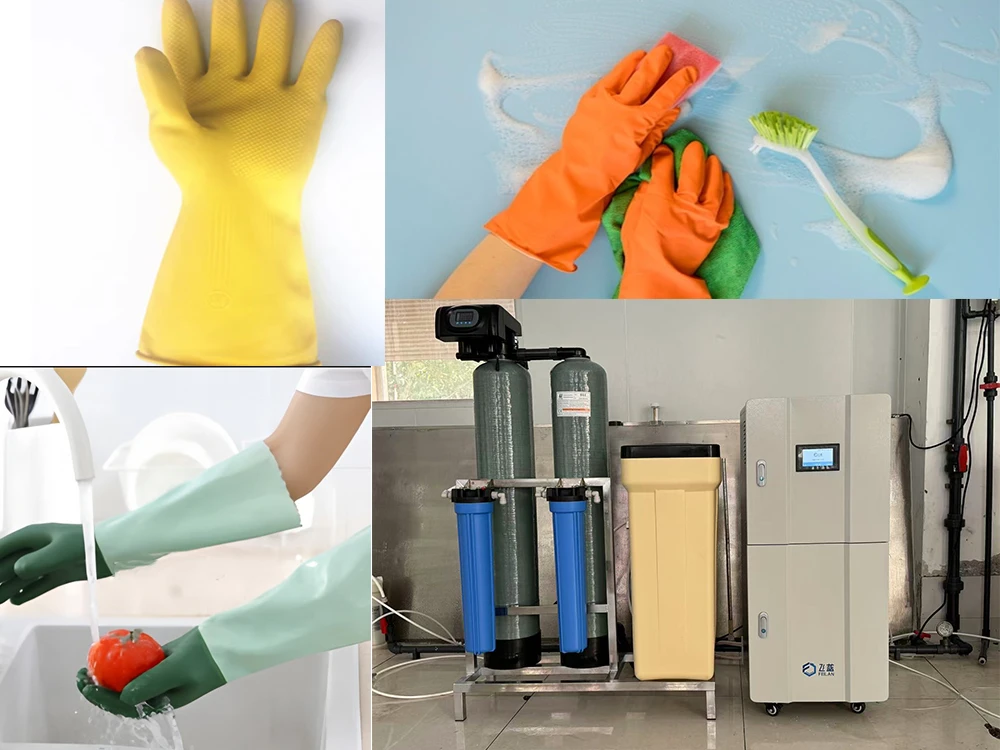
The hypochlorous acid generator can achieve continuous liquid production and support linkage with rubber glove cleaning equipment (such as ultrasonic cleaning machines and spray cleaning lines). There is no need for frequent manual dilution of disinfectants. Just set the hypochlorous acid concentration according to the cleaning requirements (usually 50-200 PPM. Suitable for rubber glove cleaning and disinfection), and it can realize automatic liquid supply. Meanwhile, the generator is equipped with concentration monitoring and alarm functions to ensure the stability of the concentration for each batch of cleaning and disinfection. Avoiding the failure of disinfection due to insufficient concentration or the waste of resources caused by excessive concentration.
The application effect of hypochlorous acid generators in the field of rubber gloves and the industry adaptation scenarios
1. Effect verification case
A certain medical equipment manufacturing enterprise used a hypochlorous acid generator (to prepare a 150ppm neutral hypochlorous acid solution) to clean and disinfect medical nitrile gloves. After verification by a third-party testing institution:
Microbial killing rate: The killing rates for Escherichia coli, Staphylococcus aureus, and Pseudomonas aeruginosa all reach 99.999%, and the killing rate for the novel coronavirus (inactivated strain) reaches 99.99%, meeting medical-grade disinfection standards.
Glove performance: After 50 consecutive washes and disinfected uses, the tensile strength and elongation at break of the gloves still meet the requirements of the GB 10213-2020 standard, and there is no obvious aging or hardening phenomenon.
Residue detection: No hypochlorous acid residue was detected on the surface of the gloves. Meeting the safety standards for skin contact.
Another food processing enterprise applied hypochlorous acid generators to the disinfection of rubber gloves for workshop operators. After replacing the traditional soaking method with 84 disinfectant, the service life of the gloves was extend from an average of 15 days to 25 days. The disinfection cost was reduced by 40%. And the microbial over-standard rate of workshop products dropped from three times a month to zero times.

2. Core adaptation scenarios
The application of hypochlorous acid generators in the cleaning and disinfection of rubber gloves is particularly suitable for scenarios where high cleanliness and sterility are require. And cost and environmental protection need to be take into account.
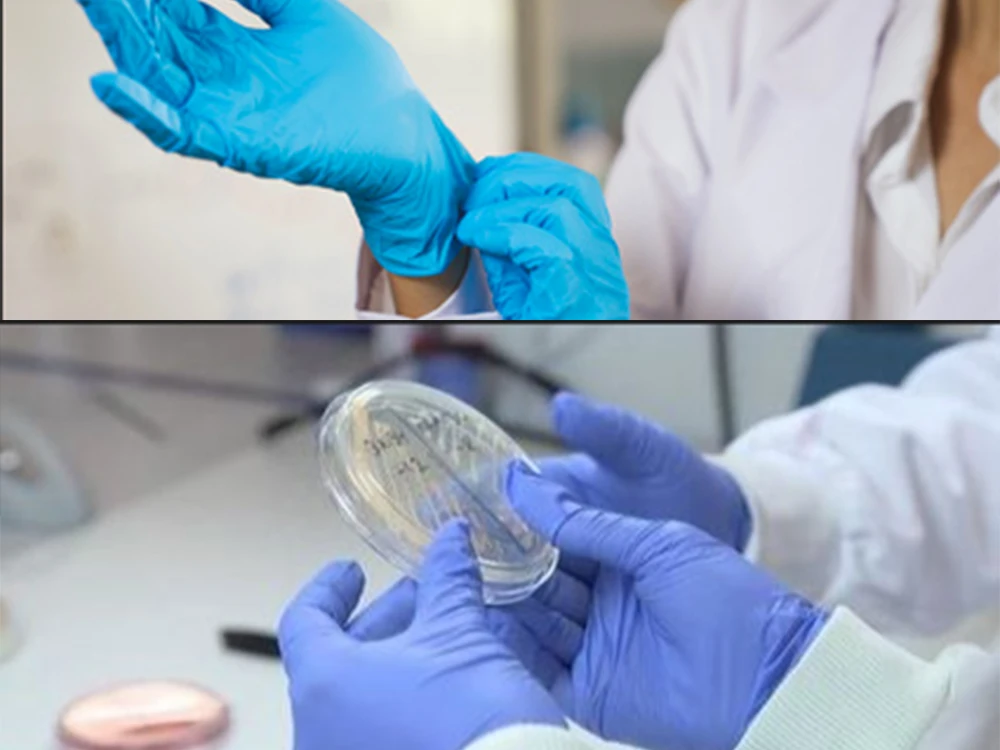
medical field: Hospital nurses’ examination gloves, sterile gloves in operating rooms (non-disposable) and sampling gloves in disease control centers, etc., need to avoid the risk of hospital infection and be sensitive to disinfectant residues.
the field of food processing: In scenarios such as meat slaughtering, baking, and dairy production, workers’ operation gloves must comply with food contact safety standards to prevent microbial contamination of food.
the field of electronics and precision manufacturing: In the production of semiconductors and electronic components, gloves must be dust-free and sterile to prevent product contamination. Moreover, the residue-free property of hypochlorous acid can prevent corrosion of electronic components.
In the fields of chemical engineering and mechanical maintenance: Gloves worn by workers after contact with oil stains and chemical reagents must be thoroughly clean and disinfecte, and at the same time. Damage to the rubber material caused by disinfectants should be avoide.
FAQ
What unexpected benefits do hypochlorous acid generators bring in the processing of rubber gloves?
The hypochlorous acid generator electrolyzes salt and water, and the cathode liquid produces a small amount of sodium hydroxide solution, which is a cleaner. It can be used as a cleaner in the first cleaning process to remove oil stains and stubborn dirt, achieving cost reduction and efficiency improvement of the equipment, and serving multiple purposes with one machine.