

Due to the deepening of the concept of sustainable development of global agriculture. Therefor the hypochlorous acid generator made in China is crossing the Pacific Ocean and showing its unique value in the vast farmland of the South American continent. This innovative equipment, which integrates electrolysis technology, intelligent control and green prevention and control concepts, provides a smart solution from the East for South American agriculture to cope with challenges such as climate change and increasing resistance to pests and diseases.

Technical adaptability: Why are hypochlorous acid generators suitable for South American agriculture?
South American agriculture is unique:
- The structures vary: from sugar cane and soybeans in Brazil to grapes and avocados in Chile
- Climate conditions are complex: tropical rain forest, plateau mountain, arid coastline and other climate types
- Obvious export orientation: strict requirements for pesticide residue standards, especially for exports to European and American markets
- High scale: large farms are common and require efficient and unified pest management programs
The advantages of hypochlorous acid generator just fit these needs:
- Broad-spectrum efficiency: One solution for multiple disease challenges
- Residue safety: comply with the most stringent international agricultural product safety standards
- Simple operation: suitable for large-scale farm application
- Strong climate adaptability: maintain stability under different temperature and humidity conditions

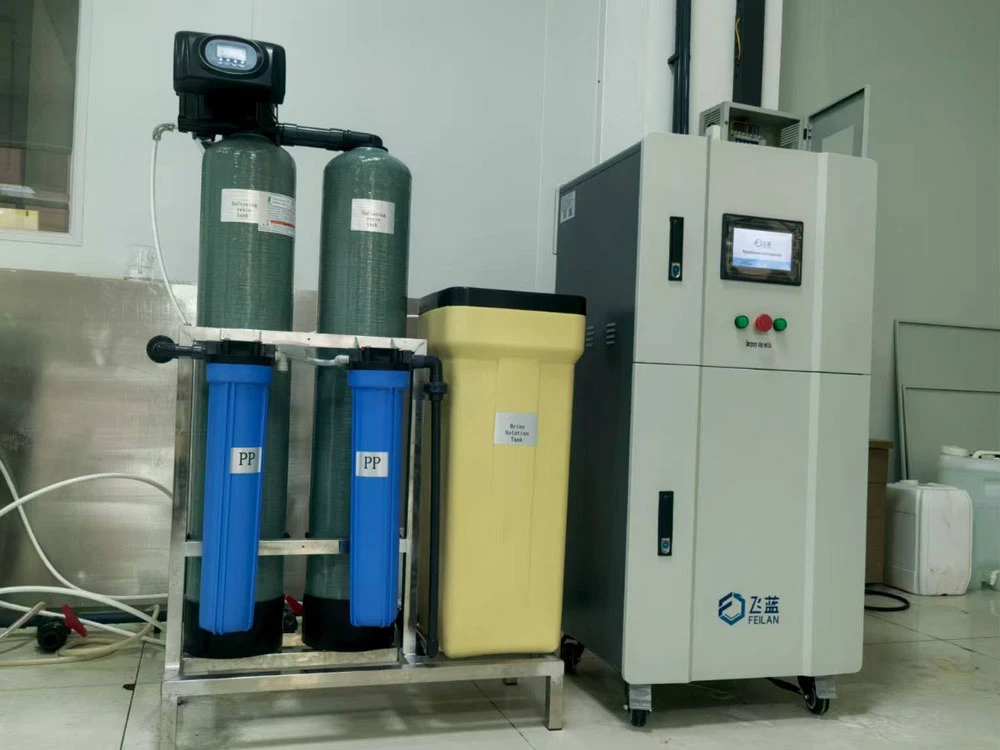
South American customer case study
Case 1: A large soybean farm in Sao Paulo State, Brazil
Client background: Costa family farm, located in the core area of the “soybean Corridor” in Brazil, planting area of 8000 hectares. Due to faced with soybean rust and root rot for a long time. Therefore the cost of chemical pesticides has increased year by year and the effect has decreased.
Technology introduction process:
In March 2023, farmers learned about hypochlorous acid technology through an agricultural exhibition. At the same time after a three-month technical evaluation, the first batch of five large centralized generator systems was procured.
Solution Implementation:
- A central preparation station was established to cover all the planting areas through a pipeline system
- Add hypochlorous acid (50ppm) to the irrigation system to control soil-borne diseases
- Uav foliar spray (30-40ppm) during critical growth period
- Complete disinfection of farm machinery and storage facilities after harvest
Application effect (2023-2024 planting season data) :
- Firstly the incidence of soybean rust was reduce by 72%
- The use of chemical pesticides has been reduce by 65%
- The cost of control has fallen by about $110 per hectare
- Soybean protein content increased by 1.2 percentage points
- To obtain the EU non-GM soybean premium acquisition qualification
Customer comments:
“The hypochlorous acid generator made in China has changed our concept of disease management. What surprised me most was its stability – working reliably in Brazil’s rainy season and high temperatures. Now our soybeans can go to the higher end of the market, which is the value add by the technology.” — Farmer Carlos Costa

FAQ
Is it safe to use hypochlorous acid generators? Will it harm the crop itself?
Safe use is key, and it is very safe for crops when done correctly.
Crop safety (concentration critical) : The safety of hypochlorous water for crops depends entirely on the concentration used. In agriculture, we usually use slightly acidic hypochlorous acid water with an effective chlorine concentration of 10-80ppm (ppm: parts per million) for foliar spraying or irrigation. This concentration range is sufficient to kill most pathogenic bacteria but is safe for plant tissues. The use of excessively high concentrations (e.g., above hundreds of ppm) for direct spraying of sensitive crop seedlings or at flowering time must be avoid.
Equipment and operation safety: The high quality generator has automatic dilution and concentration monitoring function, which can ensure the stable and safe concentration of output. When operating, you only need to follow the instructions and wear ordinary protective equipment (such as gloves and glasses), which is much safer than the operation of highly toxic pesticides.
Recommend practice: It is recommended that a small number of crops be tested for safety at different concentrations and at different growth stages before large area use to determine the best application scheme for your own crop species, so as to achieve the desired effect of being both effective and harmless.