

Seafood processing has been facing a dilemma for a long time. It is necessary to completely remove pathogenic bacteria such as Vibrio parahaemolysticus and Escherichia coli carried by raw materials. And to avoid odor residues. Protein denaturation and irritation problems caused by the use of traditional chlorine-containing disinfectant. The maturity of hypochlorous acid generator technology provides a solution with both high efficiency and safety for this problem. This paper will combine recent scientific research data and industrial practice to systematically sort out the application value of this technology in the whole chain of seafood processing.
Why is hypochlorous acid used for seafood cleaning processing, disinfection?
Hypochlorous acid generator through electrolysis of low concentration salt solution or dilute hydrochloric acid. PH 5.0~6.5 preparation of slightly acidic hypochlorous acid water. Different from the traditional sodium hypochlorite (84 disinfectant). The active components in the disinfectant prepared by this technology exist in the form of hypochlorous acid molecules (HClO) instead of hypochlorite ions (ClO⁻). The former has no charge and is 80 to 150 times more capable of penetrating microbial cell membranes than the latter
This means that under the same effective chlorine concentration. The bactericidal speed of slightly acidic hypochlorous acid water is much faster than that of traditional chlorine-containing disinfectants. And it does not need to be soaked for a long time or applied in a high concentration.
In the bidding announcement of the “high-quality processing of large yellow croaker” project issued by the Fujian Provincial Fishery Research Institute in 2024. The slightly acidic hypochlorite water generator is clearly listed as the key technical equipment. And the technical parameters require the effective chlorine concentration of 50~250mg/L. PH 5.0~6.5, and must comply with GB28234-2020 “Hygienic Requirements for Acid electrolytic water Generators”. This indicates that the technology has entered the industrial application stage from the experimental research stage.

Core application scenarios and process parameters of hypochlorous acid generator
1. Raw material cleaning: substitute tap water to block cross contamination
In the traditional process of seafood processing, raw materials are mostly washed with tap water. However, tap water itself does not have the ability to kill bacteria. And the sewage carrying pathogenic bacteria in the cleaning process will pollpollate the next batch of raw materials. Operating tables and workers’ gloves, forming cross contamination.
Solution: The hypochlorous acid generator is connected to the processing line. And the hypochlorous acid water is prepared online for direct spray cleaning or soaking.
2. Ice preservation: from passive refrigeration to active antibacterial
The traditional crushed ice storage only provides a low temperature environment. Which cannot inhibit the spoilage bacteria attached to the surface of the fish. The technology of making ice from water hypochlorous acid has developed rapidly in recent years.
The results showed that the quantity of histamine producing bacteria (Enterobacter aerogens and Morganella morganii) on the surface of tuna stored on slightly acidic hypochlorous acid water ice decreased by 2.4 and 3.5 log CFU/cm², respectively. The shelf life of tuna stored on slightly acidic hypochlorous acid water ice was 4 to 5 days longer than that on water ice. This has direct economic value for maintaining the quality of seafood caught and transported long distance.
3. Disinfection of processing environment and tools
Hypochlorous acid water can be use for continuous disinfection of floor, wall, conveyor belt, board and cutting tool in processing workshop. Compared with traditional disinfectants such as glutaraldehyde. Peracetic acid and iodopole. It has no irritating odor. No skin and mucous membrane damage. And slight corrosion to metal. Which significantly improves the working environment of workers. The comparative data provided by the equipment manufacturer show that the slightly acidic electrolytic water can be directly reduce to water after use. And there is no chemical residue
Hypochlorous acid generator equipment advantages
Equipment technical index
- According to the actual industrial application cases, seafood processing enterprises should focus on the following parameters:
Production: according to processing line hour processing capacity matching. Small test can be select 50L/h level, large-scale production line needs more than 2T/h. (Customizable) - pH value: strictly controlled in the range of 5.0~6.5 to ensure that the available chlorine is mainly hypochlorous acid molecular form.
- Available chlorine concentration: should have a wide range of adjustment ability (10~1000ppm), to adapt to cleaning (low concentration) and severe disinfection (medium and high concentration) different scenarios.
- Degree of automation: touch screen control, electrolysis current real-time monitoring, automatic alarm shutdown function is standard industrial equipment

FAQ
Hypochlorous acid generator in the salmon industry is mainly used in what links?
Hypochlorous acid generator is mainly use in the following key links of salmon industry chain:
- Aquaculture link: used for aquaculture water disinfection treatment. Kill pathogenic bacteria. Viruses and parasites in the water. Prevent disease outbreaks, improve fish health and survival rate.
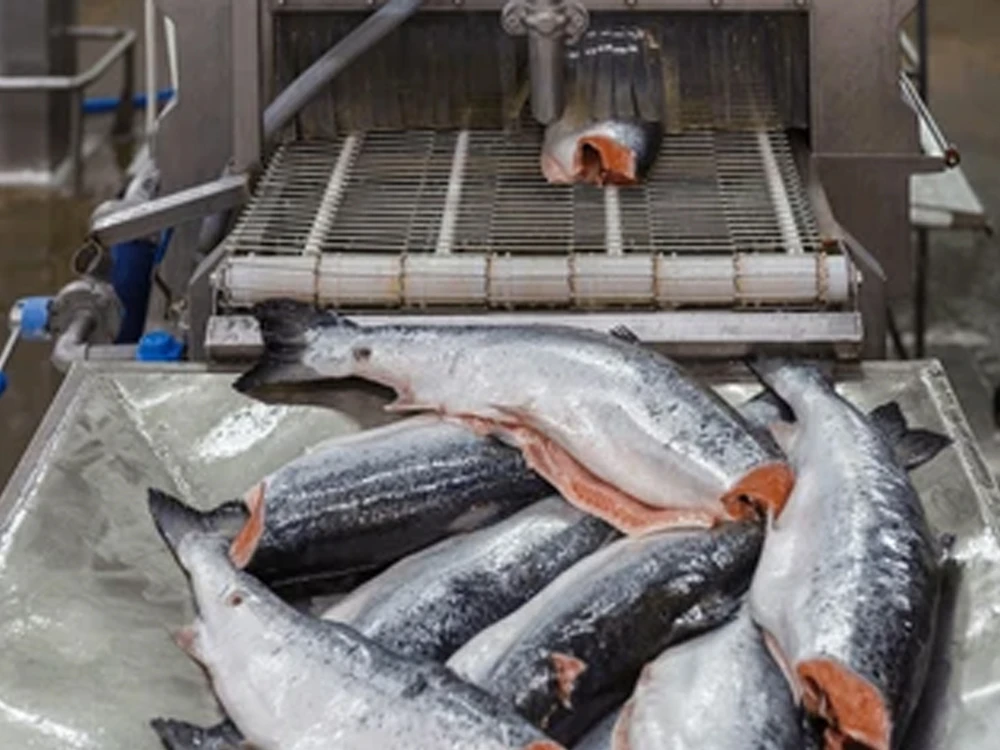
- Processing link: for processing plant environment, equipment, appliances, workers’ hands and salmon products themselves (such as fish fillet, fish segment) cleaning and disinfection. It can effectively reduce the microbial load on the surface of the product (such as the total number of bacteria, E. coli, Listeria, etc.), significantly extending the shelf life of chilled products.
- Transportation and temporary storage: It is use for the continuous disinfection of the water body or temporary storage pond water for live fish transportation to ensure the vitality and freshness of the salmon before arriving at the processing plant or market.