

Recently, a batch of high-performance hypochlorous acid generators set off from the port of Qingdao in China and were officially dispatched to the agricultural powerhouse in South America. These equipment will be applied in the large-scale agricultural plantations there. Providing safe and efficient disinfection solutions for fruit and vegetable cultivation. This marks another successful overseas venture of Chinese manufacturing in the field of agricultural technology.

1,The technological innovation of hypochlorous acid generators ensures the safety of agricultural products.
Hypochlorous acid, as a green and highly efficient disinfectant, has broad application prospects in the agricultural field. The hypochlorous acid generator shipped this time adopts advanced electrolysis technology. Which can produce stable concentration of hypochlorous acid disinfectant on-site. Effectively solving the problems of inconvenient storage and transportation as well as short validity period of traditional disinfectants.
“These devices can prepare the require concentration of disinfectant at any time according to the needs of the growers. And it can be use in various processes such as irrigation water treatment. Disinfection of planting tools. And post-harvest processing of fruits and vegetables.” The project leader explained.
2,Precise matching of the agricultural market in South America
South America is a significant global exporter of agricultural products and has been increasingly demanding higher standards for agricultural safety. The partner for this collaboration is a large fruit-growing and exporting enterprise in Chile. This company has been seeking more environmentally friendly and efficient disinfection solutions for many years to meet the strict requirements of the international market for agricultural product safety.
“The South American region enjoys abundant sunlight and a suitable climate. But it is also prone to the proliferation of various pathogenic microorganisms. Our hypochlorous acid generator can effectively control the microbial risks during the cultivation process. Without any harmful residues. And fully complies with organic agricultural standards.” said the technical engineer.
3,Adapt to challenges and implement customized solutions
In response to the specific environment and usage requirements of the South American region. The technical team made several optimizations to the equipment: enhancing its moisture-proof performance to adapt to high humidity environments; simplifying the operation interface to facilitate the use by local staff; providing Spanish and Portuguese operation guides to eliminate language barriers.
We have specially enhanced the automation level of the equipment, reducing the complexity of manual operations. At the same time, the remote monitoring function enables the management personnel to keep track of the equipment’s operating status in real time.
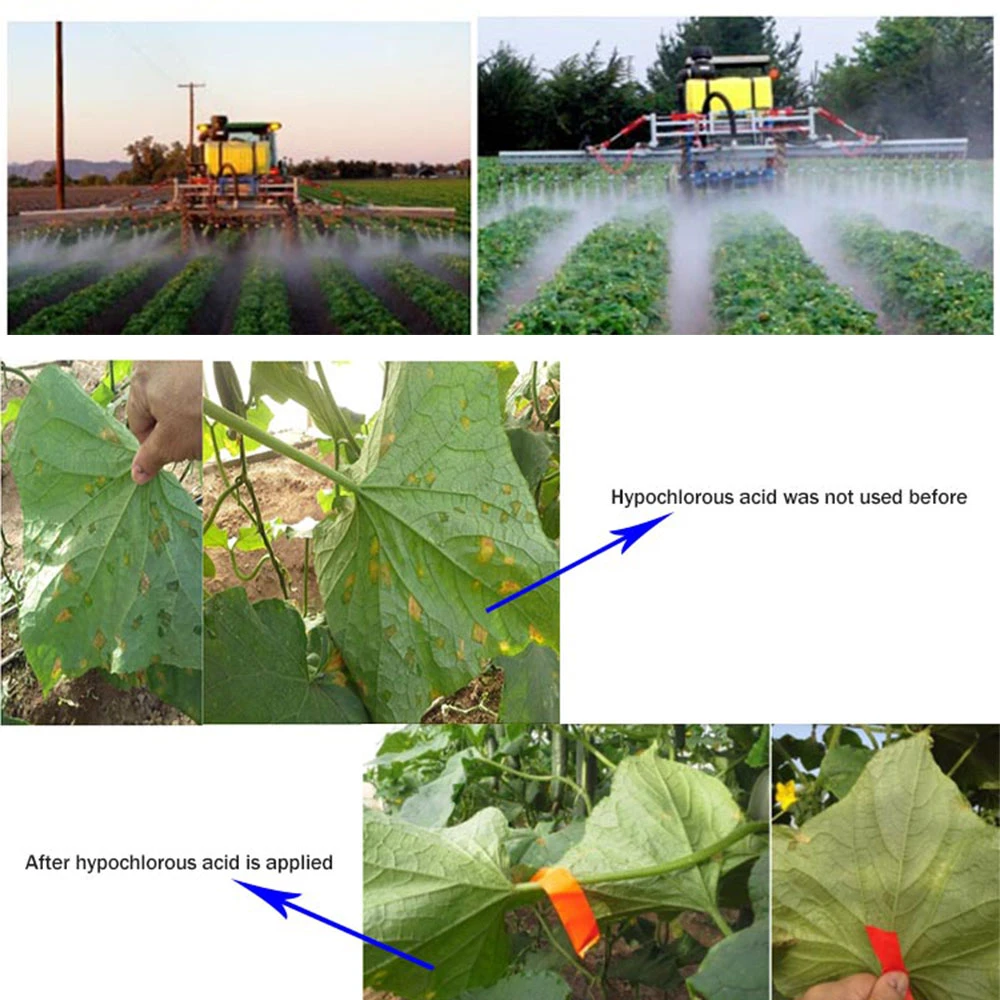
4,The market prospects and future cooperation of hypochlorous acid generators in agricultural planting in South America
This cooperation is not merely a one-time equipment export, but also marks the beginning of a long-term partnership. Both parties have reached agreements on subsequent technical services, spare parts supply, etc., and plan to carry out deeper cooperation in the overall solution for agricultural disinfection.
As global attention to food safety continues to increase, the application prospects of hypochlorous acid generation technology in the agricultural sector are extremely promising. The successful delivery of these equipment has accumulated valuable experience for Chinese agricultural technology enterprises in expanding their international markets.


FAQ
Is the water produced by the hypochlorous acid generator safe? Will it cause harm to crops, soil or the environment?
For crop safety: We recommend using low concentrations of hypochlorous acid water (for example, 50-100 ppm for foliar spraying, 100-200 ppm for irrigation disinfection). Within this concentration range, it can effectively kill bacteria without burning the plant leaves or roots. The key is to avoid using excessively high concentrations.
Regarding soil safety: Hypochlorous acid rapidly decomposes in the soil, breaking down into water, oxygen and trace amounts of chloride ions. Unlike some chemical pesticides, it does not accumulate in the soil, causing compaction or disrupting the micro-ecosystem. Instead, it can reduce harmful bacteria and create a healthier environment for beneficial microorganisms.
Environmentally friendly: Its decomposition products are substances that exist in the natural environment and will not pollute groundwater or the environment. It is an ideal tool for achieving sustainable agriculture.