

Pool operators face constant pressure to keep water safe and comfortable for swimmers. Traditional chlorine products often bring strong odors, skin irritation, and unstable water quality. For this reason, more pool facilities now turn to ECA (Electro-Chemical Activation) generators to produce fresh hypochlorous acid (HOCl) on site.
Key Operational Advantages
1. Eliminating Chemical Storage Risks
Traditional pool disinfection relies on bulk chemical deliveries and warehouse storage. In fact, staff handle hazardous chlorine liquids or powders every week. Additionally, stored chlorine loses its strength over time and creates harmful disinfection byproducts.
In contrast, an ECA generator uses only three simple inputs: salt, water, and electricity. It produces fresh HOCl directly at your facility. Consequently, you skip dangerous chemical stockpiles and cut handling risks for your staff. Furthermore, you remove all worries about expired disinfectant batches.
2. Stabilizing Water Quality while Lowering Costs
Fresh HOCl works fast against bacteria, viruses, and algae. Naturally, it maintains gentle pH levels and eliminates harsh chlorine smells that bother swimmers. For example, operators easily adjust the output concentration to match real-time pool load.
As a result, facilities spend far less on repeated chemical purchases. Meanwhile, teams waste fewer expired disinfectants over time. Besides, clean HOCl cuts down corrosion on pipelines and pool hardware, extending the service life of your entire circulation system.
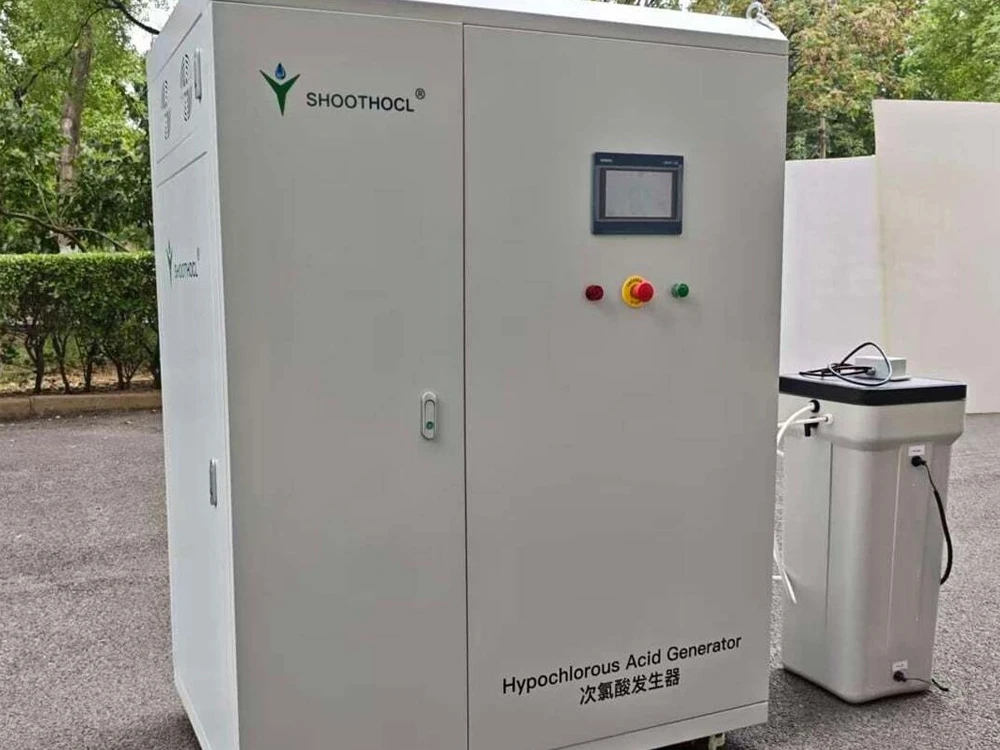
On-Site HOCl vs. Traditional Dosing
You see clear differences between on-site HOCl systems and traditional chemical dosing. To start with, on-site ECA generators only need salt, water and electricity as raw materials. However, traditional methods depend on hazardous liquid or powder chlorine.
When it comes to swimmer comfort, HOCl stays gentle on human skin and creates almost no odor. Yet standard chlorine triggers red eyes and leaves a sharp smell around the pool.
In terms of equipment impact, HOCl creates low corrosion for pipes. On the other hand, traditional chlorine accelerates corrosion and shortens the lifespan of your pipeline system.
Facility Integration & Modern Standards
Hotels, resorts, and public water parks all benefit from this setup. The ECA generator connects directly to your main pool circulation system. Then, it runs automatically and supports continuous water sanitation day and night.
Moreover, the system requires simple routine maintenance and demands minimal manual labor. Therefore, your team saves valuable time on daily testing and dosing. In short, on-site HOCl generation creates a safer, greener, and more budget-friendly path for pool management.
Today, visitors care deeply about clean, non-irritating pool water. Standard chlorine often causes red eyes and dry skin after a short swim. On the other hand, HOCl causes little to no irritation while keeping water crystal clear. Above all, it satisfies strict health codes for public swimming spaces. Thus, pool owners build a stronger reputation and attract more guests with ECA generator solutions.
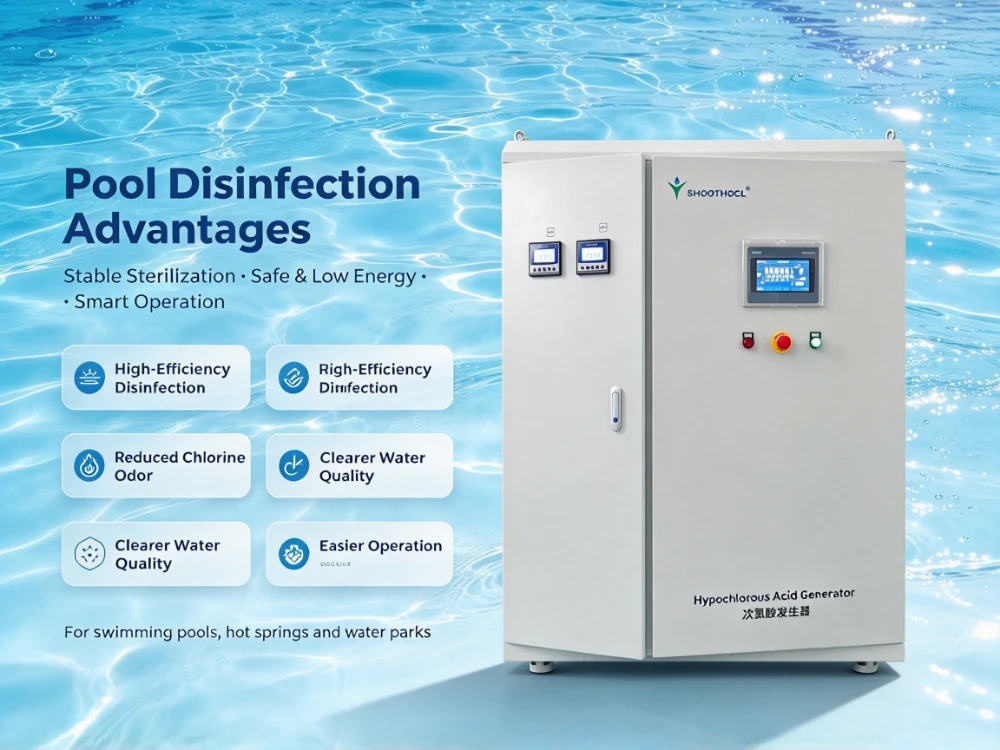
Ready to Upgrade Your Pool Sanitation?
How does your facility currently handle chemical storage and dosing? Share your experiences or questions in the comments below!
FAQ
Does an ECA generator fit both small private pools and large public water parks?
Yes. You pick a matching ECA generator model for your pool size. The machine adjusts HOCl output freely to fit low or high visitor traffic.
What supplies do I need to run the ECA generator?
You only need salt, clean water and standard electricity. You never order and store large chlorine drums or powder.
Will HOCl affect my pool pH heavily?
No. Properly generated HOCl keeps a mild pH range. You maintain balanced pool water with much less pH adjustment work.