

Firstly The cleaning of glass surfaces has always been a challenge in the field of industrial and commercial cleaning. Due to Traditional cleaning methods often rely on chemical detergents that. While effective. Suffer from high cost, environmental contamination, secondary contamination from residues. And potential hazards to operator health. Today, an innovative technology – electrolysis of potassium carbonate to produce strong alkaline ion water equipment – is becoming a disruptive solution for the glass cleaning industry due to its high efficiency. Environmental protection and economic characteristics.
Technical core: the principle of electrolytic potassium carbonate
The core technology of this equipment lies in the electrolysis of safe and non-toxic potassium carbonate (K₂CO₃) aqueous solution.
Raw material safety: Potassium carbonate is a common industrial raw material. Its aqueous solution is alkaline, but it is mild and biodegradable in itself.
Electrolysis process: Under specific voltage and electrolytic cell structure. Potassium carbonate solution undergoes an electrochemical reaction in the cathode chamber of the electrolytic cell. The key step is to electrolyze water molecules to generate a large number of hydroxide ions (OH⁻).
Generate “magical water” : After electrolysis, the water flowing out of the cathode area is alkaline ionized water with a high pH value rich in hydroxide ions. The pH value of this water can be stably maintained at 11-13, demonstrating an extremely strong decontamination ability, and it contains no toxic chemical additives at all.
Its simplified chemical reaction formula is:
2H₂O + 2e⁻ → H₂↑ + 2OH⁻
Why can it clean glass so efficiently?
Strongly alkaline ionized water has an outstanding cleaning effect on dust, oil stains, and organic impurities on glass surfaces. The mechanism of its action is multi-faceted:
Saponification reaction: For the most common oil stains (mainly composed of animal and plant oils, which belong to esters). Strong alkaline ionized water can undergo a saponification reaction with them. Decomposing insoluble oils into water-soluble fatty acid salts (i.e., soap) and glycerol, thus being easily washed away by water.
Emulsification and dispersion: In the case of non-saponifiable mineral oils and particulate dust. A strongly alkaline environment can significantly reduce the surface tension of water. Enhancing its penetration and wetting properties. This enables the ionic water to quickly encapsulate and penetrate the oil film. Emulsifying it into tiny droplets and detaching and dispersing it from the glass surface into the water.
Residue-free cleaning: Unlike traditional cleaning agents. This ionic water leaves only water and trace amounts of potassium ions after rinsing. When it dries naturally, it won’t leave any streaks. Spots or chemical residues on the glass surface. Achieving a bright and brand-new cleaning effect.
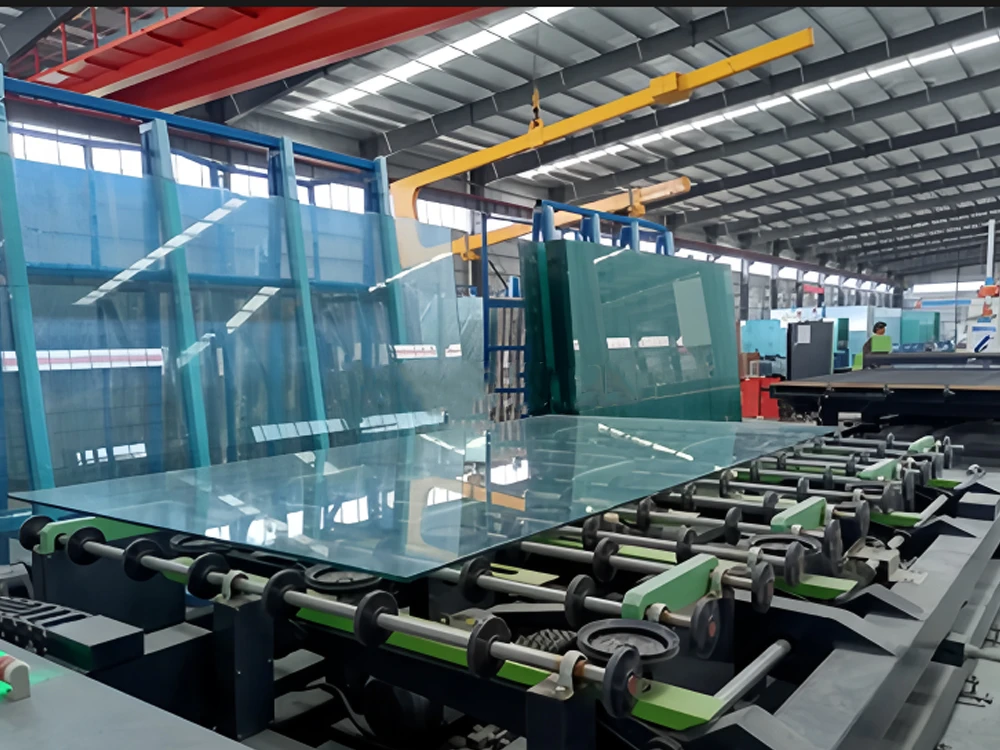

Equipment advantages: Surpassing traditional cleaning methods
Using electrolyzed potassium carbonate ion water to clean the equipment brings users multiple significant advantages:
Ultra-Environmentally Friendly: The only consumable material is food-grade potassium carbonate. The wastewater after cleaning is non-toxic and harmless. The pH value will naturally decrease by reacting with carbon dioxide in the air, being friendly to the environment and in line with the green and sustainable development concept.
Economical and efficient: It significantly reduces the costs of purchasing, storing, and transporting various chemical cleaning agents. The equipment enables “on-demand production”, producing ionized water as needed, avoiding waste. The consumption of water, electricity, and a small amount of potassium carbonate constitutes an extremely low single cleaning cost.
Operational safety and health: It has eliminated the risks of operators coming into contact with and inhaling irritating chemical vapors, protecting the health of employees and improving the working environment.
Excellent cleaning effect: It has strong ability to decompose stubborn oil stains. The glass after cleaning has a higher light transmittance, without water stains or residues. It is particularly suitable for places with extremely high requirements for cleanliness, such as high-rise building facades, optical lenses, and precision instrument windows.
High level of automation integration: This equipment can be easily integrated into an automated cleaning production line, enabling fully automatic spraying, cleaning and rinsing processes, significantly enhancing cleaning efficiency.
Typical application scenarios
This advanced cleaning technology is applicable to a variety of fields where high cleanliness standards for glass are require:
Construction industry: Glass curtain walls for high-rise buildings, sunrooms, and lighting roofs for large shopping malls.
Industrial manufacturing: Automotive windshield production line, automatic cleaning of solar photovoltaic panels, pre-treatment and cleaning of liquid crystal panels in the electronics industry.
Professional cleaning service: A professional company specializing in cleaning glass facades, offering efficient and environmentally friendly cleaning services.
Special fields: Laboratories, museums, and other places where glassware and display cases need to be clean without any chemical residues.

FAQ
Why is it that when strong alkaline ion water is used to clean glass, there is no need to rinse with clean water afterwards, and no water marks will remain?
This is mainly attribute to two key principles: extremely strong cleaning power and natural air drying without any residue.
Superior Cleaning Power: The strong alkaline ionic water (with a pH value typically ranging from 11 to 12.5) can undergo saponification reactions with the vast majority of organic stains on the glass surface (such as grease, insect corpses, bird droppings, and tree gum) and some inorganic stains, rapidly decomposing and emulsifying them. At the same time, its high permeability can remove tiny particle dust adhering to the glass.
Natural air-drying without residue: Ordinary tap water contains minerals such as calcium and magnesium. After the water evaporates, these minerals will form white mineral scale marks. However, our ion water equipment uses precise filtration and electrolysis technology to remove most of the minerals from the water. Therefore, when the clean ion water dries naturally on the glass, almost 100% of pure water vapor is evaporate, with no solid substances remaining, achieving the perfect effect of “no water marks”.