

In the field of agricultural production, the current planting mode is facing a series of severe challenges, which not only restrict the yield and quality of crops, but also pose a threat to the sustainable development of agriculture.
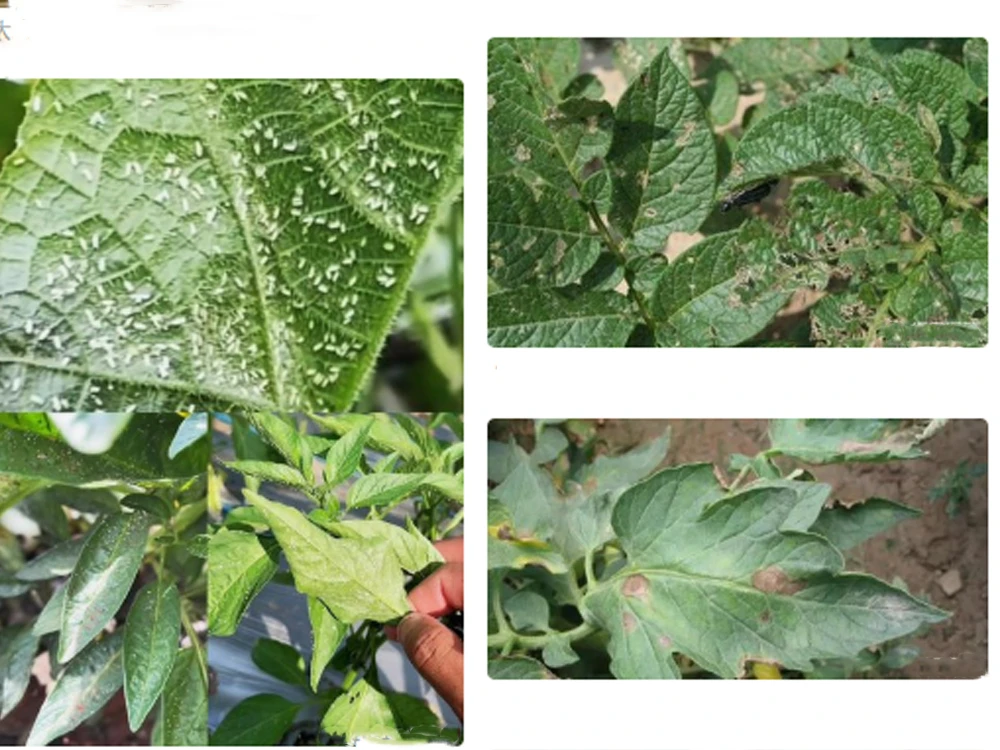
The abuse of chemical pesticides has always been a stubborn problem in agricultural development. In order to combat pests and diseases, many farmers rely too much on chemical pesticides. Long-term extensive use of chemical pesticides not only enhances the resistance of pests, which greatly reduces the control effect, but also seriously destroys the microbial community in the soil, resulting in soil ecological imbalance. What’s worse, agricultural products with excessive pesticide residues enter the market, directly threatening the health of consumers.
Soil-borne diseases are also a problem. As the same crops are planted year after year, harmful bacteria continue to accumulate in the soil, and soil-borne diseases such as fusarium wilt and root rot become more rampant. When these diseases break out, they can reduce or even wipe out a year’s worth of hard work. For example, in some vegetable growing areas, the incidence of fusarium wilt in Solanaceae vegetables has increased year by year due to long-term continuous cropping, and many farmers have suffered heavy losses.
Advantages of hypochlorous acid generator
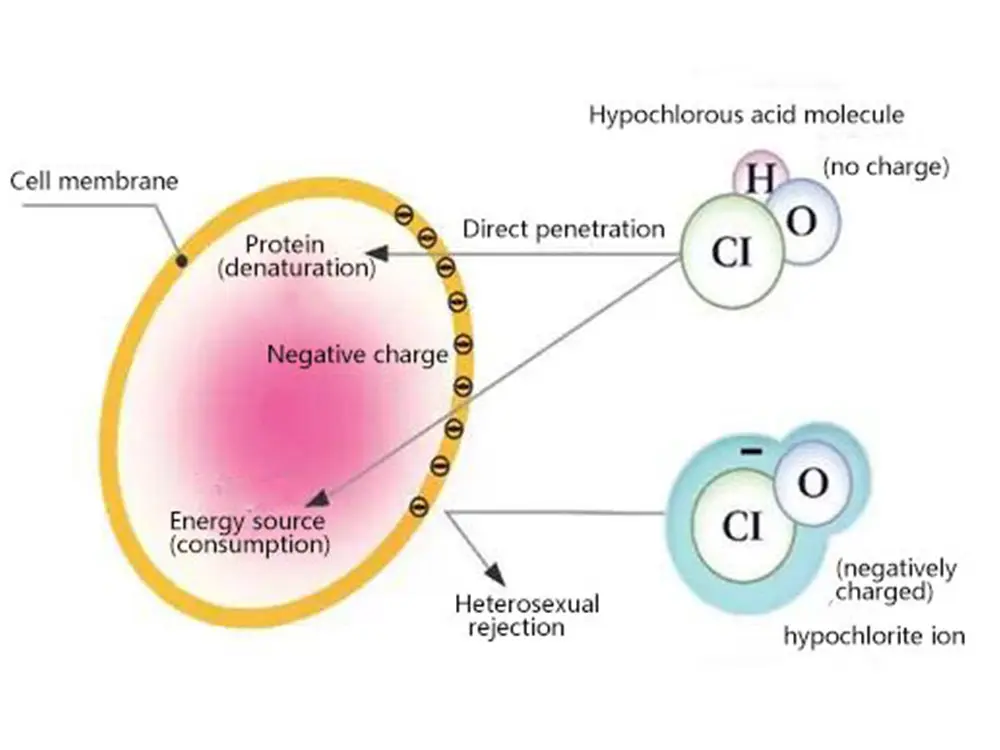
The hypochlorous acid produced by hypochlorous acid generator has a series of excellent characteristics, which make it shine in the agricultural field. The first is the highly effective dual bactericidal ability, hypochlorous acid molecules are extremely small and electrically neutral, which gives it extraordinary penetration ability. It is able to easily cross the pathogen’s cell membrane and penetrate deep into the cell interior. Once entering the cell, hypochlorous acid quickly reacts with key biological macromolecules such as proteins and nucleic acids by virtue of its strong oxidation, destroying their structure and function, so as to realize the rapid inactivation of bacteria, fungi and other pathogens in just 15 seconds, and effectively curb the spread and spread of diseases.
It is worth mentioning that the zero chemical residue characteristics of hypochlorous acid generator provide a solid guarantee for the quality and safety of agricultural products. Hypochlorous acid will naturally degrade to water and trace salts after it has completed its sterilization task, and will not leave any harmful chemical residues in the soil, crops or agricultural products. This not only meets the increasingly strict export standards of agricultural products around the world, but also enables consumers to eat green and healthy agricultural products at ease, which effectively promotes the development of green agriculture.

Multiple application scenarios of hypochlorous acid generator in agricultural cultivation
1,Treatment of seed soaking and seedling with hypochlorous acid
Scenario: The seeds were treated by dipping and the incisions and roots of tissue culture seedlings, grafted seedlings were disinfected.
Advantages: Effectively kill pathogenic bacteria attached to the seed surface, significantly improve the germination rate and seedling rate; Prevent infection of grafting wound, promote healthy growth of seedlings, and lay a solid foundation for high yield.
2,Disinfection of agricultural facilities and soil by hypochlorous acid
Scenario: Spray disinfection of seedling trays, cultivation tanks, irrigation pipes, farm tools, and air and object surfaces inside greenhouses.
Advantage: Replace formaldehyde, potassium permanganate and other toxic chemicals, to achieve continuous disinfection of human and livestock in the state of operation. It can effectively remove biofilm, keep irrigation systems open, prevent the spread of soil-borne diseases, and greatly reduce the pathogen base of the whole growing environment.
3,Hypochlorous acid prevention of crop diseases during growing period
Scenario: Prevention and adjunctive treatment of common fungal and bacterial diseases such as powdery mildew, downy mildew, gray mold, and leaf spot by foliar spraying.
Advantages: In the early stage of disease or as a routine prevention means, hypochlorous acid water can directly act on the surface of crops, forming a protective film to inhibit pathogen infection. It not only does not produce resistance, but also can be used in coordination with biological pesticides and beneficial bacteria, which is an ideal choice for green integrated control.
4,Treatment of fruits and vegetables with hypochlorous acid after picking
Scenario: After harvesting fruits, vegetables are washed, soaked or sprayed.
Advantages: Thoroughly clean the dirt and pathogenic bacteria on the surface of agricultural products, greatly extend the shelf life, and reduce the loss of decay during transportation and storage. Due to its non-residue characteristics, it does not need to be washed again after treatment, and can be directly packaged and listed, which perfectly guarantees the edible safety and commodity value of agricultural products.


Application case of hypochlorous acid generator in agricultural planting
In strawberry cultivation in Japan, local farmers successfully solved the problem of continuous cropping after introducing the Hulse hypochlorous acid generator, through the perfusion of 200ppm hypochlorous acid solution to the soil and the fumigation technology with film mulching. The harmful pathogens in the soil have been greatly reduced, the root system of the strawberry has developed well, and the fruit is full and juicier. The yield has increased by 70% compared with the previous, and the quality has also reached the standard of the high-end market. The market is in short supply, which has brought huge profits to farmers
